Crab Island Tides: A Local Captain’s Guide to Timing Your Day Just Right
 Hey there, future Crab Island convert. I’m Captain Mike Smith, born and raised right here in Destin, and I’ve been running boats around this bay for 34 years. If you ask anyone at the harbor about Crab Island, you’ll get a hundred different opinions on where to anchor or which floatie is best, but every captain worth their salt will tell you the same thing: it all comes down to the Crab Island tides.
The tide is the single biggest factor in how your day unfolds at the famous Destin sandbar. Get it right and you’ve got the perfect day. Ignore it and, well, you’ll still have fun, but you might be wondering why your cooler floated away. Let’s break it all down so you show up looking like a local.
What Are Crab Island Tides, Anyway?
Crab Island sits in the Choctawhatchee Bay, just north of the Destin bridge, where the bay meets the East Pass and the Gulf. Because of that location, the Crab Island tides are influenced by Gulf tides, the pass current, and the geography of the bay itself. The result is a sandbar whose entire personality shifts throughout the day.
At low tide, vast stretches of the sandbar sit in ankle to waist deep water. You can wade out a football field and still see your toes. At high tide, that same spot might be chest deep or deeper, with a gentle current rolling through. Neither one is better than the other. They’re just different days at the same place, and that’s the magic of Crab Island tides.
High Tide vs. Low Tide at Crab Island
Let’s get into the nitty gritty, because the difference between high and low Crab Island tides genuinely changes what your day looks like.
Low tide is the family favorite. Water is shallowest, the sandbar feels enormous, and little kids can run around without a worry. Floats stay put, coolers stay close, and you can stand and chat in waist deep water for hours. Vendor boats glide through easily, the bottom stays sandy and firm under your feet, and the water often looks its clearest because there’s less depth scattering the light. If you’ve got toddlers, grandparents, or anybody who just wants the easiest possible day, plan your visit around low tide.
High tide brings a different energy. The water is deeper, the current is a touch stronger, and the crowd skews toward the party scene. Boats can anchor in more spots, deeper draft vessels can get closer in, and there’s more swimming water for adults who want to actually swim. Sunsets at high tide look particularly stunning because the surface is wider and more reflective.
The takeaway? Match the Crab Island tides to your crew. Kids and chill vibes love low tide. Bigger crowds and deeper splashing love high tide.
How to Check Crab Island Tides Before You Go
| Tide Stage | Water Depth | Current | Best For | Crowd Level |
|---|---|---|---|---|
| Low Tide | Ankle to waist deep | Very gentle | Families, toddlers, easy wading, photos | Light to moderate |
| Incoming Tide | Rising, knee to chest deep | Picks up steadily | Arriving and anchoring, swimming, jet skis | Building |
| High Tide | Chest deep or deeper | Strongest of the day | Party scene, deeper swimming, sunset photos | Peak |
| Outgoing Tide | Dropping, chest to waist deep | Moderate, easing | Winding down, heading back to harbor | Thinning out |
Best Crab Island Tide Timing
| What You Want to Do | Best Tide Window |
|---|---|
| Bring kids and toddlers | 2 hours before to 2 hours after low tide |
| Wade out far from your boat | Low tide |
| Swim in deeper water | High tide |
| Catch the party scene | 1 hour before high tide through high tide |
| Sunrise on the bay | Any tide, low tide is the local favorite |
| Sunset photos | High tide for the glassy reflection |
| Spot dolphins | Early morning and evening, any tide |
| Anchor easily | Low to mid tide before crowds arrive |
This is where I’m going to save you a lot of headaches. Checking Crab Island tides before you head out should be the very first thing on your list, right alongside grabbing your sunscreen.
The easiest way is to pull up a tide chart for Destin or the Choctawhatchee Bay on any tide app or weather service. Search “Destin tide chart” or “Choctawhatchee Bay tides” and you’ll get the day’s high and low tide times along with predicted water levels. NOAA also publishes free, accurate Crab Island tide data online that locals lean on year round.
Look for two things: when the high and low tides hit, and how big the swing is between them. A bigger swing means more dramatic changes during the day. A smaller swing means more stable conditions. Knowing both ahead of time lets you plan when to head out, when to picnic, and when to start packing up.
“I tell every first time visitor the same thing,” says Captain Mike Smith, who’s spent 34 years on these waters. “Spend 30 seconds checking the Crab Island tides before you leave the dock and you’ve already done more than half the people out there. It’s the simplest local trick, and it turns a good day into a great one. Every time.”
The Best Time to Visit Crab Island Based on the Tides
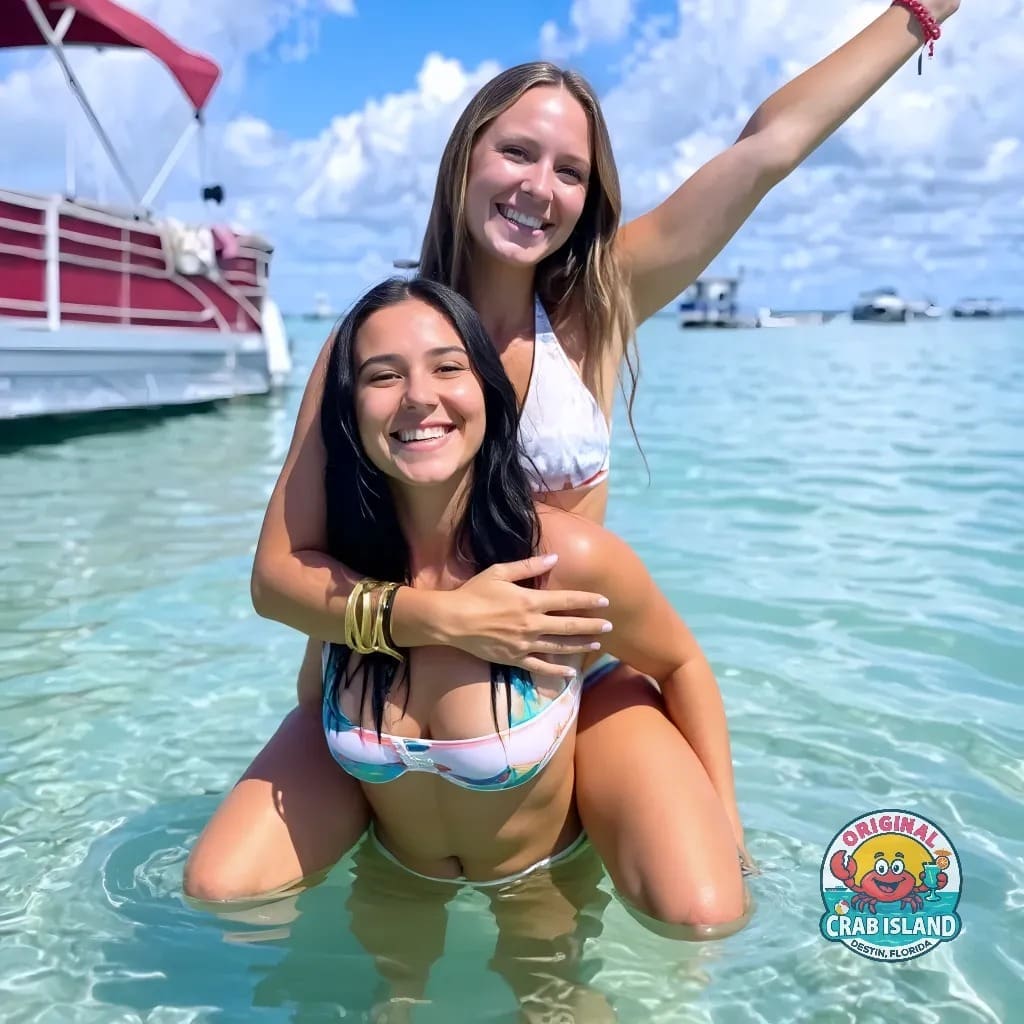 Here’s the question I get asked more than any other: when’s the best time to come out? Honestly, it depends on what you want, and the Crab Island tides are the answer key.
If you want shallow water for kids, aim for a couple of hours on either side of low tide. The sandbar is at its widest and friendliest then. If you want a livelier scene with more boats and deeper water, target high tide and the hour or two leading up to it. If you want the absolute golden hour photo, time your sunset to land near high tide for that wide, glassy water look.
Sunrise on a low tide is the local secret nobody talks about. The bay is calm, the crowds haven’t arrived, and the light is unreal. I’ve seen dolphins cruise through on mornings like that more times than I can count. If you can drag yourself out of bed, do it once and you’ll understand.
Crab Island Tides and Safety
I won’t beat you over the head with this, but it matters. The Crab Island tides aren’t dangerous in the way ocean surf can be, but they do require a little awareness.
As the tide rises, the water deepens and the current strengthens. That spot where your kids were standing comfortably an hour ago may now be over their heads. Floats and rafts drift faster as the current builds. Anchors that held perfectly at low tide can shift when the tide changes. None of this is scary, but it does mean you stay alert and adjust as the day goes.
A few simple habits handle all of it. Keep life jackets on little ones no matter what the Crab Island tides are doing. Clip floats to your boat with a line so they can’t drift off. Check your anchor when the tide swings. And keep eyes on your crew the same way you would at any beach or pool. Easy stuff that turns into second nature after one trip.
USCG Safety Regulations Working in Your Favor
 Here’s something that should give you peace of mind regardless of what the Crab Island tides are doing on any given day. Every legitimate rental, charter, and tour boat operating around Crab Island falls under United States Coast Guard safety regulations. That’s federal law.
What that means in practice: vessels carry the required life jackets for every passenger, plus throwable flotation, fire extinguishers, navigation lights, and signaling devices. Charter captains hold USCG licenses that require training, testing, and ongoing compliance. Rental fleets are required to give safety briefings before you leave the dock. Capacity limits are posted and enforced. When you book a boat through Original Crab Island, all of that is already handled before you ever step aboard. You just enjoy the ride.
Crab Island Tides Through the Seasons
Quick local note: Crab Island tides shift their patterns throughout the year. Summer brings warmer water and bigger crowds, with tides that tend to favor late morning and afternoon highs during peak season. Spring and fall offer calmer conditions, smaller crowds, and tide cycles that can give you the place almost to yourself on a weekday. Winter sees lower tourist traffic but still plenty of locals enjoying the bay on warm days.
The wind also plays into Crab Island tides more than you’d expect. A steady south wind can push more water into the bay and amplify a high tide. A north wind can do the opposite at low tide and make the sandbar even shallower than predicted. Veteran captains read wind and tide together, and after a few visits, you’ll start to notice the patterns too.
Reading Crab Island Tides Like a Pro
Want to look like you’ve been doing this for years? Here’s the simple framework. Check the Crab Island tides the morning of your trip. Note the high and low times. Plan the activities that work best in shallow water for the low tide window. Save deeper water fun for the high tide window. Build in a buffer of about an hour on either side of the tide turn, because that’s when conditions shift the most.
If you’re renting a boat, your captain or the rental staff will happily talk Crab Island tides with you. Locals love sharing this stuff. Ask which spots tend to stay shallower at higher tides, or where the current runs strongest. You’ll get insider gold every time.
The Bottom Line
After 34 years out here, I can promise you the people who have the best days at Crab Island are the ones who respect the Crab Island tides. Not in a stressful, complicated way. Just in a “glance at the chart, plan around it, and have a blast” kind of way.
The sandbar is generous. It gives families a perfect playground at low tide and turns into a floating party at high tide. It serves up sunrises that feel like a private show and sunsets that turn the whole bay orange. Add in the Coast Guard regulated boats, the friendly captains, the dolphins that show up when they feel like it, and you’ve got the recipe for one of the best days you’ll spend on the Emerald Coast.
Check those Crab Island tides, pack the cooler, and come see what we’re all so proud of out here. For more options, explore our Services page.
