Every light on a boat tells other vessels something specific, its size, direction, and what it’s doing on the water. Having boat navigation lights explained clearly matters because misreading even one signal can lead to a close call or a collision, especially after dark. Whether you’re operating a small rental pontoon or piloting a larger yacht, understanding these lights is not optional, it’s required by federal and international maritime law.
Navigation lights use a straightforward system of colors and positions to communicate a vessel’s orientation and right-of-way status. Red marks port (left), green marks starboard (right), and white serves multiple roles depending on where it’s mounted. The rules behind these lights are governed by the U.S. Coast Guard and the International Regulations for Preventing Collisions at Sea (COLREGs), and they apply to every recreational boater on the water.
At Original Crab Island, we put guests on the water daily across Destin and the Emerald Coast, on pontoon boats, jet skis, and fishing charters. We know firsthand that a basic grasp of navigation lights makes every trip safer and more enjoyable. This guide breaks down each light type, its color, its placement, and the rules you need to know before heading out.
Why navigation lights matter for safety and rules
Navigation lights exist for one core reason: boats cannot see each other in the dark without them. On open water at night or in low visibility conditions like fog or heavy rain, your eyes give you almost nothing to work with. A lit vessel sends out signals that tell approaching boats your direction, size, and activity before any other communication is possible. Without that information, two boats heading toward each other have no reliable way to determine who should yield.
The legal requirement for recreational boaters
The U.S. Coast Guard requires all vessels to display navigation lights from sunset to sunrise and during any period of restricted visibility, regardless of vessel size. This rule comes directly from both domestic law under 33 CFR Part 83 and the international COLREGs framework. If you operate a recreational boat without proper lights during these periods, you are breaking federal law and can face fines or boarding by the Coast Guard.
Navigation lights are not a courtesy, they are a federal requirement every time you take a boat out after dark or in reduced visibility.
Rental operators and charter services are held to the same standard as private boat owners. Every vessel on the water during applicable hours must carry functioning, properly positioned lights that match the vessel’s size and type.
Why the rules are designed the way they are
The color and placement system behind navigation lights is not arbitrary. It mirrors the logic used in aviation and road traffic: a consistent, universal visual language that any boater, anywhere in the world, can read the same way. Red on the left, green on the right, and white at the stern create a pattern that tells you where a vessel is heading relative to your position. That information lets you make the correct decision in seconds, which is often all the time you have at night on the water.
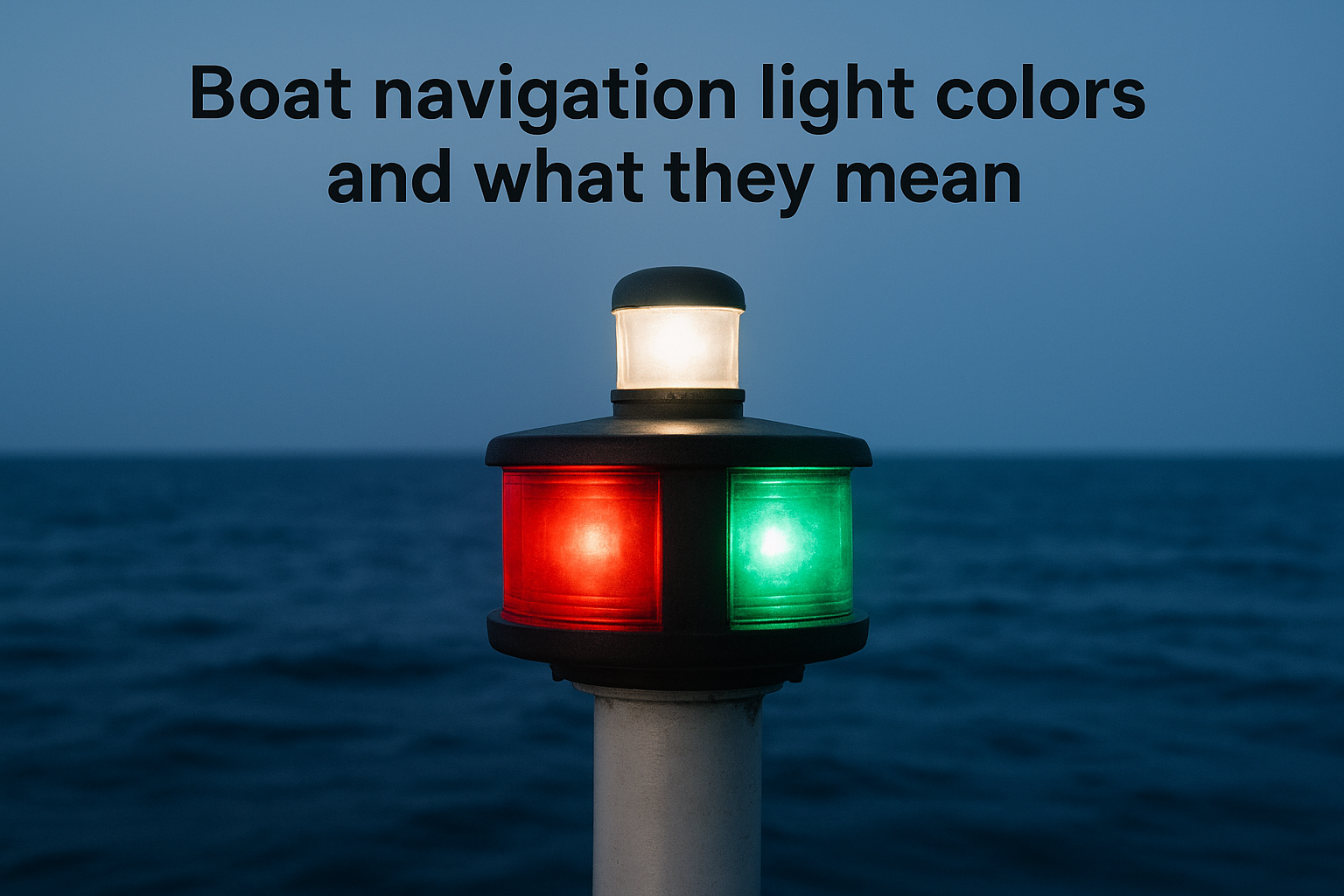
Boat navigation light colors and what they mean
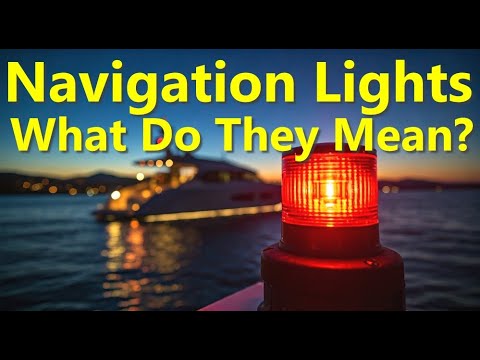
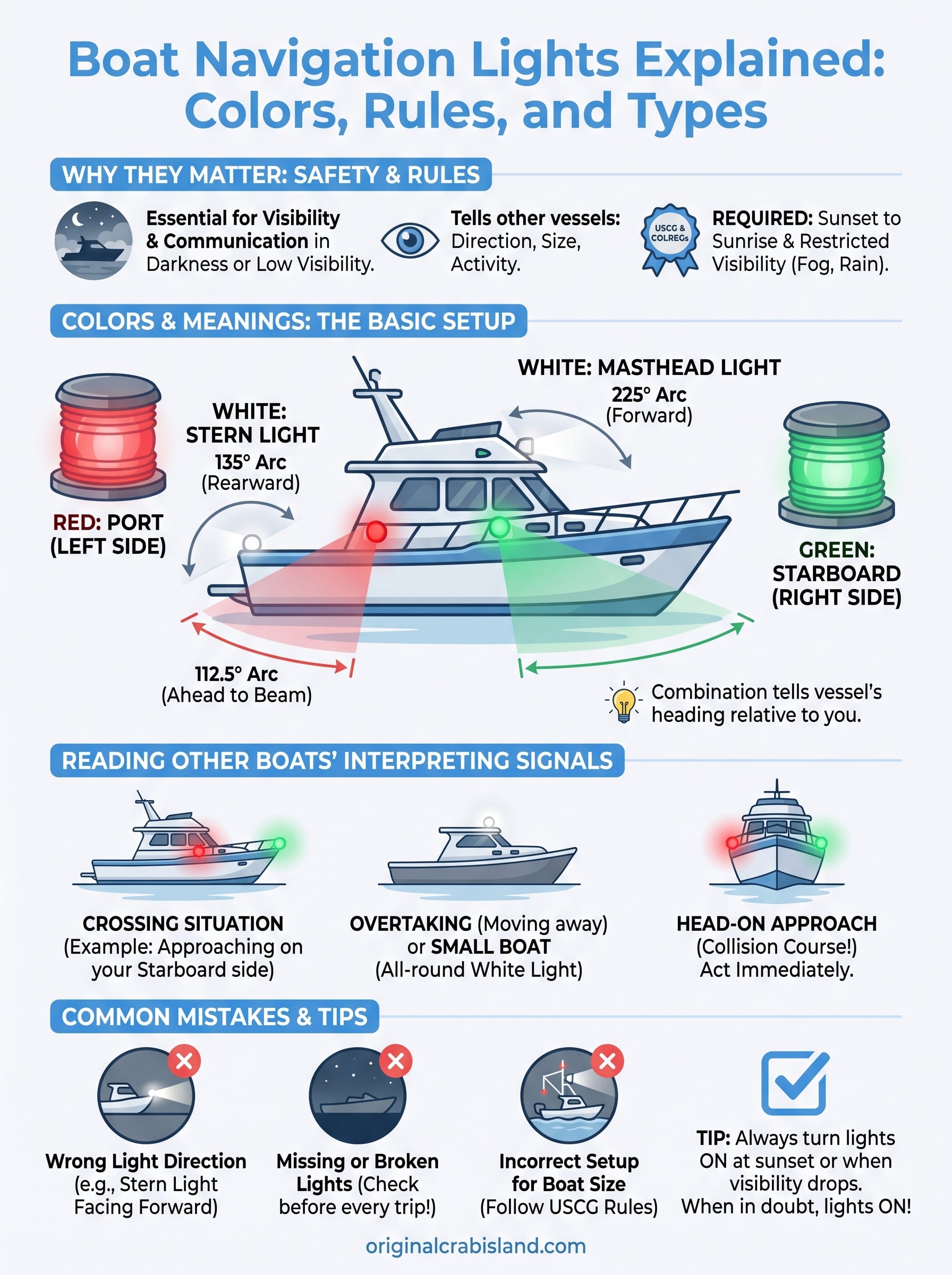
Getting boat navigation lights explained properly starts with three core colors: red, green, and white. Each color has a fixed meaning and a fixed position on every vessel, and those two factors combined tell you exactly where another boat is pointing relative to your own.
Red and green: the sidelights
Red marks the port (left) side of a vessel, and green marks the starboard (right) side. Both sidelights project across a 112.5-degree arc from directly ahead to just past the beam. If you see another boat’s red light from your position, you are looking at its left side. Green means you are on its right.
If you see both red and green simultaneously, that vessel is heading directly toward you and you need to act immediately.
White lights and what they signal
White lights fill two separate roles on a vessel depending on where they are mounted. A stern light faces rearward and covers a 135-degree arc, so you only see it when you are overtaking another boat. A masthead light, required on power-driven vessels, projects forward across a 225-degree arc and is visible to approaching traffic.
Knowing which white light you are seeing tells you whether a vessel is moving away from you or closing in. A boat showing only a white stern light is ahead and moving in roughly your direction. A boat showing a masthead light alongside colored sidelights is approaching or crossing, and that situation demands your attention.
Types of navigation light setups by boat
Not every boat uses the same lighting configuration. The U.S. Coast Guard assigns specific setups based on vessel length, type, and propulsion, so what’s required on a small rental pontoon differs from what a larger power-driven cruiser must carry.
Small vessels under 39.4 feet (12 meters)
Boats under 39.4 feet have more flexibility in how they meet the requirements. You can use a combined lantern that shows red, green, and white from a single bow-mounted unit, or you can run separate sidelights and a stern light. Your options at this size include:
- A combined tri-color lantern mounted at the bow
- Separate port, starboard, and stern lights at their required positions
- An all-round white light for vessels under 23 feet, paired with a handheld flashlight as a backup
Power-driven vessels over 39.4 feet (12 meters)
Larger power-driven boats require a more complete setup. You must display separate red and green sidelights, a white stern light, and at least one forward-facing white masthead light. Vessels over 164 feet (50 meters) need two masthead lights mounted at different heights.
Getting boat navigation lights explained for your specific vessel size matters because running the wrong configuration still counts as a violation, even if you have some lights on.
Sailboats under power follow the same rules as motor vessels. Sailboats running under sail alone can use a combined masthead tri-color light instead of separate sidelights and a stern light, which simplifies the setup considerably.
How to read another boat’s lights at night
When you spot lights on the water after dark, the key is reading what combination you see and where each color sits relative to your position. That combination tells you the other vessel’s heading and whether you are on a collision course before you are close enough to signal or communicate in any other way.
What each light combination tells you
The combinations you encounter most often break down clearly once you know the color positions. If you see a green light on your left and a red light on your right, the other vessel is crossing from your starboard to your port side, and you are likely the give-way vessel in that situation. If you see only a white light, the vessel is either moving away from you (stern light) or is a small boat using an all-round white light.
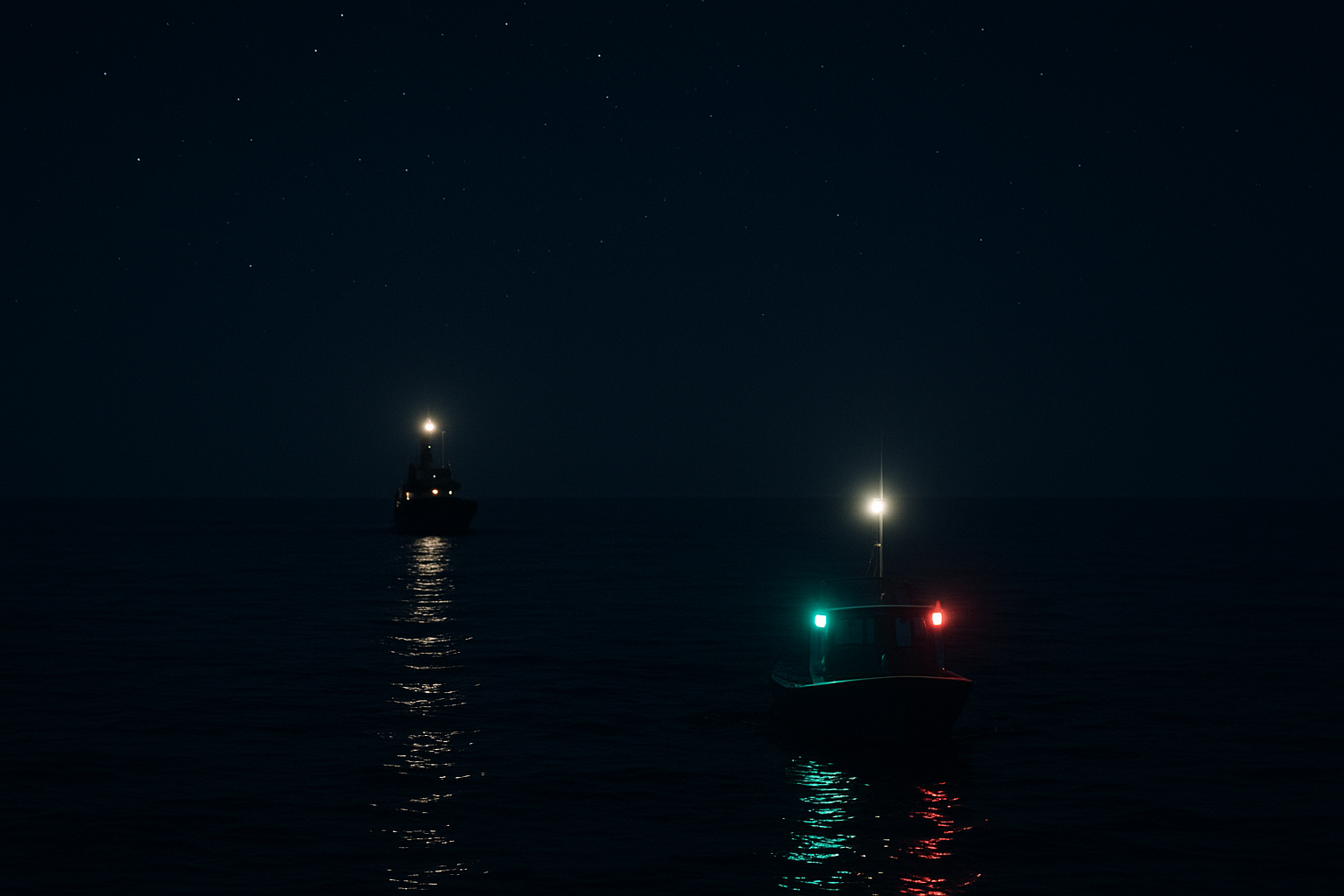
If you ever see both red and green at the same time with the red on your right, that boat is pointed directly at you and closing fast.
Judging direction and distance
Boat navigation lights explained in real-world terms come down to two things: brightness signals proximity, and the arc of visibility tells you the angle. A red or green sidelight that disappears as you watch means the other vessel is turning. Watch the lights for a few seconds before reacting, because a short observation tells you whether the situation is stable or changing rapidly.
When to turn lights on and common mistakes
Most boaters know they need lights at night, but the exact trigger point often gets misunderstood. The rule is clear: you must display proper navigation lights from sunset to sunrise and any time visibility drops, whether from fog, rain, or heavy cloud cover. Waiting until it is fully dark to switch your lights on is already too late under federal law.
The exact rule for when lights are required
Sunset is the legal cutoff, not darkness. If the sun has gone down and you are still on the water, your lights must be on. The same rule applies mid-afternoon if a storm rolls in and drops visibility significantly. With boat navigation lights explained this way, there is no gray area about timing: when in doubt, turn them on.
Turning your lights on early costs you nothing, but failing to have them on at the right moment can result in a Coast Guard citation or, far worse, a collision.
Mistakes boaters make with navigation lights
Several common errors show up repeatedly among recreational boaters. Running a stern light that faces forward, or mounting sidelights at the wrong height, sends incorrect signals to other vessels. Using a single all-round white light on a vessel that requires separate sidelights and a masthead light is another frequent violation. Check that every bulb works before you leave the dock, and verify that each light sits in its correct position for your vessel’s size and type.
Final safety check before you head out
With boat navigation lights explained from colors to configurations, you now have everything you need to stay legal and visible on the water. Before every trip, run a quick physical check of each light: turn them on at the dock, walk the full length of the boat, and confirm that every bulb works and faces the correct direction for your vessel type. Pay attention to your vessel’s specific size category because running the wrong configuration still counts as a violation even when some lights are functioning.
If you are heading out on the water around Destin and want a boat that is already rigged, inspected, and ready to go, book a rental or charter with Original Crab Island and let us handle the pre-trip setup. Our vessels meet all applicable Coast Guard lighting requirements so you can focus on enjoying the water instead of running through a checklist.