Planning to hit the water in Destin? Whether you’re renting a pontoon to cruise Crab Island or taking a jet ski out for some thrills, understanding Florida boating laws is essential before you cast off. These regulations exist to keep everyone safe on the water, and knowing them can save you from fines, accidents, or a ruined vacation day.
At Original Crab Island, we help thousands of visitors experience the Emerald Coast each year. We’ve seen firsthand how a little knowledge about age requirements, safety equipment, and alcohol rules can make the difference between a smooth trip and a stressful one. Florida takes boating safety seriously, with specific regulations covering everything from who can legally operate a vessel to what gear must be on board.
This guide breaks down what you need to know about Florida’s boating regulations, including boater education requirements, age restrictions, mandatory safety equipment, and the state’s strict rules about drinking while operating a boat. Whether you’re a first-time boater or a seasoned captain, understanding these laws will help you stay legal and safe on Florida waters.
What Florida boating laws cover and why they matter
Florida boating laws establish clear guidelines for operating any vessel on state waters, from small kayaks to large yachts. These regulations cover operator requirements, safety equipment, navigation rules, and alcohol restrictions. The Florida Fish and Wildlife Conservation Commission (FWC) enforces these laws across all waterways, including the Gulf of Mexico, bays, rivers, and inland lakes.
Core areas of regulation
You’ll find that Florida boating laws address four main categories that directly affect your time on the water. Education and licensing requirements determine who can legally operate different types of vessels based on age and training. Safety equipment standards specify exactly what gear you must carry on board for different boat sizes and uses. Navigation rules govern how you interact with other boats, swimmers, and wildlife, while alcohol and impairment laws set strict limits on operating under the influence.
Understanding these categories before you rent or operate a boat helps you avoid violations that can result in fines starting at $50 and going up to thousands of dollars for serious infractions.
Why compliance protects you
Following these regulations does more than keep you out of legal trouble. Proper safety equipment has saved countless lives during emergencies, engine failures, and unexpected weather changes on Florida waters. The state updates these laws regularly based on accident data and safety trends, meaning compliance reflects real-world lessons learned from past incidents. Law enforcement officers patrol popular areas like Crab Island heavily during peak season, and they check for violations during routine safety inspections. Knowing the rules before you head out means you can focus on enjoying your day instead of worrying about fines or having your trip cut short.
Boater education card rules and common exemptions
Florida requires most boaters to carry a Boating Safety Education ID Card, commonly called a boater education card, before operating any motorized vessel. You obtain this card by completing an approved boating safety course and passing the final exam. The card never expires and remains valid across all Florida waters, making it a one-time requirement that covers your entire boating career in the state.
Who needs a boater education card
Anyone born on or after January 1, 1988 must have a valid boater education card to operate a vessel with a motor of 10 horsepower or greater. This applies to all ages above the minimum operating requirements, meaning both teens and adults fall under this rule. The Florida Fish and Wildlife Conservation Commission approves several course providers, and you can complete the training online or in person. Most online courses take 2-3 hours to finish, and you receive your card within weeks of passing.
Florida boating laws make no exceptions for out-of-state residents, so even if you’re visiting from another state, you need this card if you were born after 1988.
Common exemptions that apply
You don’t need a boater education card if you’re operating on private property, such as a pond or lake entirely within privately owned land. Non-residents who have a valid boating license from their home state or country are also exempt. Additionally, anyone renting a boat from a licensed livery must only complete a safety checklist and receive basic instructions from the rental operator.
Age rules for boats and personal watercraft
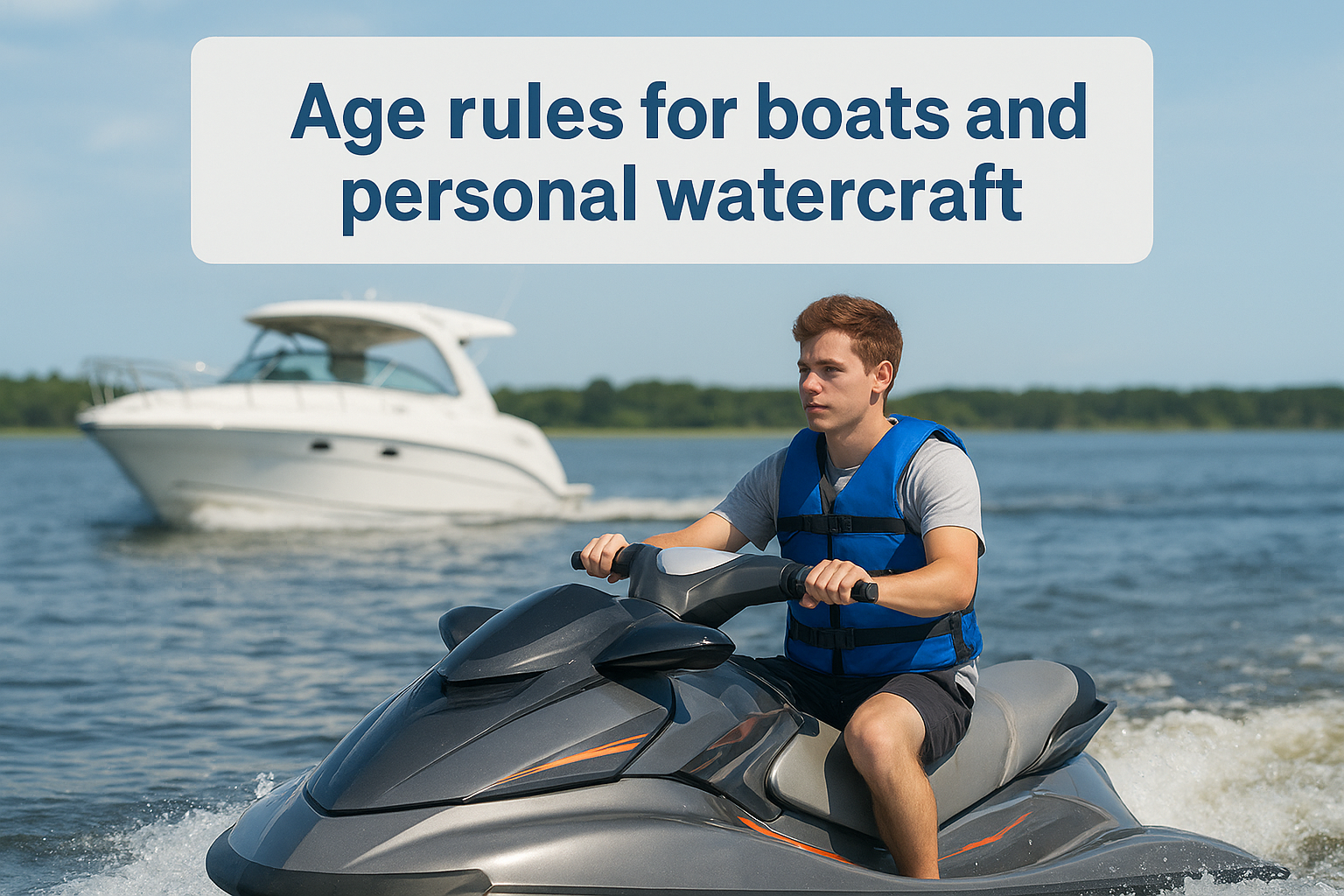
Florida sets specific age requirements for operating different types of vessels, and these rules vary based on whether you’re piloting a traditional boat or a personal watercraft like a jet ski. Understanding these age restrictions is critical because violating them results in fines and potentially having your vessel impounded. The state considers personal watercraft more dangerous than standard boats, which explains why stricter age limits apply to jet skis and similar craft.
Minimum age for operating vessels
You must be at least 14 years old to operate a motorized vessel without supervision in Florida. Anyone younger than 14 can operate a boat only if someone 18 or older who holds a boater education card directly supervises them. This supervisor must be physically present on the vessel and able to take immediate control if needed.
Florida boating laws enforce these age requirements strictly, and officers can request proof of age during safety inspections on the water.
Personal watercraft age restrictions
Operating a personal watercraft requires you to be at least 14 years old, but even at that age, you need direct supervision from someone 18 or older with a boater education card. Once you turn 18, you can operate a PWC independently as long as you have the required boater education card. The state applies these stricter rules because personal watercraft demand faster reaction times and present higher accident risks than traditional boats.
Required safety gear checklist for Florida boats
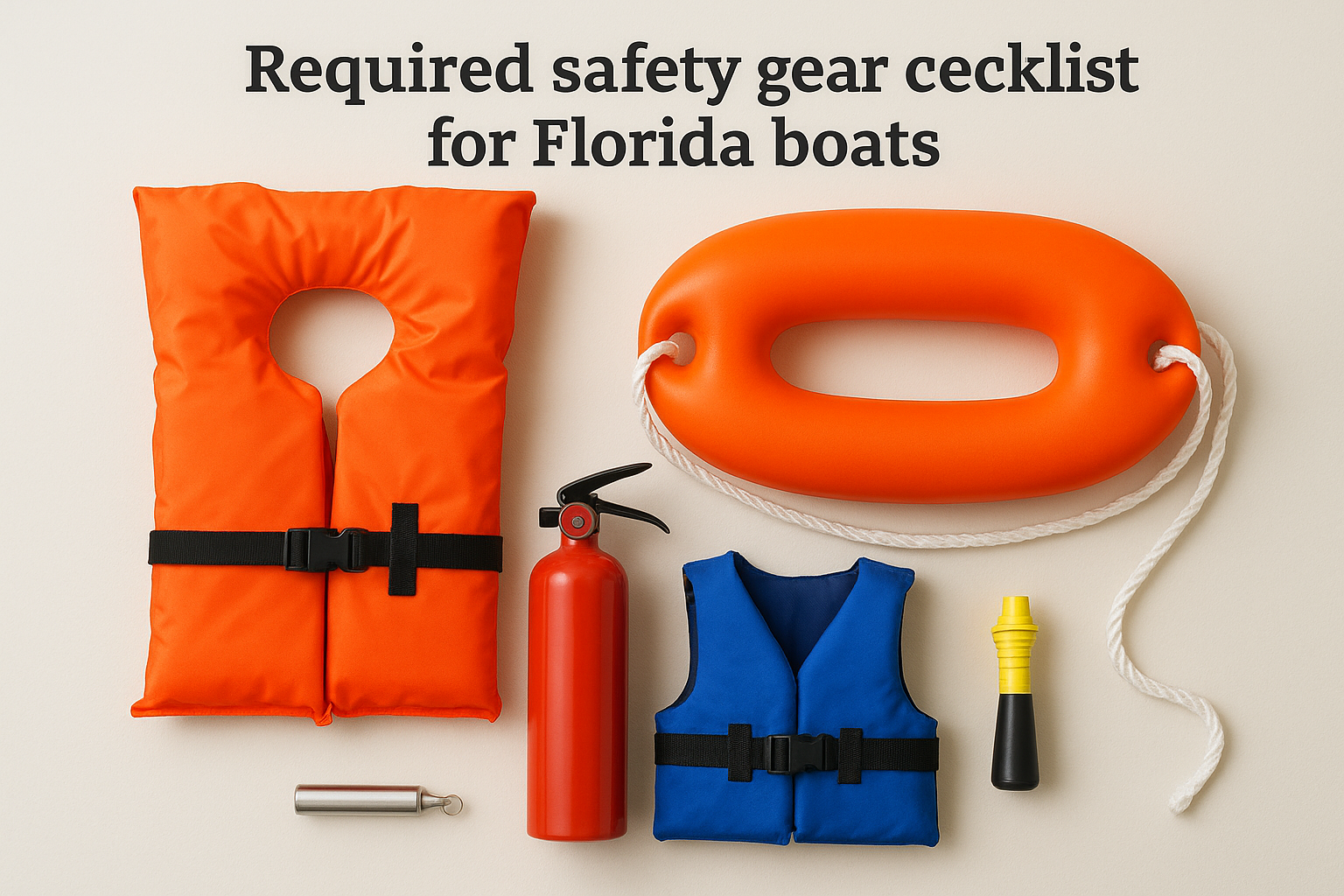
Every vessel operating in Florida waters must carry specific safety equipment based on its size and type. Florida boating laws mandate these items to handle emergencies, signal for help, and prevent accidents. Officers from the Florida Fish and Wildlife Conservation Commission conduct random safety inspections, and missing equipment results in fines and potential citations that can reach several hundred dollars.
Essential equipment for all vessels
Your boat must have a U.S. Coast Guard-approved personal flotation device (life jacket) for each person on board, regardless of the vessel’s size. These PFDs need to be the correct size for each passenger and in serviceable condition without rips, tears, or missing straps. You also need a sound-producing device like a whistle or horn that’s audible for at least half a mile. Fire extinguishers become mandatory for boats with enclosed engine compartments, permanent fuel tanks, or closed living spaces. Visual distress signals are required for boats operating in coastal waters beyond the inlet, and these can include flares, orange flags, or electric distress lights.
Carrying expired flares or damaged life jackets counts as not having the required equipment at all, so inspect your safety gear before every trip.
Additional requirements by boat length
Boats over 16 feet need a throwable flotation device like a ring buoy or cushion in addition to wearable life jackets. Navigation lights become mandatory for any vessel operating between sunset and sunrise or during reduced visibility.
Alcohol rules and boating under the influence in Florida
Florida treats boating under the influence (BUI) with the same seriousness as driving under the influence on roads. Operating any vessel while impaired by alcohol or drugs violates state law and carries severe penalties that can affect your driving privileges, not just your boating rights. The Florida Fish and Wildlife Conservation Commission actively patrols popular boating areas, especially during weekends and holidays when water traffic increases.
Legal limits and BUI charges
You face BUI charges if your blood alcohol concentration reaches 0.08% or higher while operating a vessel. Officers can also arrest you for BUI even below this limit if they observe impaired normal faculties like slurred speech, poor coordination, or unsafe boat handling. First-time BUI convictions result in fines up to $1,000 and possible jail time of six months. Second offenses within five years increase penalties to $2,000 in fines and nine months imprisonment.
Florida boating laws allow officers to conduct field sobriety tests on the water, and refusing these tests results in automatic suspension of your boating and driving privileges for one year.
Enforcement and open container rules
Unlike some states, Florida allows open containers of alcohol on boats as long as the operator remains sober. Passengers can legally drink while you’re operating the vessel. However, officers regularly stop boats for safety checks and can request sobriety tests if they suspect impairment based on your boat handling or behavior.
Quick wrap-up before you go
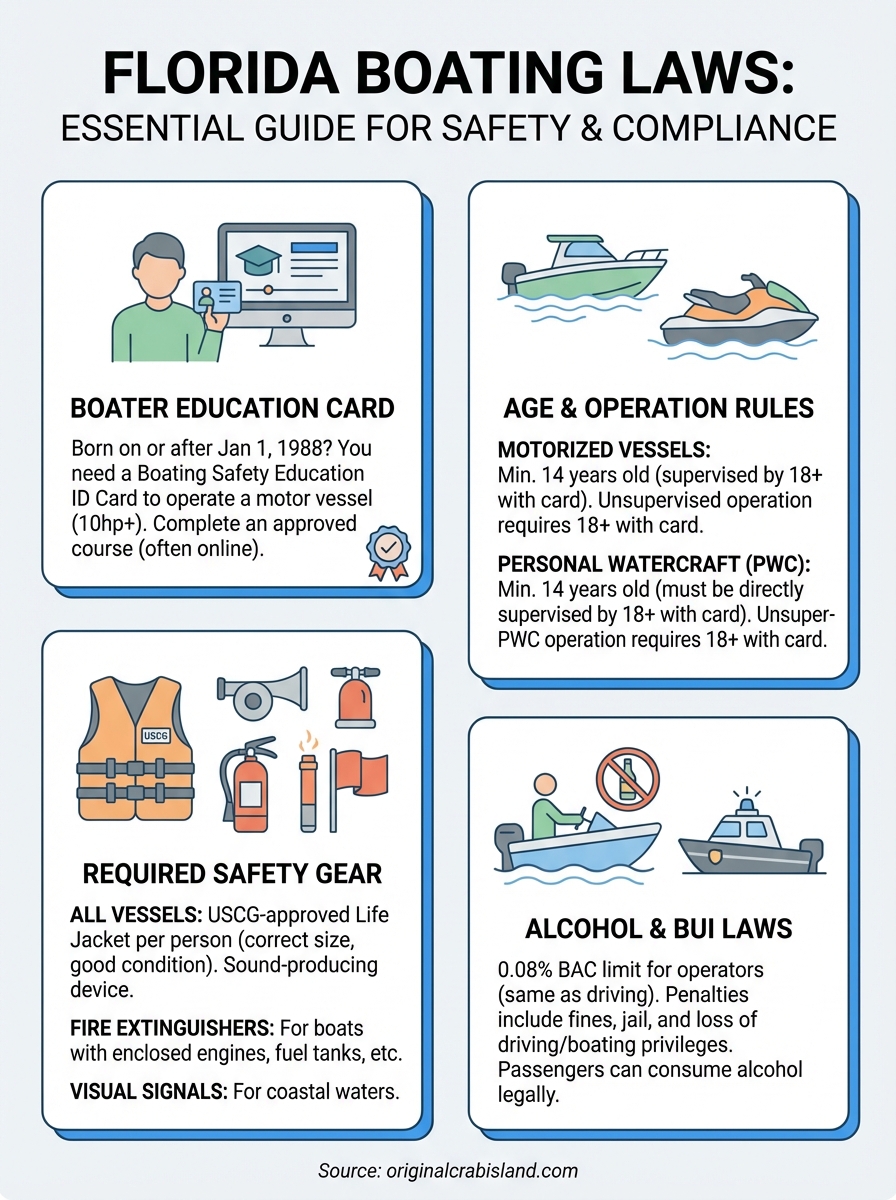
Understanding florida boating laws keeps you safe and helps you avoid fines that can reach hundreds or thousands of dollars. You need a boater education card if you were born after 1988, and you must be at least 14 to operate most vessels without direct supervision. Safety equipment requirements vary by boat size, but every vessel needs life jackets for each person, sound-producing devices, and often fire extinguishers. The state enforces a 0.08% blood alcohol limit for operators, with penalties that affect both boating and driving privileges.
These regulations exist because Florida waters see thousands of boaters daily, especially around popular destinations like Crab Island in Destin. Officers patrol regularly and conduct random safety checks, so keeping your required gear on board and staying sober protects you from citations and helps ensure everyone gets home safely after a day on the water.
Ready to experience the Emerald Coast with confidence? Original Crab Island provides all the equipment and guidance you need for a safe, legal, and memorable day exploring Florida’s beautiful waters.
Popular Crab Island Pages
- Crab Island Pontoon Rentals
- Crab Island Fishing Charters
- Crab Island Boat and Yacht Rentals
- Crab Island Parasailing
- Crab Island Jet Ski Rentals
- Crab Island Helicopter Rides
- Crab Island Snorkeling Tours
- Crab Island Paddleboard Rentals
- Crab Island Kayak Rentals
- Crab Island Bike Rentals
- Crab Island Shark Boat
- Crab Island Pirate Ship
- Crab Island Tiki Rentals
- Crab Island Snorkeling Tours


