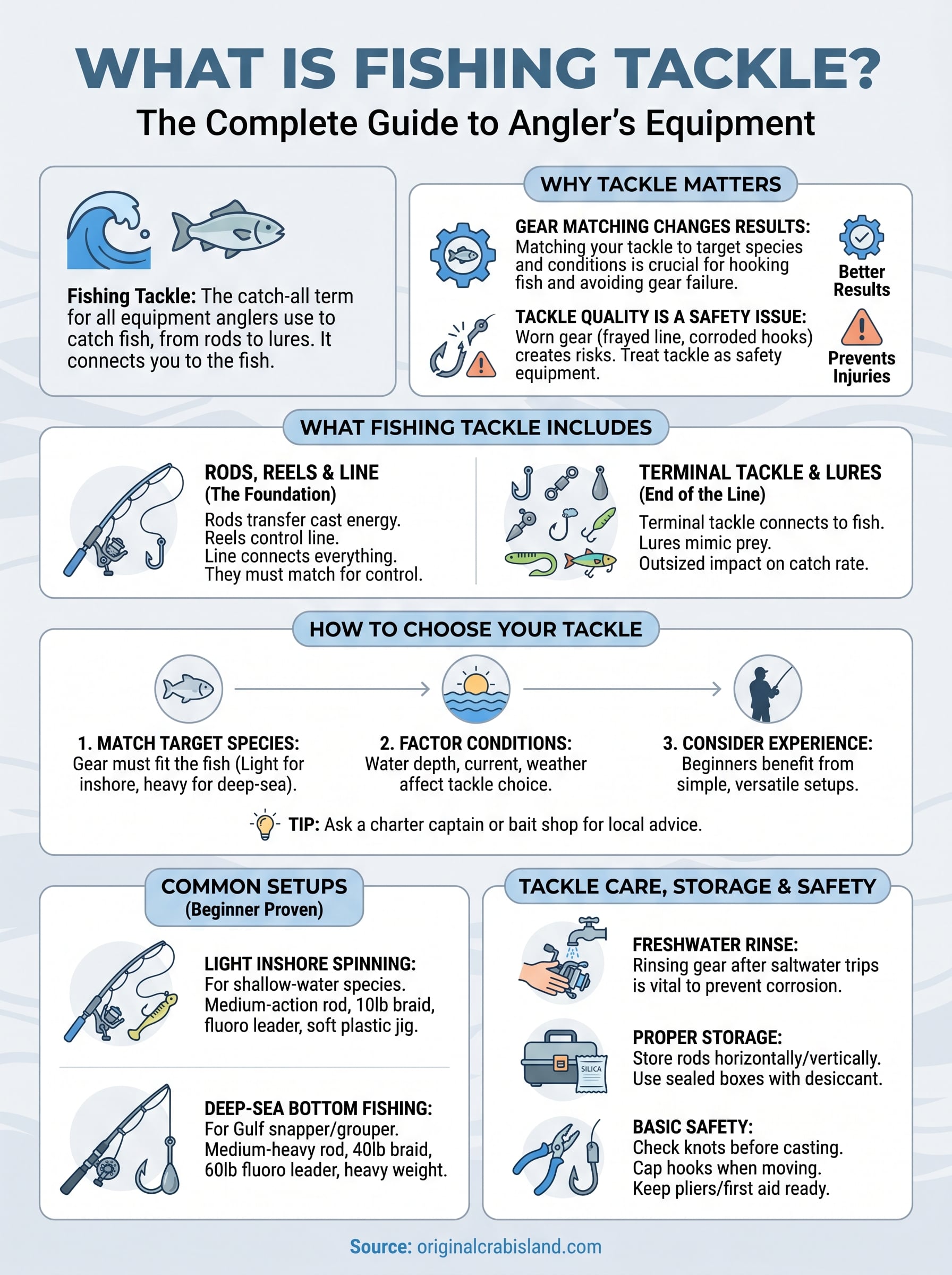
Whether you’re booking your first fishing charter out of Destin, Florida, or gearing up for a day on the Gulf, understanding what is fishing tackle makes a real difference. Fishing tackle is a catch-all term for the equipment anglers use to catch fish, rods, reels, hooks, lines, lures, sinkers, and everything in between. It’s the stuff that connects you to what’s swimming below the surface.
At Original Crab Island, we put guests on the water every day for guided deep-sea fishing trips in the Gulf of Mexico, so we see firsthand how the right tackle turns a slow afternoon into a cooler full of fish. Knowing what each piece does, and why it matters, helps you make smarter choices whether you’re shopping at a bait shop, packing for a trip, or stepping aboard one of our charters.
This article breaks down every major category of fishing tackle, from rods and reels to terminal tackle and electronics. By the end, you’ll have a clear understanding of the gear that makes fishing work and know exactly what to look for the next time you hit the water.
Why fishing tackle matters
Understanding what is fishing tackle goes beyond memorizing gear names. The equipment you choose directly affects how many fish you hook, how comfortable your time on the water feels, and whether your setup can handle the species you’re targeting. A mismatched rod and reel combination, the wrong line weight, or a hook that’s too large will cost you bites before you even make a second cast.
Gear matching changes your results
When your tackle matches the target species and fishing conditions, everything works together cleanly. A light spinning rod paired with a 6-pound monofilament line is perfect for smaller inshore fish like flounder or speckled trout. Put that same setup against a large amberjack in the Gulf of Mexico and the line snaps before you see the fish.
Matching your gear to the fish you’re after is the single most important decision you make before the first cast.
Experienced anglers and charter captains always start by thinking about the fish first, then building their tackle setup around it. This approach keeps you from wasting money on the wrong gear and keeps action moving throughout the day. On a deep-sea trip out of Destin, that alignment between gear and target is exactly why guided charters produce better results than most self-rigged trips.
Tackle quality is also a safety issue
Worn or low-quality tackle creates real safety risks that most beginners overlook. A frayed line can snap back at high speed. A corroded hook can bend under pressure and send a rigged bait flying toward someone’s face. Cheap swivels fail under tension and can cause sudden lurches that throw people off balance on a moving boat.
Checking your hooks, lines, and knots before every trip takes under five minutes and cuts those risks sharply. On a guided charter, your captain handles gear inspection before anyone boards. When you fish independently, that responsibility is yours. Treating your tackle as safety equipment, not just fishing equipment, keeps everyone on the water comfortable and protects the trip from avoidable problems.
What fishing tackle includes

When you break down what is fishing tackle, you’re looking at several distinct categories that each serve a specific function. Every piece of gear plays a role in delivering your bait or lure to the fish and getting it back to the boat.
Rods, reels, and line
Rods and reels form the foundation of any fishing setup. The rod transfers energy from your cast, while the reel controls how line pays out and retrieves. Your line connects everything and needs to match the rod’s power rating. Common choices include monofilament, fluorocarbon, and braided line, each with different stretch, visibility, and strength characteristics.
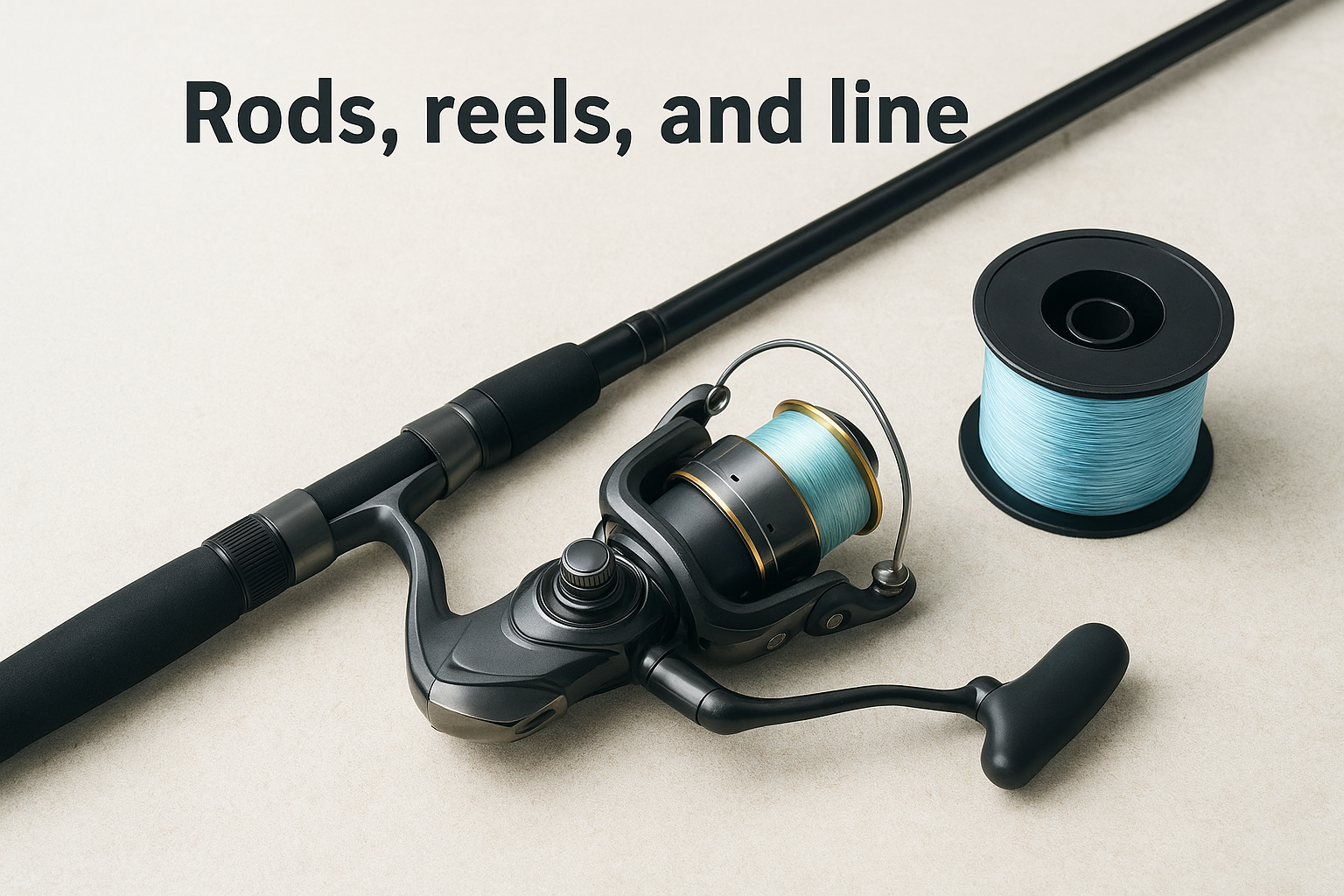
Matching your rod, reel, and line as a single system gives you far more control than buying each piece without thinking about how they work together.
Terminal tackle and lures
Terminal tackle refers to the components at the end of your line that make direct contact with the fish, including hooks, sinkers, swivels, and leaders. These small pieces have an outsized impact on your catch rate because they determine how your bait sits in the water and how well you set the hook.
Lures are artificial baits designed to mimic the movement or appearance of prey. Soft plastics, hard-bodied plugs, jigs, and spinnerbaits each work best in specific conditions and for specific species. Knowing which lure to use for Gulf fishing versus inshore work keeps your line in the productive zone longer.
How to choose fishing tackle for your trip
Choosing the right gear starts with knowing what you’re after. Once you understand what is fishing tackle and how each piece functions, narrowing down your choices becomes much simpler. Your target species, location, and experience level all point you toward specific rod weights, line strengths, and lure types before you spend a dollar. Starting with those three factors keeps you from buying gear that works against your plans.
The clearest shortcut to choosing tackle is asking your charter captain or local bait shop what’s working right now for the species you want to catch.
Match gear to your target species
Every fish species responds to different presentations, which means your tackle needs to fit the fish, not just your budget. Inshore fishing for redfish or snook calls for lighter rods, smaller hooks, and natural baits or soft plastics. Deep-sea trips in the Gulf require heavy conventional rods, thick braided line, and large circle hooks that can handle the pressure of fighting a big fish at depth.
Factor in conditions and experience level
Water depth, current speed, and weather all affect which tackle performs well on a given day. Beginners benefit most from simple, versatile setups like a medium-action spinning rod with 10- to 15-pound monofilament, which handles a wide range of conditions without requiring advanced casting technique. If you book a guided charter out of Destin, your captain supplies the gear, so you can focus on learning rather than shopping.
Common tackle setups beginners can copy
Once you understand what is fishing tackle and how each piece connects, the next step is putting together a setup that actually works. Copying a proven combination saves you time and keeps you from making expensive mistakes before you’ve had a chance to develop your own preferences on the water.
Light inshore spinning setup
This setup handles most shallow-water species you’ll encounter along the Emerald Coast, including flounder, speckled trout, and smaller redfish. Start with a 7-foot medium-action spinning rod paired with a 2500-series spinning reel. Spool it with 10-pound braided line and attach a short fluorocarbon leader of around 12 to 15 pounds. Clip on a 1/4-ounce jig head with a soft plastic paddle tail, and you’re ready for most inshore conditions.
This three-piece combination of braided main line, fluorocarbon leader, and soft plastic lure covers more inshore situations than any other beginner setup.
Deep-sea bottom fishing setup
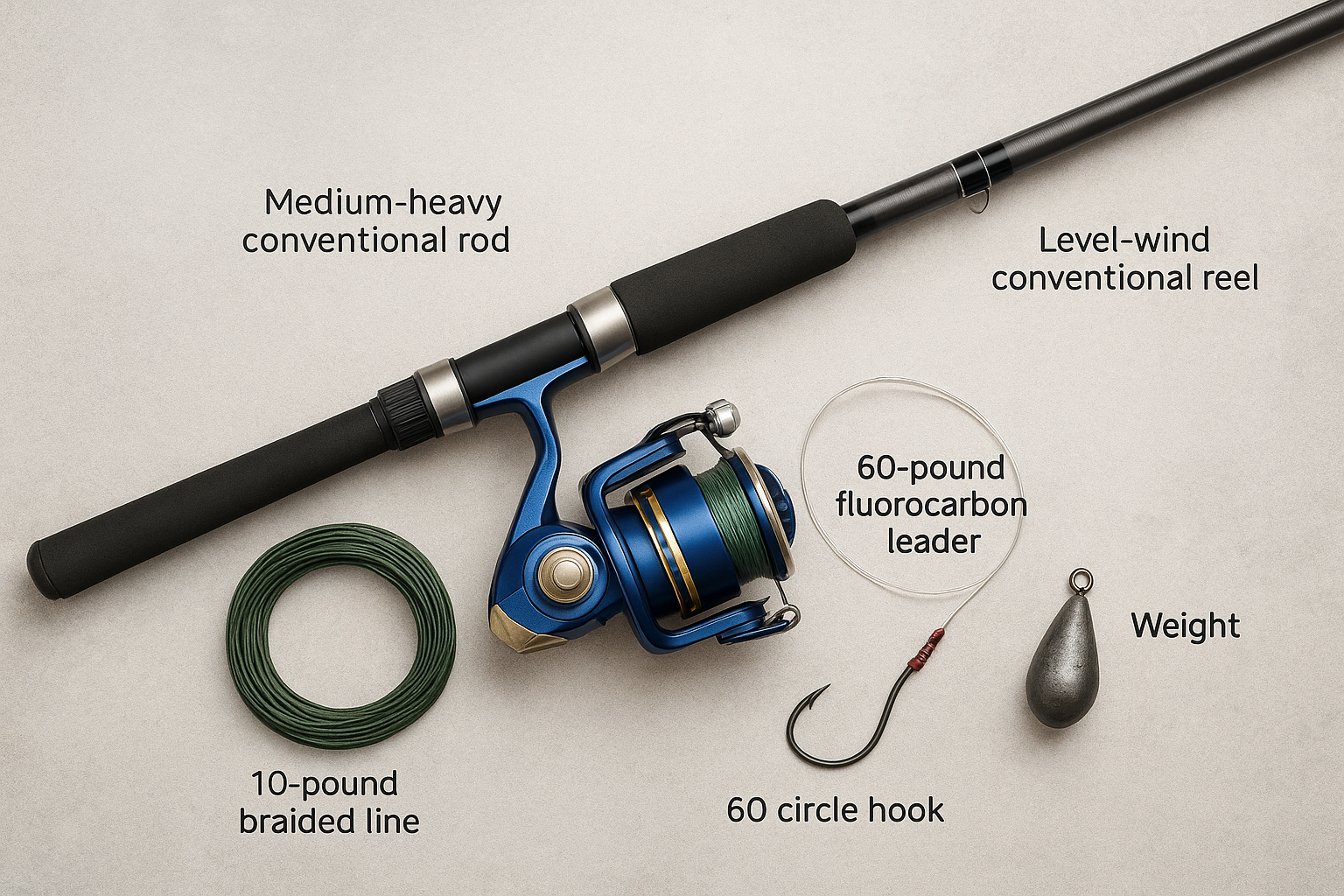
Offshore fishing out of Destin requires heavier gear built to handle depth, current, and larger fish. Use a medium-heavy conventional rod rated for 30 to 50 pounds, paired with a level-wind conventional reel loaded with 40-pound braided line. Add a 60-pound fluorocarbon leader, a 6/0 circle hook, and enough weight to keep your bait on the bottom. This rig works well for snapper and grouper, which are common targets on Gulf charters throughout the season.
Tackle care, storage, and basic safety
Part of understanding what is fishing tackle is knowing how to maintain it between trips. Salt water, UV exposure, and heat break down gear faster than most beginners expect, and ignoring basic care shortens the life of equipment you’ve invested real money in. Rinsing your rods, reels, and terminal tackle with fresh water after every saltwater outing takes a few minutes and prevents the corrosion that quietly destroys metal components.
A quick freshwater rinse after every saltwater trip is the single most effective habit you can build to extend the life of your tackle.
Storing gear the right way
Proper storage protects your investment and keeps your tackle ready to fish without last-minute repairs. Store rods horizontally or hang them vertically to prevent warping. Keep hooks, jigs, and soft plastics in a sealed tackle box away from direct sunlight, which dries out soft baits and weakens plastic components over time.
Placing a small silica gel packet inside your tackle box absorbs moisture and reduces rust forming on hooks and split rings. Organizing your gear by type also saves time on the water when conditions shift quickly and you need to swap rigs fast.
Basic safety habits on the water
Hooks cause the most common fishing injuries, and most of them are preventable. Always cap your hooks or close treble hooks into a soft plastic when moving around the boat. Check your knots before every cast, since a poorly tied knot fails under pressure and sends terminal tackle flying toward anyone nearby. Keep pliers and a basic first aid kit within reach at all times.
Ready to get on the water
Now that you know what is fishing tackle and how each component fits together, you’re in a much better position to fish with confidence. The right rod, reel, line, and terminal setup won’t guarantee a catch, but they give you a real edge and keep the experience enjoyable from the first cast to the last.
If you’re heading to Destin and want to skip the gear research entirely, a guided fishing charter puts you on the Gulf with professional-grade equipment and a captain who knows exactly where the fish are running. You focus on fishing while the experts handle everything else.
Crab Island and the surrounding Gulf waters offer some of the best fishing on the Emerald Coast, and getting there is easier than you think. Book your trip directly through Original Crab Island and spend less time planning and more time pulling fish over the rail.
Popular Crab Island Pages
- Crab Island Pontoon Rentals
- Crab Island Fishing Charters
- Crab Island Boat and Yacht Rentals
- Crab Island Parasailing
- Crab Island Jet Ski Rentals
- Crab Island Helicopter Rides
- Crab Island Snorkeling Tours
- Crab Island Paddleboard Rentals
- Crab Island Kayak Rentals
- Crab Island Bike Rentals
- Crab Island Shark Boat
- Crab Island Pirate Ship
- Crab Island Tiki Rentals
- Crab Island Snorkeling Tours