
Destin’s shallow saltwater flats offer some of the most rewarding fishing experiences along Florida’s Emerald Coast. Mastering flats fishing techniques requires a different approach than traditional deep-sea angling, here, stealth, precision casting, and reading the water become your most valuable skills. Whether you’re stalking redfish through crystal-clear shallows or targeting speckled trout near grass beds, the learning curve rewards patience and the right guidance.
At Original Crab Island, we’ve helped countless beginners navigate their first flats fishing adventures in Destin’s waters. Through our fishing charters and years on the water, we’ve seen firsthand what separates a frustrating day from a successful outing. This guide breaks down the essential techniques you need, from proper gear positioning to bait selection strategies that actually produce results in our local flats.
By the end of this article, you’ll understand how to approach shallow water fishing with confidence and sidestep the mistakes that send fish scattering. You’ll walk away with actionable strategies for stealth, casting, and reading conditions, everything you need to start catching fish consistently in Destin’s stunning flats.
Know Destin flats before you go
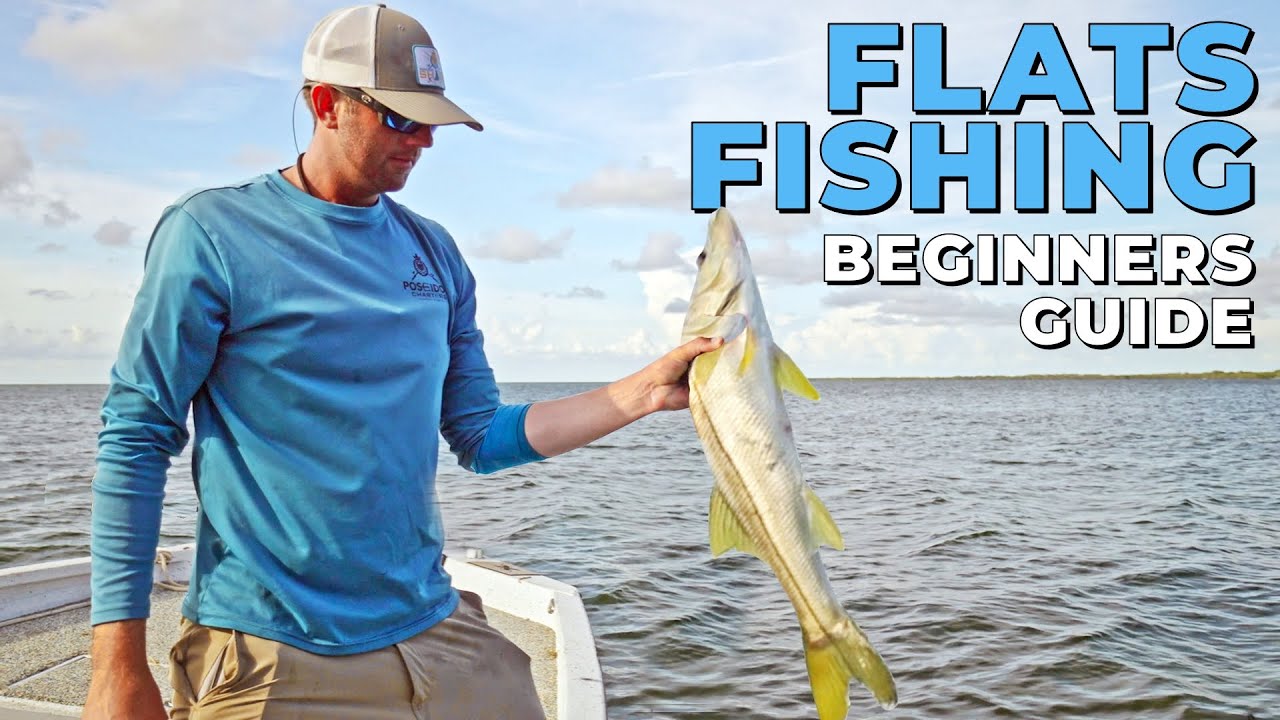
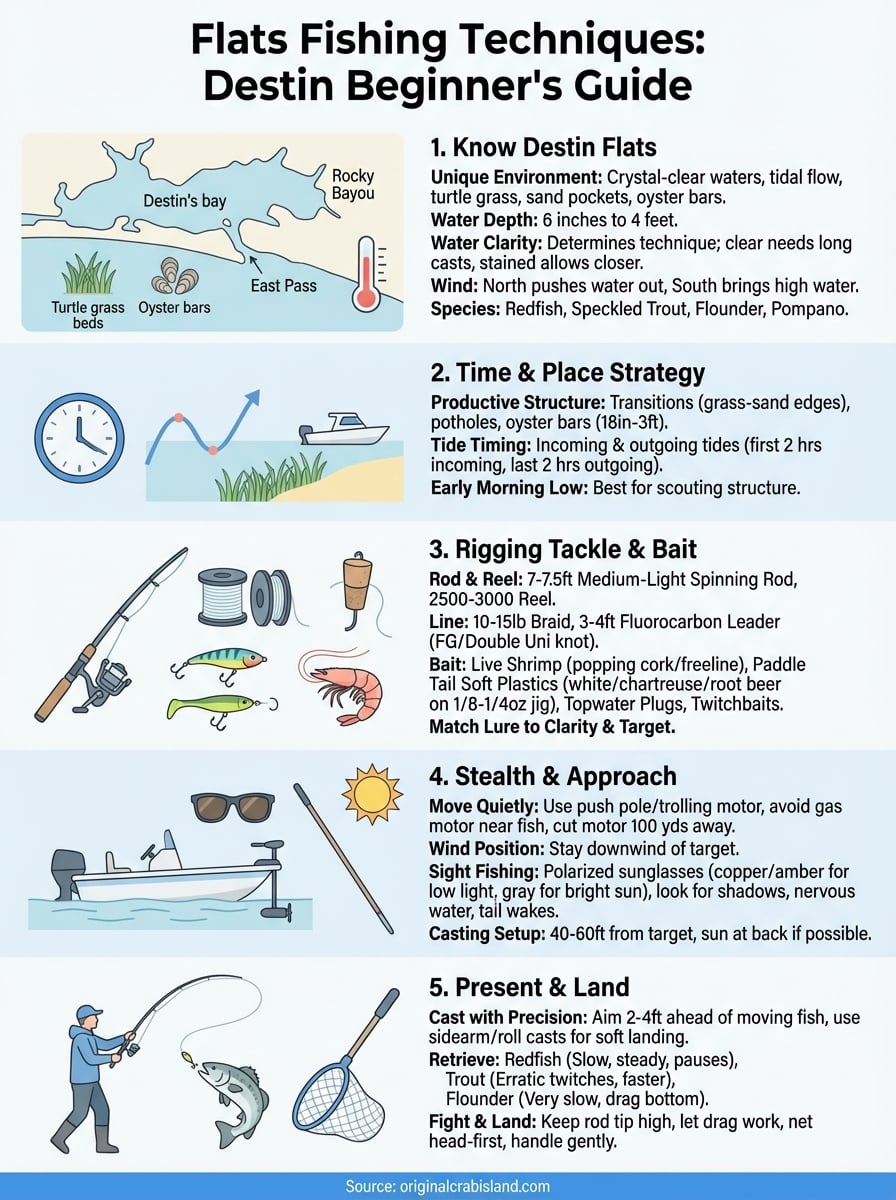
Destin’s flats fishing environment differs significantly from other coastal areas, and understanding these local characteristics sets you up for success before you even step onto a boat. The flats around Destin stretch across Choctawhatchee Bay and East Pass, where water depths range from six inches to four feet depending on tide conditions. You’ll find yourself fishing over grass beds, sand patches, oyster bars, and mixed bottom structures that each hold different species at different times.
What makes Destin flats unique
Destin’s flats benefit from the crystal-clear emerald waters that give this coast its name, allowing you to sight-fish more effectively than in many other Gulf locations. The tidal flow through East Pass brings baitfish and nutrients into the bay system, creating feeding opportunities that concentrate game fish in predictable zones. You’ll encounter calmer conditions here compared to open Gulf fishing, but wind still plays a major role in water clarity and fish behavior.
The most productive flats sit within Choctawhatchee Bay’s northern shoreline, particularly around Rocky Bayou, Turkey Cove, and the areas near Fort Walton Beach. These zones feature turtle grass beds that attract baitfish, creating natural ambush points for predators. Sandy pockets between grass beds serve as highways where fish travel, and learning to identify these transition zones separates productive anglers from those who struggle.
Understanding your local flat’s structure and how tides affect fish movement gives you a strategic advantage before you make your first cast.
Reading water conditions
Water clarity determines which flats fishing techniques you’ll use on any given day. Clear water demands longer casts and more cautious approaches, while slightly stained water allows you to get closer to your targets. You should check conditions at the boat ramp before heading out, looking for visibility of at least two to three feet for optimal sight fishing opportunities.
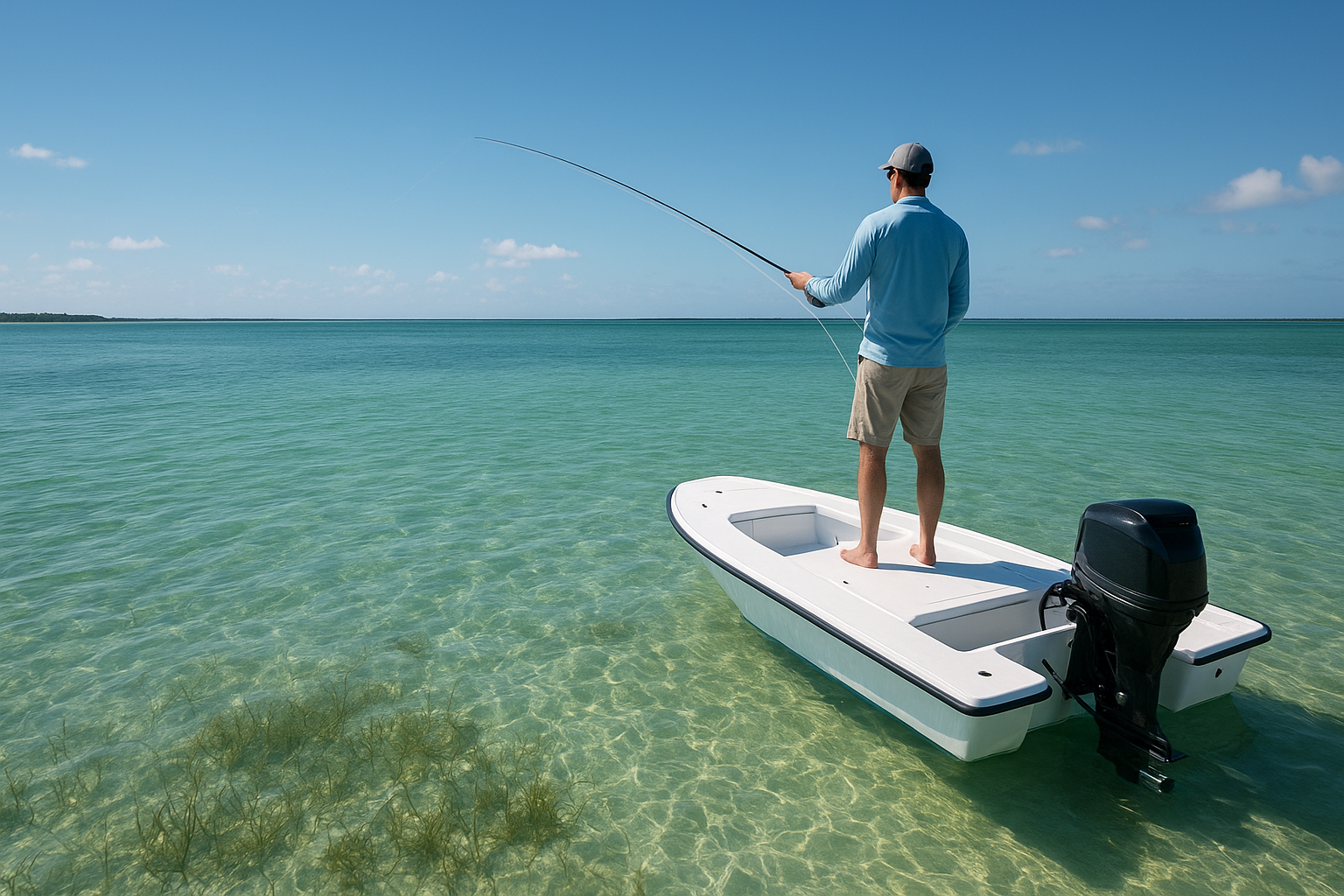
Depth changes signal structure even when you can’t see bottom features clearly. Watch for color variations in the water, darker patches indicate deeper holes or grass beds, while lighter areas reveal sand flats or shallow bars. Wind direction affects which flats fish comfortably, a north wind pushes water out and exposes more bottom structure, while south winds bring higher water levels into the bay.
Common species you’ll target
Redfish dominate Destin’s flats from spring through fall, with fish ranging from slot-sized 18 to 27 inchers to oversized bulls in the 30-plus-inch range. These fish cruise grass edges and oyster bars, feeding on crabs, shrimp, and small baitfish. You’ll spot them by their bronze backs and distinctive black tail spots when conditions allow sight fishing.
Speckled trout hold in slightly deeper pockets and along drop-offs where grass meets sand. These fish prefer cooler water temperatures and feed actively during early morning and late afternoon periods. During summer months, you’ll find them in three to four feet of water, while winter pushes them to deeper channels.
Flounder and pompano round out your target list on Destin flats. Flounder lay camouflaged on sandy bottom, waiting to ambush passing prey, while pompano cruise sand bars in small schools, particularly during their spring and fall migrations. Each species requires different presentation methods, so knowing what you’re targeting shapes your entire approach to tackle selection and retrieval techniques.
Step 1. Pick the right flat and fish the right tide
Your success in flats fishing techniques starts with choosing the right location and timing your trip around tidal movements. Many beginners make the mistake of fishing any flat at any time, but game fish concentrate in specific zones based on water depth and current flow. You’ll waste hours on unproductive water if you don’t match your location to the tidal stage.
Choose productive flat structure
You should target flats that offer multiple depth zones within a small area. Look for transitions between grass beds and sand pockets, where predators wait to ambush baitfish moving between structures. These edge zones concentrate fish because they provide both cover and feeding opportunities in a compact space.
Rocky Bayou and the northern shoreline of Choctawhatchee Bay offer prime examples of productive structure. You’ll find grass flats ranging from one to three feet deep, with deeper potholes that hold fish during low tide periods. Sandy channels cutting through grass beds create natural highways where redfish and trout travel as they feed.
Productive flats combine shallow feeding areas with nearby deep water refuge, allowing fish to move freely based on tide and temperature changes.
Oyster bars add another productive element to target. These structures sit in 18 inches to three feet of water and attract baitfish seeking shelter in the rough bottom. Position yourself to cast toward the edges of oyster bars during rising tides, when game fish move up to feed on crabs and shrimp dislodged by current.
Time your fishing with tides
You’ll catch more fish by fishing incoming and outgoing tides rather than slack periods. Moving water activates baitfish and triggers feeding behavior in predators. Plan your trips around the first two hours of incoming tide or the last two hours of outgoing tide for peak activity.
Different tidal stages require different approaches:
| Tide Stage | Target Depth | Best Technique |
|---|---|---|
| Low incoming | 1-2 feet | Fish edges of deeper potholes |
| Mid incoming | 2-3 feet | Work grass bed perimeters |
| High slack | 3-4 feet | Focus on channels and drop-offs |
| High outgoing | 2-3 feet | Cast to structure edges |
| Low slack | 1-2 feet | Target deeper holes only |
Early morning low tides expose bottom structure, helping you identify productive zones to fish when water returns. Mark these spots with your GPS or visual references on shore, then return during mid-rising tide when fish push onto the flats to feed. This scouting approach eliminates guesswork and puts you on fish consistently.
Step 2. Rig the right tackle, bait, and lures
Your tackle setup determines whether you’ll land fish or lose them in the grass. Flats fishing techniques demand lighter gear than offshore work, allowing you to make accurate casts while maintaining sensitivity to detect subtle strikes. You need equipment that balances casting distance with stealth, because spooking fish in shallow water ends your opportunity before it begins.
Select the proper rod and reel setup
You should use a 7 to 7.5-foot medium-light spinning rod paired with a 2500 to 3000 series reel for most Destin flats situations. This combination lets you cast lightweight lures 40 to 60 feet while maintaining control in windy conditions. Spool your reel with 10 to 15-pound braided line connected to a 20-pound fluorocarbon leader through an FG knot or double uni knot.
The fluorocarbon leader matters more than many beginners realize. Braided line offers no stretch and high visibility in clear water, making fish wary. Your three to four-foot fluorocarbon leader provides near-invisibility underwater and slight stretch that prevents hook pulls during aggressive strikes. Replace leaders after catching fish or detecting abrasion from oyster bars and grass.
Proper line-to-leader connections prevent break-offs when fish run through structure, so practice your knots before you hit the water.
Choose effective bait options
Live shrimp produces consistent results across all target species in Destin’s flats. You’ll rig them under a popping cork in two to three feet of water or free-line them in shallower zones. Hook shrimp through the horn (between the eyes) for natural presentation, allowing them to swim freely and attract predators.
Artificial soft plastics give you versatility when live bait runs out. Paddle tail shrimp imitations in white, chartreuse, or root beer colors match the forage base on most flats. Rig these on 1/8 to 1/4-ounce jig heads, adjusting weight based on water depth and current strength. Lighter jigs work better in calm, shallow water, while heavier options help you reach bottom in deeper pockets.
Match lures to conditions
Your lure selection changes based on water clarity and target species. Use this guide to match conditions:
| Water Clarity | Best Lure Type | Recommended Colors |
|---|---|---|
| Crystal clear | Topwater plugs | Natural silver, white |
| Slightly stained | Suspending twitchbaits | Chartreuse, pearl |
| Murky | Loud rattling jigs | Bright orange, pink |
Topwater lures excel during early morning when fish feed aggressively in six inches to two feet of water. Walk-the-dog style plugs create surface disturbance that triggers reaction strikes from redfish and trout. Work these lures with sharp twitches, pausing two to three seconds between movements to let fish track and attack.
Step 3. Move quiet, spot fish, and set up the shot
Stealth separates successful flats anglers from those who watch fish scatter before casting. You need to control noise, minimize movement, and position yourself strategically before fish detect your presence. These flats fishing techniques require patience and precise execution, but they dramatically increase your hookup rate in shallow water.
Approach with stealth
You should use a push pole or electric trolling motor when entering productive flats, never a gas motor that sends vibrations through shallow water. Cut your motor at least 100 yards from your target zone and coast or pole into position. Fish detect hull slaps and gear rattles from surprising distances, so secure loose items and move deliberately.
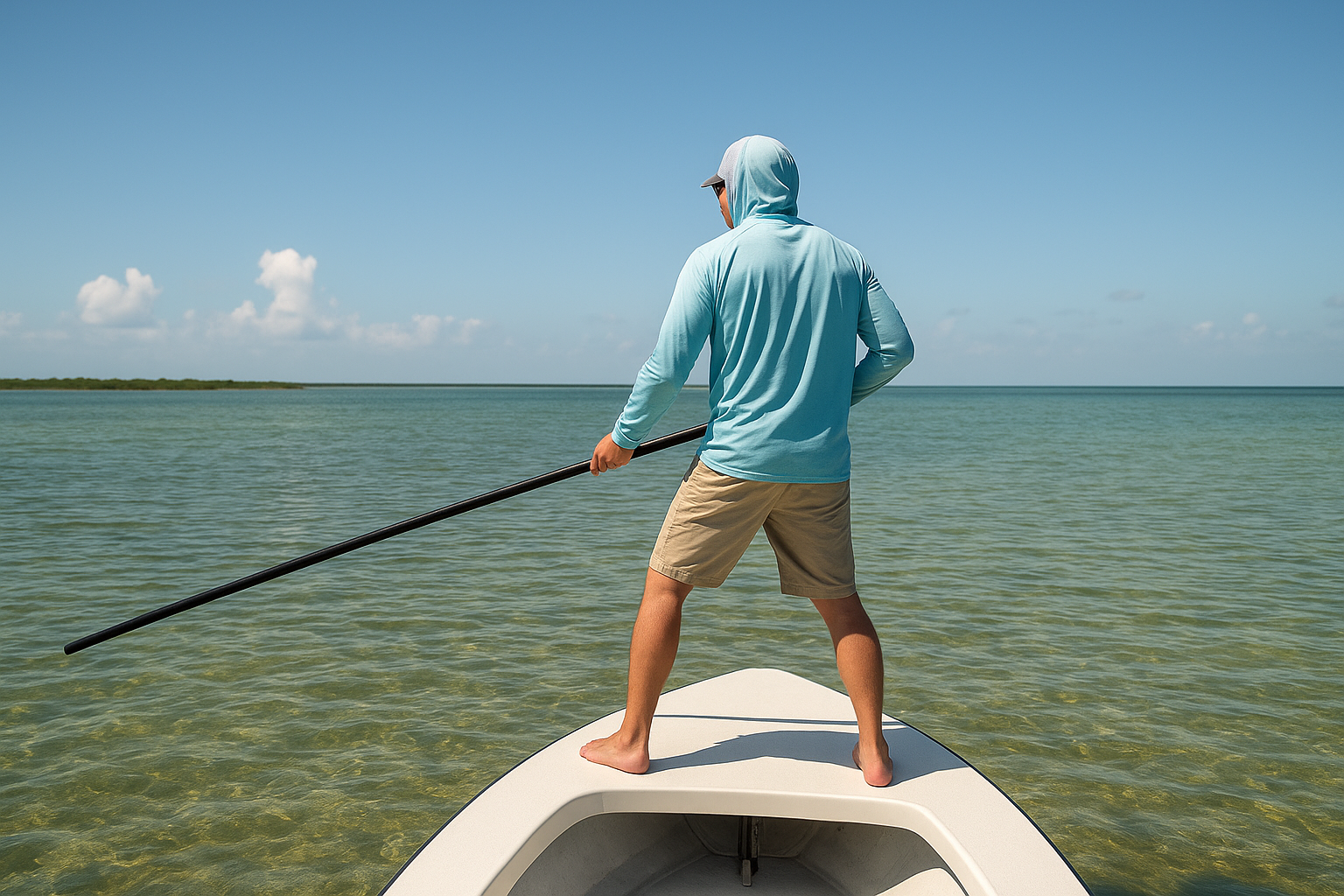
Wind direction determines your approach angle. Position yourself downwind of your target area so you drift naturally toward feeding zones without creating unnatural wakes. This technique lets you cover water silently while maintaining boat control for accurate casts. Avoid walking around in your boat, each footfall transmits through the hull and alerts nearby fish.
Silent approaches put you within casting range before fish know you exist, turning impossible shots into easy presentations.
Spot fish effectively
Polarized sunglasses become your most valuable tool for sight fishing. You’ll cut surface glare and see fish holding two to three feet below the surface in clear conditions. Choose copper or amber lenses for low light periods and gray lenses for bright midday sun. Position the sun at your back when possible, illuminating fish while keeping your silhouette less visible.
Look for shadows, nervous water, and tail wakes rather than entire fish bodies. Redfish tails break the surface when they feed head-down in shallow water, creating obvious targets. Trout push small wakes when cruising grass edges. You’ll spot these movement patterns before seeing the fish themselves, giving you time to prepare your cast.
Position for the cast
You need to set up 40 to 60 feet from your target with clear casting lanes between you and the fish. Account for wind drift by positioning slightly upwind, allowing natural drift to bring you into range. This approach keeps you moving naturally rather than fighting current and creating disturbance.
Calculate your casting angle based on fish direction. Lead moving fish by three to five feet, placing your lure in their path rather than directly at them. Fish traveling left to right require different timing than those moving toward you. Practice these angles before your trip, because hesitation costs opportunities when fish appear suddenly in shallow water.
Step 4. Present well, retrieve right, and land fish
Your presentation determines whether fish strike or ignore your offering. You need to land your lure softly within the strike zone and retrieve it naturally to trigger feeding responses. These final flats fishing techniques separate hookups from refusals, so execute each cast with precision and adjust your retrieve based on fish behavior.
Cast with precision
You should aim to place your lure two to four feet ahead of moving fish, allowing them to intercept it naturally during their travel path. Overhead casts create loud splashes that spook shallow water fish, so use sidearm or roll casts that deliver lures with minimal disturbance. Practice these casting styles at home before your trip, building muscle memory that eliminates hesitation when opportunities appear.
Casting accuracy matters more than distance in flats fishing. You’ll succeed by putting lures in six-inch target zones at 40 feet rather than bombing 80-foot casts that land nowhere productive. Watch your backcast to avoid snagging grass or hitting structure behind you. One clean, accurate cast beats three sloppy attempts that alert every fish in the area.
Soft presentations and accurate placement give fish confidence to strike, while loud splashes and poor timing send them fleeing to deeper water.
Match retrieve to target species
Your retrieve speed and pattern change based on what you’re targeting. Redfish respond to slow, steady retrieves with occasional pauses, mimicking wounded baitfish or crabs moving across bottom structure. Twitch soft plastics every three to four seconds, then pause for two seconds before resuming movement. This stop-and-go rhythm triggers aggressive strikes.
Trout prefer faster retrieves with erratic movements that imitate fleeing shrimp. Work your lure with sharp twitches and quick retrieves through the first 10 feet, then slow down as it enters deeper water. Topwater lures need walk-the-dog action created by rhythmic rod tip movements, producing side-to-side motion that imitates struggling baitfish.
| Target Species | Retrieve Speed | Best Pattern |
|---|---|---|
| Redfish | Slow, deliberate | Pause every 3-4 seconds |
| Speckled Trout | Medium-fast | Erratic twitches, steady pull |
| Flounder | Very slow | Drag bottom, long pauses |
Fight and land fish correctly
You need to keep rod tip high and maintain pressure once fish strike, preventing them from diving into grass or structure. Let your drag do the work rather than horsing fish toward the boat. Redfish make powerful runs, so allow line to peel while keeping steady tension that tires them without breaking your leader.
Net fish head-first in shallow water, scooping from behind gives them leverage to escape. Keep fish in the water during photos and handle them minimally to ensure healthy releases. Grip redfish by the lower jaw or support their belly, avoiding gill plates that damage easily and reduce survival rates.
Wrap-up and next steps
You’ve now learned the essential flats fishing techniques that produce consistent results in Destin’s shallow waters. From selecting productive flats and timing your trips around optimal tidal windows to rigging proper tackle and executing stealthy approaches, each step builds toward more hookups and fewer missed opportunities. These fundamentals give you the foundation to develop your skills through practice and observation on the water.
Start your flats fishing journey by booking time on Destin’s productive waters during incoming or outgoing tides. Focus on mastering one or two techniques during each outing rather than trying everything simultaneously. You’ll build confidence faster by perfecting your casting accuracy and retrieve patterns before adding complexity to your presentations and approaches.
Ready to experience Destin’s incredible flats fishing firsthand with expert guidance? Original Crab Island offers guided fishing charters that put you on productive flats with experienced captains who know these waters intimately. Book your charter today and turn these techniques into tangible results with professional guidance and top-notch equipment. For more options, explore our Destin pontoon rentals page. For more options, explore our Deep sea fishing Destin page. For more options, explore our our rentals page.
Popular Crab Island Pages
- Crab Island Pontoon Rentals
- Crab Island Fishing Charters
- Crab Island Boat and Yacht Rentals
- Crab Island Parasailing
- Crab Island Jet Ski Rentals
- Crab Island Helicopter Rides
- Crab Island Snorkeling Tours
- Crab Island Paddleboard Rentals
- Crab Island Kayak Rentals
- Crab Island Bike Rentals
- Crab Island Shark Boat
- Crab Island Pirate Ship
- Crab Island Tiki Rentals
- Crab Island Snorkeling Tours


