Whether you’re renting a pontoon boat to cruise Crab Island or taking jet skis out on the Emerald Coast, understanding Florida life jacket laws is essential before you hit the water. These regulations aren’t just bureaucratic requirements, they’re designed to keep you, your family, and your crew safe during every outing.
Florida law sets specific rules based on vessel type, passenger age, and the activities you’re doing. Get it wrong, and you’re looking at fines or citations from the Florida Fish and Wildlife Conservation Commission. Get it right, and you can focus on what matters: enjoying the water without worry.
This guide breaks down everything you need to know, from age requirements for children to the differences between boats, kayaks, and personal watercraft. We’ll cover what equipment you must have on board, who needs to wear a life jacket at all times, and how to stay compliant while making the most of your time on Florida’s waters.
Why Florida life jacket laws matter
Florida’s waterways attract over 1 million registered vessels and countless visitors each year, making it one of the nation’s busiest recreational boating destinations. With that activity comes risk: drowning remains the leading cause of death in recreational boating accidents across the state. Florida life jacket laws exist to reduce these preventable fatalities, and they apply to every vessel on the water, from kayaks to luxury yachts.
Understanding these regulations protects you from more than just legal trouble. Personal flotation devices (PFDs) give you a fighting chance in unexpected situations, whether you’re caught in a sudden storm, dealing with engine failure, or responding to a medical emergency on board. When accidents happen on the water, they happen fast, and you won’t have time to search for equipment or read instructions.
Wearing a properly fitted life jacket reduces your drowning risk by 85%, according to U.S. Coast Guard data.
The real cost of non-compliance
Citations for violating Florida’s PFD requirements start at $50 but can climb much higher depending on the circumstances. If law enforcement finds you operating a vessel without the required number of life jackets, or if a child under six isn’t wearing one, you’ll receive a non-criminal infraction with mandatory fines. These violations go on your boating record and can complicate future vessel registrations or insurance applications.
Beyond the immediate financial penalty, non-compliance puts your entire group at risk during inspections. Florida Fish and Wildlife Conservation Commission officers conduct random safety checks throughout the year, especially during peak boating season. They can require you to return to shore immediately if you’re not carrying the proper equipment, cutting your day short and creating an embarrassing situation for everyone on board.
Beyond the law: safety statistics that matter
Florida consistently ranks in the top three states for boating accidents nationwide, with drowning accounting for the majority of fatalities. In incidents where victims drowned, over 80% were not wearing life jackets at the time of the accident. These aren’t abstract statistics; they represent real families whose outings ended in tragedy because basic safety equipment wasn’t being used.
The numbers reveal something else: children under 13 face the highest risk in boating accidents. Their smaller size and lower swimming stamina make them particularly vulnerable when they enter the water unexpectedly. Florida’s age-specific requirements for life jacket use directly address this vulnerability, requiring younger children to wear PFDs at all times while the vessel is underway.
Most drowning victims are found within a short distance of safety, often just feet from their boat or the shoreline. A life jacket keeps you buoyant and conserves energy, giving you time for rescue even if you’re injured, disoriented, or exhausted. That difference between sinking and floating is the difference between a scary story and a fatal one.
Who must wear a life jacket in Florida
Florida life jacket laws require specific groups to wear PFDs based on age and activity, while others must simply have them accessible on board. The most important distinction involves children under six years old, who face the strictest requirements. Understanding these rules prevents citations and keeps your passengers safe during every trip.
Children under six years old
Any child under six must wear a U.S. Coast Guard-approved life jacket at all times when your vessel is underway. This requirement applies regardless of the boat’s size, type, or where you’re operating. Whether you’re cruising close to shore at Crab Island or heading into open water, the law makes no exceptions for calm conditions or short distances.
The rule covers every vessel type, from kayaks and canoes to pontoon boats and yachts. Your child must keep the life jacket on from the moment you leave the dock until you return, unless they’re below deck in an enclosed cabin. Standing on the bow, sitting in a seat, or playing in a shallow area doesn’t exempt them from wearing their PFD.
Florida defines "underway" as any time your vessel is not anchored, moored, or aground, meaning your child needs that life jacket on even when you’re drifting.
Requirements for specific activities
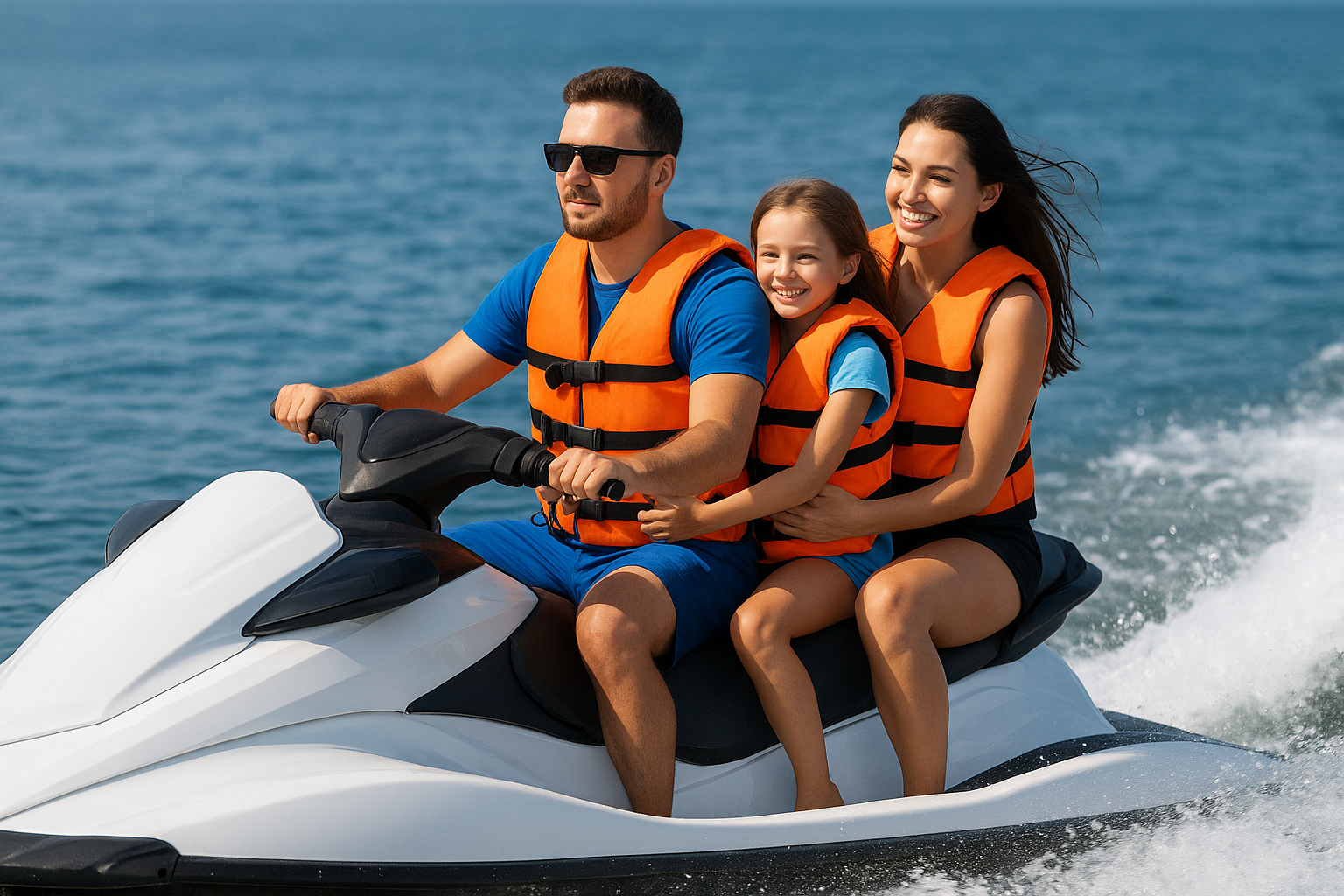
Personal watercraft operators and passengers of all ages must wear life jackets while the vessel is in operation. This applies to jet skis, wave runners, and similar craft, with no exceptions. You cannot remove your PFD to cool off or take photos while operating or riding as a passenger.
Anyone being towed behind a vessel for water skiing, tubing, wakeboarding, or similar activities must wear a life jacket. The only exception applies to performers in professional water ski exhibitions, and that exemption requires specific permits and conditions you won’t encounter during recreational outings.
Adults on traditional boats face different rules. You must have one wearable, Coast Guard-approved PFD for each person on board, but adults aren’t required to wear them unless conditions or activities demand it. However, having them readily accessible means within arm’s reach, not stored in a locked compartment or buried under gear.
What you must carry on board to stay legal
Florida life jacket laws require you to carry specific personal flotation devices based on your vessel’s size and passenger count. These aren’t optional recommendations; they’re mandatory equipment that officers check during safety inspections. Your vessel must have the correct number and type of Coast Guard-approved PFDs on board before you leave the dock, and they must remain accessible throughout your trip.
The requirements vary depending on your boat’s length and the number of people aboard. Vessels under 16 feet need one wearable, Coast Guard-approved PFD for each person, plus one throwable device if you’re carrying more than a certain capacity. Larger vessels face additional requirements, but the basic principle stays consistent: every person gets a properly sized life jacket.
Wearable PFDs for everyone
You must have one Type I, II, III, or V wearable PFD for each person on your vessel, and each device must fit the intended wearer properly. A child-sized life jacket doesn’t count toward an adult’s requirement, and an adult-sized PFD doesn’t satisfy the requirement for a small child. Officers will check sizes during inspections, so guessing or improvising creates problems.
Coast Guard approval matters. Your PFDs must display a Coast Guard approval stamp or label showing they meet federal standards. Decorative life rings, pool toys, and water wings don’t count as legal devices, even if they look similar to approved equipment. Only devices specifically manufactured and labeled for boating safety meet Florida’s requirements.
Expired or damaged life jackets fail inspections even if they’re Coast Guard-approved, so inspect your equipment before each season.
Throwable devices for larger vessels
Vessels 16 feet or longer must carry one throwable Type IV device in addition to the wearable PFDs for each passenger. This typically means a throwable cushion or ring buoy that you can toss to someone in the water. The device must be immediately accessible, not stored in a compartment or tied down where you can’t reach it quickly during an emergency.
Your throwable device cannot substitute for a wearable PFD in meeting the one-per-person requirement. Canoes and kayaks under 16 feet are exempt from the throwable device rule, but they still need wearable PFDs for everyone aboard.
Rules by activity: boats, kayaks, PWCs, towing
Florida life jacket laws change based on what you’re doing on the water, and understanding these activity-specific requirements prevents confusion during your outings. The regulations recognize that different vessels and activities carry different risks, so they adjust PFD rules accordingly. What applies to your pontoon boat rental doesn’t necessarily match the requirements for jet skiing or kayaking.
Recreational boats and pontoons
Motorized boats and pontoons follow the standard carriage requirements: one Coast Guard-approved wearable PFD for each person on board, properly sized and readily accessible. You don’t need to wear these devices as an adult unless you’re engaging in specific activities, but they must be within reach at all times while underway.
Children under six must wear their life jackets continuously on these vessels, regardless of where they’re sitting or what they’re doing. This applies whether you’re anchored at Crab Island for the afternoon or cruising through the bay at speed. The only exception allows them to remove their PFD when they’re below deck in an enclosed cabin with proper ventilation.
Kayaks and canoes
Kayakers and canoeists must carry one wearable PFD per person, even though these vessels don’t require throwable devices. The law treats paddlecraft the same as motorized vessels regarding the one-per-person rule, and those devices must meet Coast Guard approval standards.
Wearing your life jacket while kayaking isn’t legally required for adults, but conditions can change rapidly on Florida waters. Your stable kayak in calm conditions becomes unstable equipment in sudden wind or waves, and you won’t have time to put on your PFD after you capsize.
Kayakers account for a significant portion of Florida’s boating fatalities each year, with most victims not wearing their available life jackets when they entered the water.
Personal watercraft and towed activities
Everyone on a personal watercraft must wear a Coast Guard-approved life jacket at all times, with no exceptions for adults or brief stops. This requirement applies the moment you start the engine and continues until you shut it down completely. Anyone being towed behind any vessel for water sports must also wear a proper PFD throughout the activity, from the moment the rope tightens until they return to the boat.
How to choose a legal life jacket and wear it right
Selecting the correct life jacket goes beyond grabbing the first device you see at the rental counter. Florida life jacket laws require Coast Guard-approved PFDs, but approval alone doesn’t guarantee the device will work properly for you or your passengers. You need to match the life jacket type to your activity, ensure it fits the wearer correctly, and understand how to adjust it for maximum effectiveness in the water.
Understanding Coast Guard approval types
Type III life jackets work best for most recreational boating activities in Florida, offering comfort and mobility while keeping you afloat in calm to moderate waters. These devices come in various styles, from traditional vests to inflatable options, and you’ll find them at most rental facilities. Type II life jackets provide more buoyancy and will turn some unconscious wearers face-up, making them better choices for offshore trips or situations where rescue might take longer.
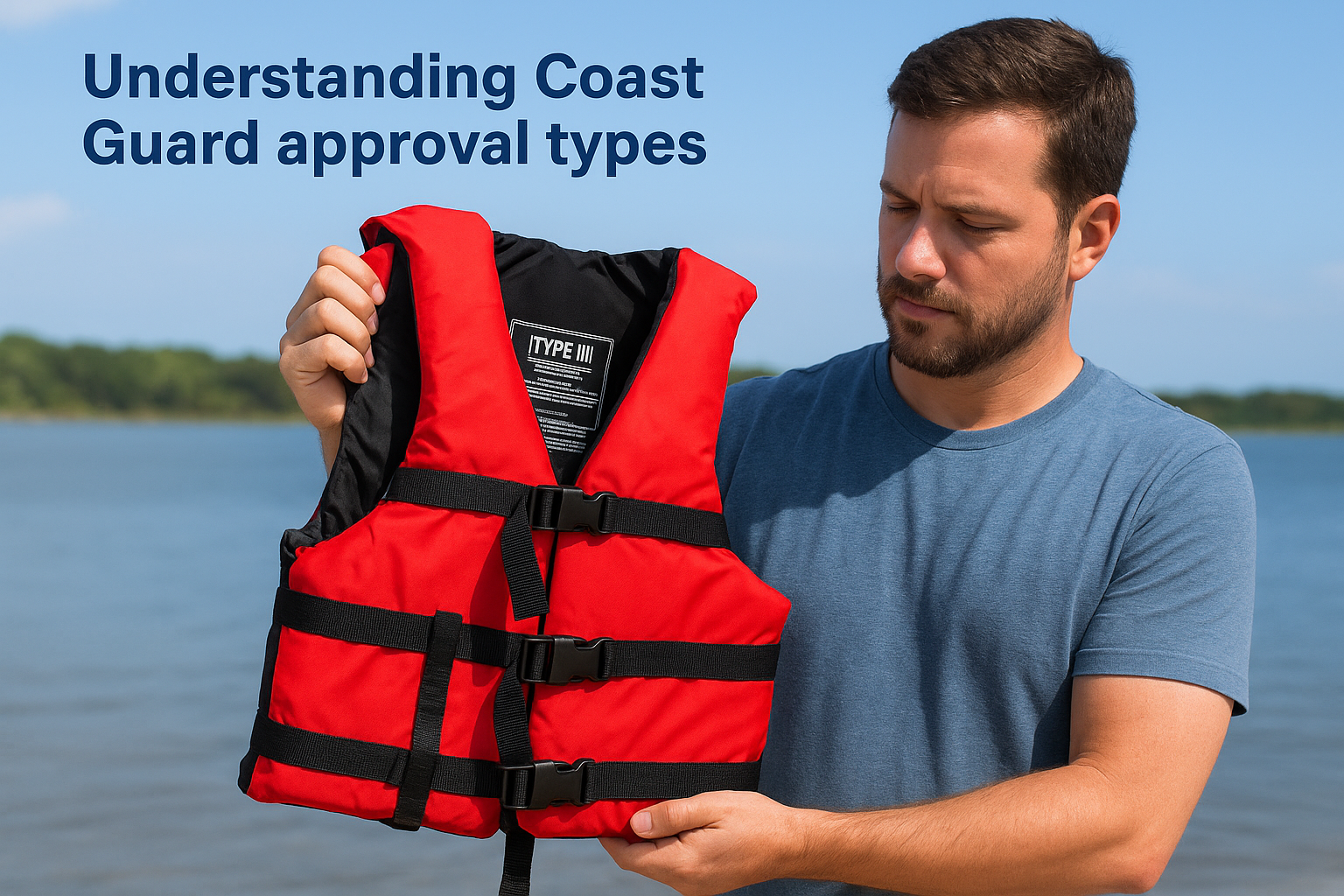
You’ll see the Coast Guard approval stamp on the inside label of every legal device. This stamp confirms the PFD meets federal performance standards for buoyancy, materials, and construction. Devices without this stamp don’t count toward your legal requirements, even if they look identical to approved models. Check for damage, fading, or missing labels before each outing, as these issues can void the approval status.
Proper fit and adjustment
Your life jacket should fit snugly without restricting your breathing or movement. After fastening all straps and zippers, have someone lift the jacket by the shoulders. If the device rides up over your chin or ears, it’s too loose and won’t keep your head above water properly. Tighten the side straps first, then adjust the waist and chest straps to eliminate excess movement while maintaining comfort.
Children’s life jackets require extra attention to fit. The device must match your child’s weight range, not their age, and those weight ranges appear clearly on every approved PFD. A jacket that’s too large will slip off during submersion, while an undersized device won’t provide adequate flotation.
A properly fitted life jacket stays in place when you’re in the water and keeps your head and airways clear of the surface without requiring you to tread water.
Key takeaways before you head out
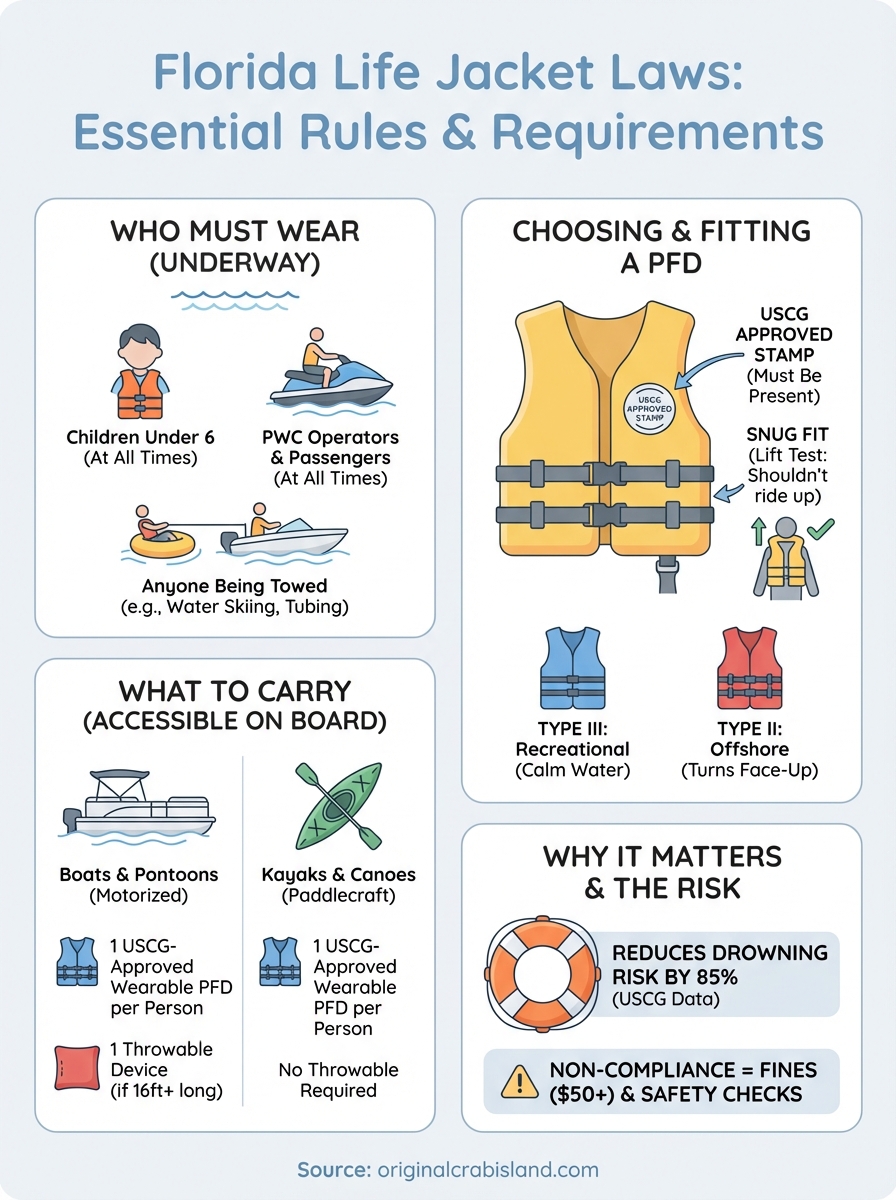
Florida life jacket laws protect everyone on the water, from children under six who must wear PFDs at all times to adults who need devices readily accessible on board. You’ve learned that different activities carry different requirements, whether you’re operating a personal watercraft, towing water skiers, or cruising on a pontoon boat. The rules aren’t complicated once you understand them: carry the right number of Coast Guard-approved devices, ensure proper fit for each passenger, and keep everything within reach.
Compliance starts before you leave the dock. Check your equipment, verify sizes match your passengers, and confirm every device displays current Coast Guard approval. These simple steps prevent citations and keep your group safe during unexpected situations on the water.
Ready to experience Crab Island with confidence? Original Crab Island provides properly equipped rentals and ensures you have everything needed to stay legal and safe on the Emerald Coast waters.
Popular Crab Island Pages
- Crab Island Pontoon Rentals
- Crab Island Fishing Charters
- Crab Island Boat and Yacht Rentals
- Crab Island Parasailing
- Crab Island Jet Ski Rentals
- Crab Island Helicopter Rides
- Crab Island Snorkeling Tours
- Crab Island Paddleboard Rentals
- Crab Island Kayak Rentals
- Crab Island Bike Rentals
- Crab Island Shark Boat
- Crab Island Pirate Ship
- Crab Island Tiki Rentals
- Crab Island Snorkeling Tours


