You’ve booked your deep sea fishing charter, the excitement is building, and then it hits you, what to wear for deep sea fishing? The wrong clothing choice can turn an epic day on the Gulf of Mexico into hours of discomfort from sunburn, seasickness amplified by overheating, or freezing ocean spray.
At Original Crab Island, we’ve taken countless anglers out on our Destin fishing charters. After years of guiding trips into the Gulf, we know exactly what works, and what leaves people miserable by noon. Sun protection, moisture management, and proper footwear aren’t optional extras; they’re non-negotiables for offshore fishing. This guide breaks down the five clothing essentials you need to stay comfortable, safe, and focused on landing your catch.

1. A UPF long-sleeve fishing shirt
Your first line of defense against the Gulf sun is a quality long-sleeve fishing shirt with UPF rating. The sun reflects off the water, hits you from above, and amplifies UV exposure by up to 25% compared to land-based activities. A proper fishing shirt blocks harmful rays while keeping you cool through moisture-wicking technology that standard cotton t-shirts simply can’t match.
What to look for in a sun shirt
You want a UPF rating of 30 or higher, with 50+ being the gold standard for all-day offshore protection. Look for shirts with built-in ventilation panels along the sides or back, which allow airflow without compromising sun coverage. The collar should stand high enough to protect your neck, and thumb holes in the cuffs keep sleeves from riding up when you’re fighting a fish or reaching for gear.
Why long sleeves beat short sleeves offshore
Short sleeves leave your forearms exposed to six to eight hours of direct sun on a typical charter, and sunscreen alone won’t cut it when you’re sweating and getting splashed. Long sleeves eliminate reapplication gaps and protect against rope burn, fish spines, and accidental hook scratches. You’ll stay cooler too; the shade created by long sleeves actually reduces skin temperature compared to bare arms baking in the sun.
Anglers who skip long sleeves often deal with painful sunburns that ruin the rest of their vacation.
Fabric choices that handle sweat and spray
Synthetic blends like polyester and nylon dry in minutes, not hours, keeping you comfortable when ocean spray hits or you work up a sweat reeling in a bull dolphin. Avoid cotton entirely; it holds moisture, causes chafing, and weighs you down when wet. Some premium fishing shirts include antimicrobial treatments that prevent that sour smell after a long day handling bait and fish.
Fit tips for women, men, and kids
Choose a relaxed fit that allows full arm movement without binding when you cast or reach overhead. Women’s cuts typically offer shorter torsos and tapered waists, while men’s versions run longer with straighter side seams. For kids, size up one to account for growth and layering, and prioritize bright colors that make them easier to spot on a crowded deck. Loose is better than tight; you need room to move fast when a fish strikes.
2. A hat and polarized sunglasses
Your eyes and face take constant abuse from UV rays and reflected glare when you’re offshore, making proper headwear and eyewear essential to what to wear for deep sea fishing. The Gulf of Mexico throws intense sunlight and wind at you for hours, and standard sunglasses or baseball caps won’t hold up to the conditions. You need gear specifically designed for marine environments that stays put during rough water and protects your vision when you’re tracking fish.
Hat options that stay on in wind
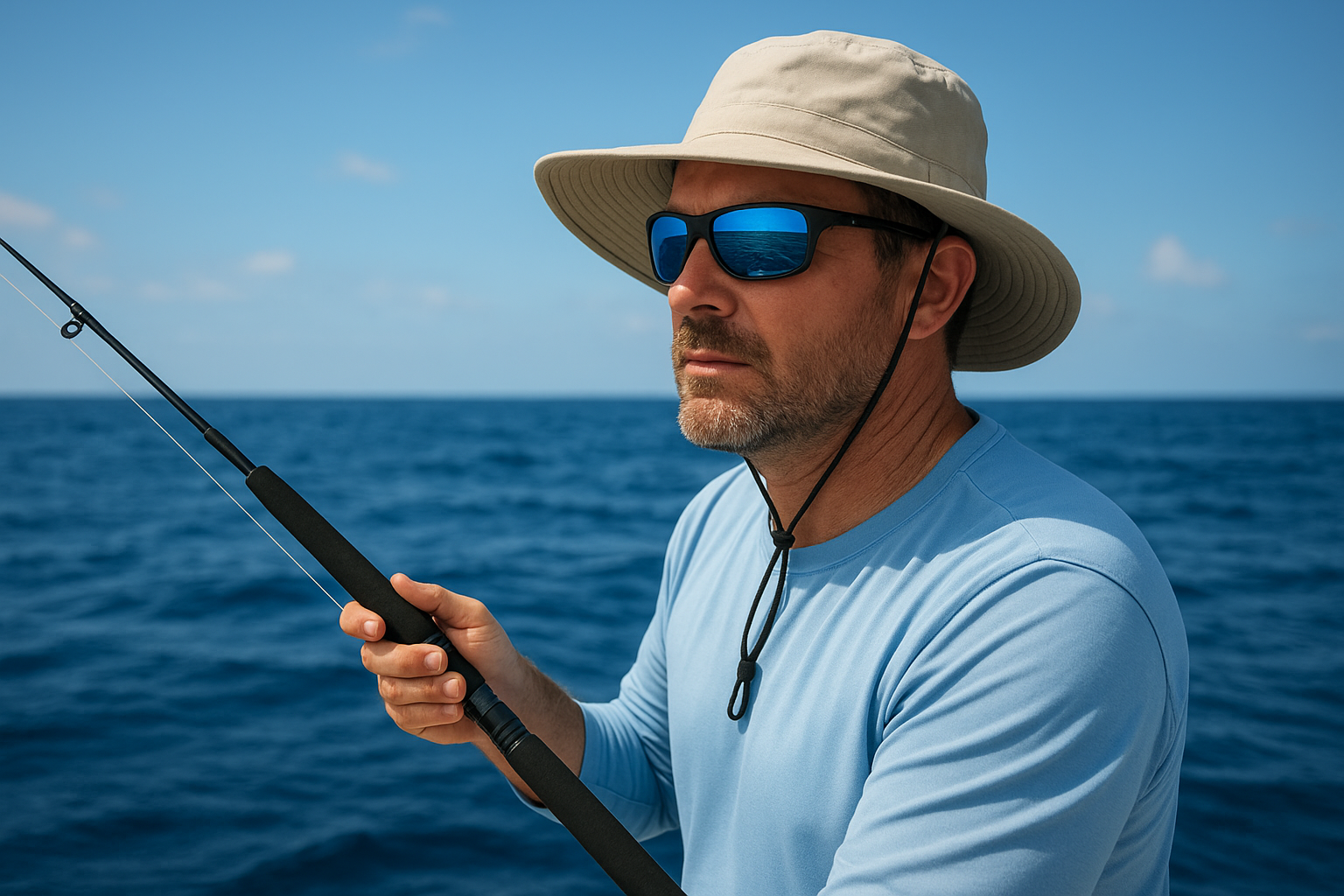
A wide-brimmed hat with a chin strap is your best choice for all-day sun protection that won’t blow off when the boat speeds up or wind gusts hit. Look for hats with at least a 3-inch brim that shades your face, ears, and neck from multiple angles. Avoid loose-fitting caps that lift off your head; you want an adjustable strap or drawcord that keeps the hat secure without causing headaches during long charters.
Why polarization matters on the Gulf
Polarized lenses cut through water glare by blocking horizontal light waves, letting you spot fish movement, underwater structure, and floating debris that standard tinted glasses miss. This technology reduces eye strain and fatigue by up to 60% during extended fishing sessions, keeping you alert when fish strike. Gray or copper lens tints work best in bright offshore conditions, while amber helps on overcast days.
Without polarization, you’re essentially fishing blind in the top layer of water where many species feed.
Add-ons that prevent losing gear overboard
Secure your sunglasses with a floating eyewear retainer that keeps them around your neck and prevents a $200 loss overboard. Hat clips or leashes attach to your collar or life jacket, ensuring your headwear stays connected even when knocked off. These simple accessories save hundreds of dollars in replacement costs and keep you protected throughout the trip.
Common eye and face protection mistakes
You make a critical error when you choose fashion sunglasses over fishing-specific models that lack proper UV400 protection and impact resistance. Skipping a hat entirely exposes your scalp to burns, and wearing dark glasses without polarization actually dilates your pupils and increases UV damage. Cotton bandanas under hats trap sweat instead of wicking it away, creating discomfort that distracts from fishing.
3. Quick-dry shorts or fishing pants
Your lower body needs breathable, fast-drying bottoms that handle saltwater spray, bait slime, and constant movement around a boat’s deck. The choice between shorts and pants depends on weather conditions, sun sensitivity, and trip duration, but both options should prioritize quick-dry fabrics over cotton. When deciding what to wear for deep sea fishing below the waist, flexibility and moisture management trump style every time.
When to wear shorts vs pants on a charter
Choose fishing pants in spring and fall when morning temperatures hover in the 60s, or anytime you burn easily and want full leg coverage. Shorts work best in summer months when air temps exceed 80°F and you’ll appreciate maximum ventilation during midday heat. Convertible fishing pants with zip-off legs give you both options in a single garment, adapting to changing conditions throughout your charter.
Materials that dry fast and don’t chafe
Synthetic blends of nylon and polyester with 4-way stretch dry in under 20 minutes after getting soaked, preventing that cold, clammy feeling cotton creates. Look for flatlock seams instead of raised stitching, which reduces friction points during repetitive casting motions and kneeling on the deck.
Cotton fishing bottoms stay wet for hours and cause painful chafing in warm, humid conditions.
Pockets, stretch, and movement on a boat
You need deep, secure pockets with zipper or snap closures that won’t dump your phone or wallet overboard when you bend down. Fabric with at least 10% spandex or elastane allows you to squat, lunge, and pivot without restriction when fighting fish or moving around tight spaces.
What to avoid on hooks, bait, and rails
Skip loose cargo pockets with exposed flaps that snag on rod holders and boat hardware. Avoid belt loops that catch fishing line, and never wear jeans, which absorb water, restrict movement, and take forever to dry.
4. Non-slip closed-toe deck shoes
Your footwear choice determines whether you stay upright and safe on a saltwater-soaked deck or risk serious injury from slips and falls. Wet fiberglass and metal surfaces become treacherous when combined with fish slime, bait juice, and constant ocean spray, making proper deck shoes a critical part of what to wear for deep sea fishing. Closed-toe protection shields your feet from dropped hooks, sharp fins, and heavy tackle that can cause puncture wounds or crushed toes.
What makes a shoe safe on a wet deck
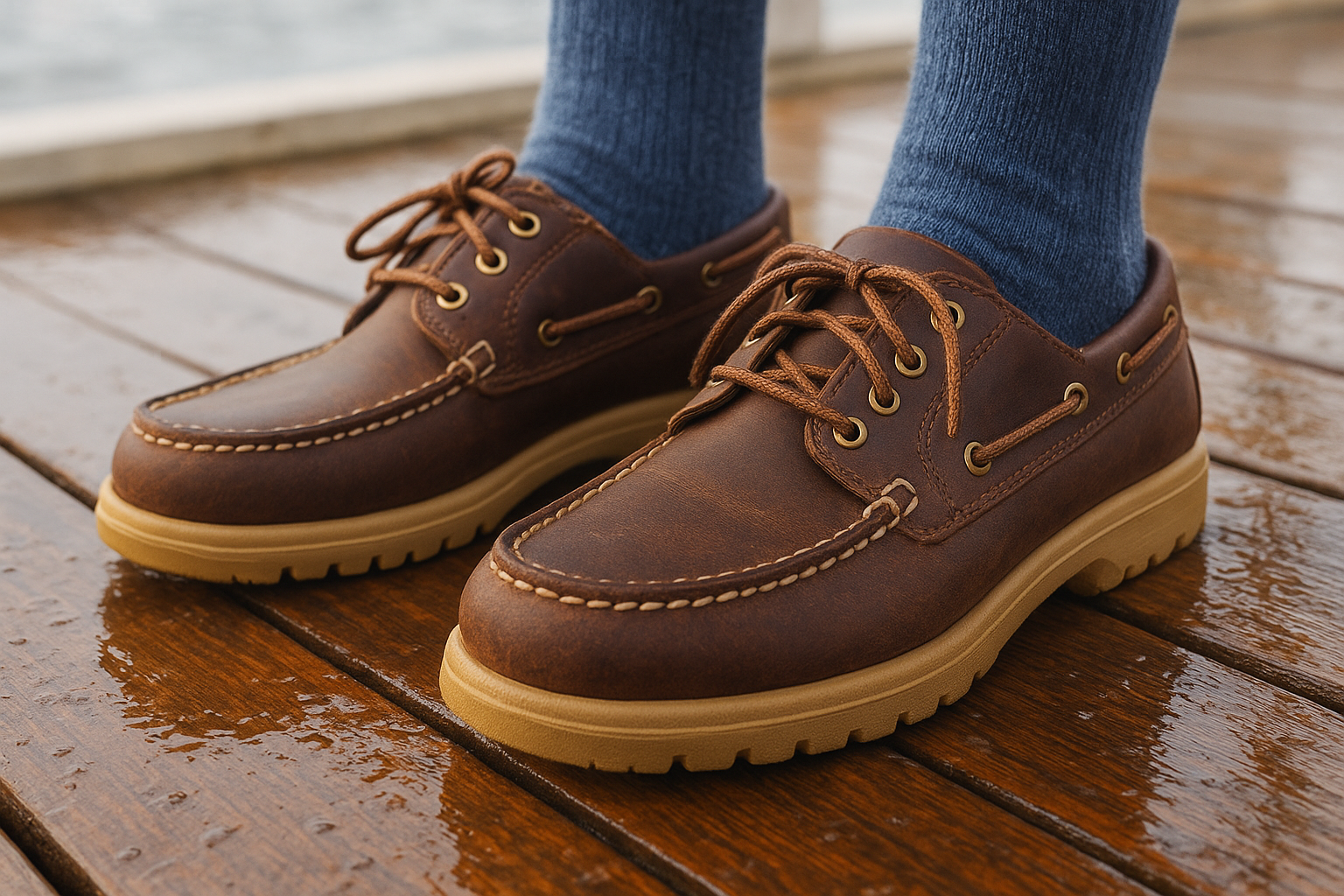
You need non-marking rubber soles with deep siping patterns that channel water away and maintain grip on slick surfaces. The outsole should feature razor-cut grooves in multiple directions, creating hundreds of biting edges that prevent hydroplaning. Avoid smooth or worn treads that offer zero traction when conditions get wet.
Boat shoes vs deck boots vs water shoes
Classic boat shoes with leather uppers and white rubber soles work well in dry, moderate conditions but take forever to dry once soaked. Deck boots provide ankle support and full waterproofing for rough weather or winter fishing. Water shoes offer quick-dry convenience and lightweight comfort but sacrifice durability and toe protection compared to purpose-built fishing footwear.
The wrong shoes cause more fishing accidents than any other single gear mistake.
Socks and blister prevention that actually works
Wear moisture-wicking synthetic or wool blend socks that prevent friction and hot spots during long charters. Apply anti-chafe balm to your heels and toe joints before putting on socks to eliminate blister formation. Cotton socks trap moisture and guarantee painful blisters by hour three of your trip.
Footwear to skip even if it feels convenient
Never wear flip-flops, sandals, or Crocs that offer zero protection and slip off easily when you move fast. Skip running shoes with mesh panels that stay wet all day and provide inadequate grip on marine surfaces.
5. Light layers and rain protection
Gulf conditions shift dramatically between dawn departure and midday sun, making versatile layering essential to what to wear for deep sea fishing. Temperature swings of 15 to 20 degrees happen regularly on offshore charters, and unexpected rain squalls blow through even on forecast sunny days. Smart layering keeps you comfortable through every condition without overheating or getting soaked.
How temperatures change offshore near Destin
Morning departures in spring and fall start in the 50s and climb into the 70s by noon, while summer trips begin warm but cool down once the boat hits cruising speed. Wind chill on the water drops perceived temperature by 10 to 15 degrees, making that calm marina feel deceiving compared to offshore conditions. Winter charters require serious planning, with early morning temps dipping into the 40s before afternoon warming.
The simple layering system that works year-round
Start with your UPF long-sleeve fishing shirt as your base layer, add a lightweight quarter-zip pullover for morning chill, and top with a windbreaker shell for protection. This three-layer system lets you strip down as temperatures rise without sacrificing sun protection or getting stuck in bulky clothing.
Proper layering prevents the miserable choice between overheating in too many clothes or freezing in too few.
Rain gear that packs small and keeps you fishing
Pack a lightweight waterproof jacket that stuffs into its own pocket, taking up minimal space in your bag until weather turns. Look for sealed seams and adjustable cuffs that keep water from running down your arms when you’re working with tackle.
Cold-weather add-ons for early mornings and winter trips
Thin synthetic gloves with exposed fingertips maintain dexterity while protecting hands from wind and cold spray. A neck gaiter or buff provides adjustable face and neck coverage that you can pull up or down as conditions change throughout your charter.
Ready for the dock
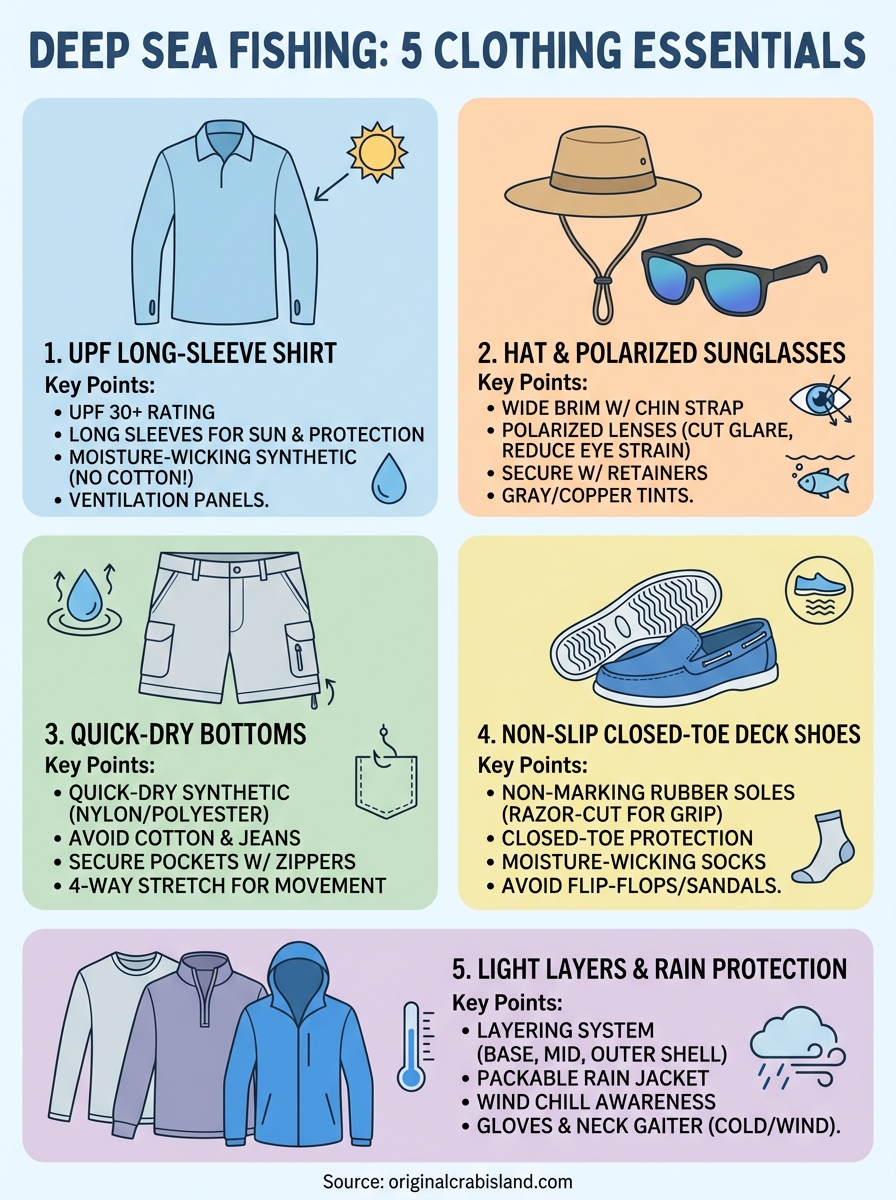
You now know exactly what to wear for deep sea fishing on your Destin charter. Your UPF long-sleeve shirt, polarized sunglasses, quick-dry bottoms, non-slip deck shoes, and complete layering system form an outfit that protects you from sun, spray, and temperature swings catching unprepared anglers off guard throughout the day. Proper clothing separates memorable fishing trips from miserable ones, letting you focus on landing your catch instead of dealing with painful sunburn, foot blisters, chafing, or soaking wet cotton that refuses to dry even hours into your trip.
Pack these essentials the night before your charter, double-checking each item against this guide to avoid last-minute marina scrambling when you should be heading to the dock. Weather conditions on the Gulf change fast and without warning, so having the right gear ready means you stay comfortable and fishing no matter what conditions the day brings to your boat.
Ready to test your new fishing wardrobe on the water? Book your Destin fishing charter with Original Crab Island and experience the Gulf of Mexico with our expert captains who know exactly where the fish are biting.