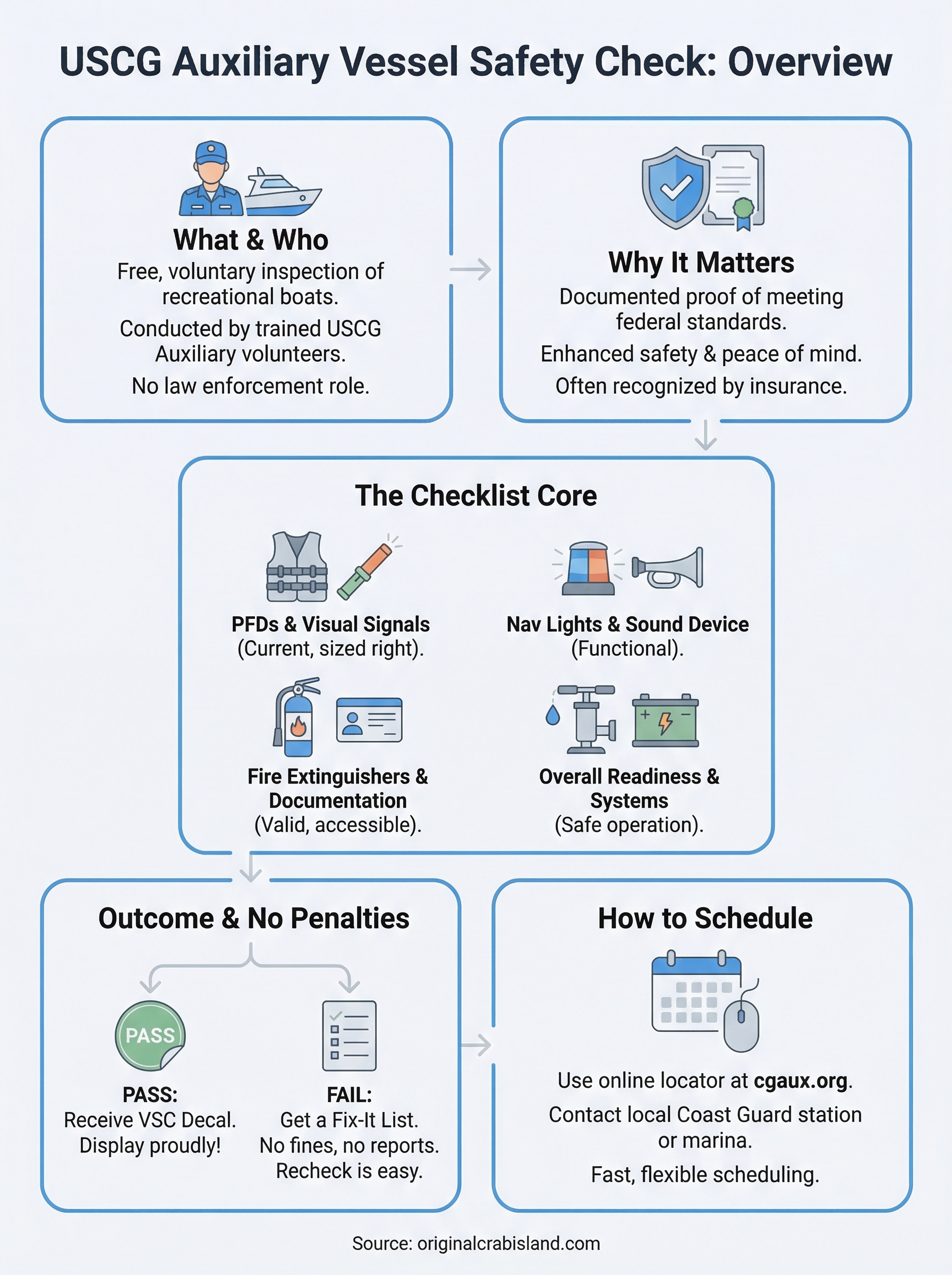
Whether you own a center console, a pontoon, or a weekend sailboat, a USCG Auxiliary vessel safety check is one of the smartest things you can do before hitting the water. It’s a free inspection conducted by trained U.S. Coast Guard Auxiliary volunteers who walk through your boat’s safety equipment, documentation, and overall readiness, no penalties, no fees, no reports filed if you don’t pass.
At Original Crab Island, we put boats on the water in Destin every single day. Our pontoon rentals, jet skis, and charter vessels all meet strict safety and equipment standards because we know firsthand how quickly conditions on the Gulf and around Crab Island can change. That same level of preparation applies to private boat owners, and a vessel safety check is the easiest way to confirm you’re covered.
This article breaks down exactly what the inspection covers, what items are on the official checklist, and how to schedule your free check. We’ll also walk through common reasons boats fail and how to fix those issues before your next trip out of Destin Harbor or any other waterway in the U.S.
What a USCG Auxiliary vessel safety check is
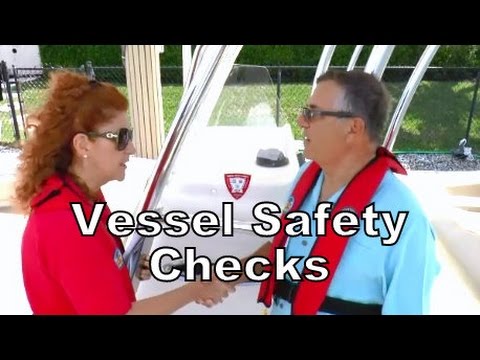
A USCG Auxiliary vessel safety check is a free, voluntary inspection offered to recreational boat owners across the United States. Trained volunteers from the U.S. Coast Guard Auxiliary board your vessel, review your safety gear, confirm you have proper documentation, and verify that your boat meets current federal and state requirements. The entire process typically takes between 30 and 60 minutes, depending on the size and type of your vessel.
Who conducts the inspection
The U.S. Coast Guard Auxiliary is the uniformed civilian component of the U.S. Coast Guard. Volunteers complete formal training courses before they are authorized to conduct safety checks. They wear official uniforms, carry credentials, and follow a standardized inspection procedure on every boat they review. These are not casual volunteers making informal recommendations. Each examiner has passed a verified qualification process before they step aboard any vessel.
The Auxiliary has conducted millions of free vessel safety checks across the country, making it one of the most widely used boating safety programs in the United States.
What happens if your boat does not pass
If your vessel does not meet the required standards, no report is filed with law enforcement or any regulatory agency. You simply do not receive the VSC decal for that inspection, and the examiner provides you with a clear list of what needs to be corrected before you reapply. There are no fines, no penalties, and no consequences tied to falling short. That structure makes the inspection a genuinely low-pressure way to identify gaps in your safety setup before you are out on open water where those gaps can become serious problems.
Why a vessel safety check matters
Beyond the obvious safety benefits, a USCG Auxiliary vessel safety check gives you documented proof that your boat met federal standards at the time of inspection. If an incident occurs on the water, that VSC decal signals that you took reasonable steps to outfit your vessel properly. Insurance companies and marina operators both recognize that distinction.
A boating accident caused by missing or defective safety equipment can result in federal fines that far exceed the cost of any gear you would have needed to buy.
The real cost of skipping it
Most boaters who skip the inspection simply assume their equipment is fine. That assumption is where serious problems start. Life jackets expire, flares have shelf lives, and fire extinguisher pressure gauges drop without warning. A single missed item can leave you out of compliance with U.S. Coast Guard regulations even if everything else on your boat is perfect.
What you gain from passing
Passing means you receive a dated decal that you display on your vessel. It shows Coast Guard officers, fellow boaters, and passengers that your boat cleared a standardized review. That credibility matters, especially when you’re running passengers or heading into open Gulf water where conditions shift fast.
What the examiner checks on your boat
During a USCG Auxiliary vessel safety check, the examiner works through a standardized federal checklist that covers the core safety equipment every recreational vessel is required to carry. The specific requirements vary by vessel type, size, and the waters you travel, but the core categories remain consistent across all inspections.
Personal flotation devices and visual distress signals
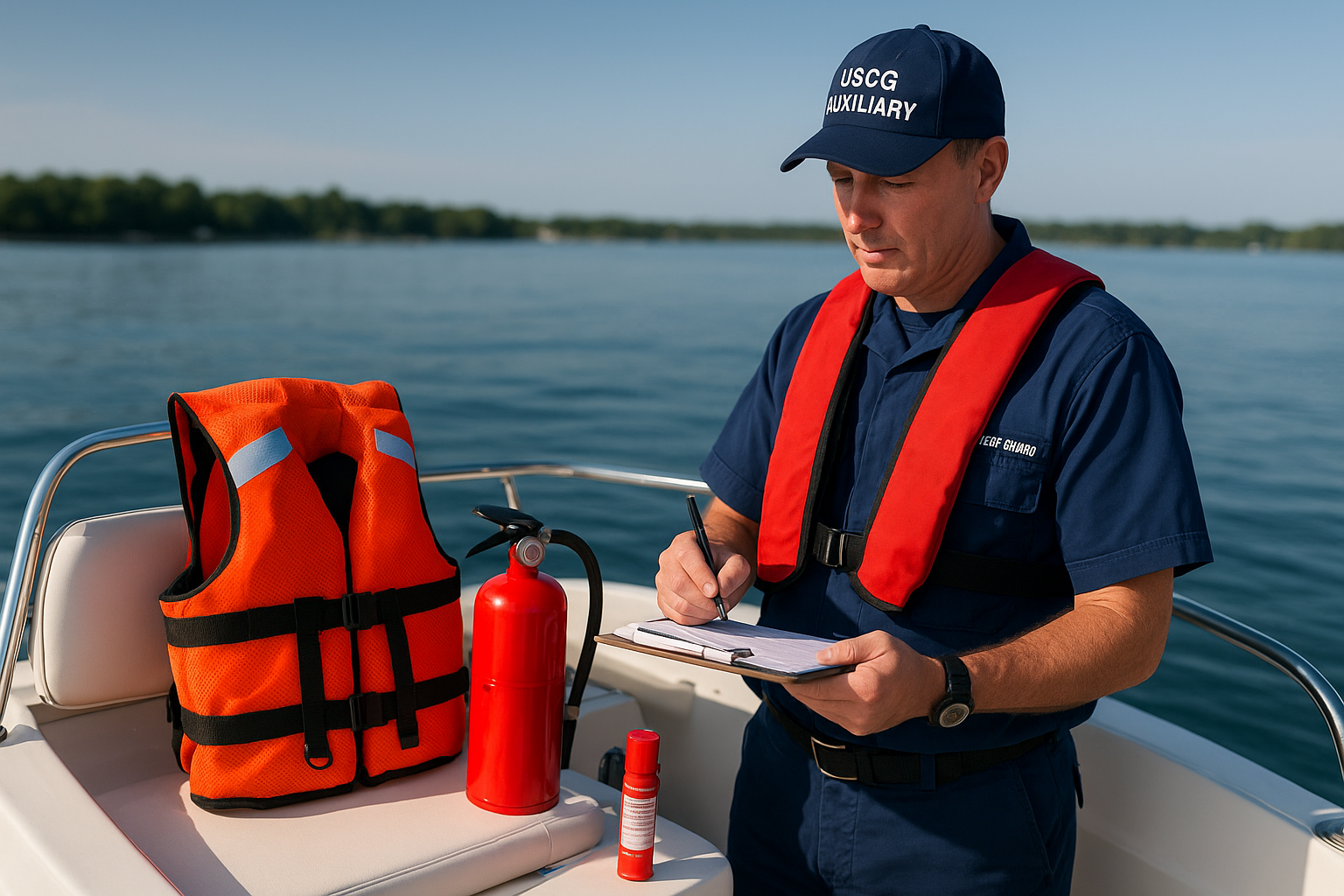
The examiner first confirms you have properly sized life jackets for every person on board and that your visual distress signals are current and unexpired. Outdated flares are one of the most common reasons boats fail the check.
Flares older than 42 months from their manufacture date no longer meet USCG requirements, even if they still appear functional.
Key items reviewed in this category:
- One Type I, II, III, or V PFD per person on board
- One throwable Type IV device for vessels 16 feet and longer
- Non-expired visual distress signals for boats used on coastal waters
Navigation lights, fire extinguishers, and sound devices
Your navigation lights must display the correct colors for your vessel class and operate without flicker or failure. The examiner also checks your fire extinguisher for proper gauge pressure and confirms you carry an approved sound-producing device such as a horn or whistle.
Required items in this category:
- Port (red), starboard (green), and stern (white) lights fully operational
- B-1 or larger fire extinguisher with a valid service date
- Horn or whistle that meets federal sound output standards
How to schedule a free vessel safety check
Scheduling a USCG Auxiliary vessel safety check takes only a few minutes. The U.S. Coast Guard Auxiliary maintains a free online locator where you enter your zip code to find a qualified examiner near you. Most examiners respond within a day or two and will coordinate a time that works around your schedule.
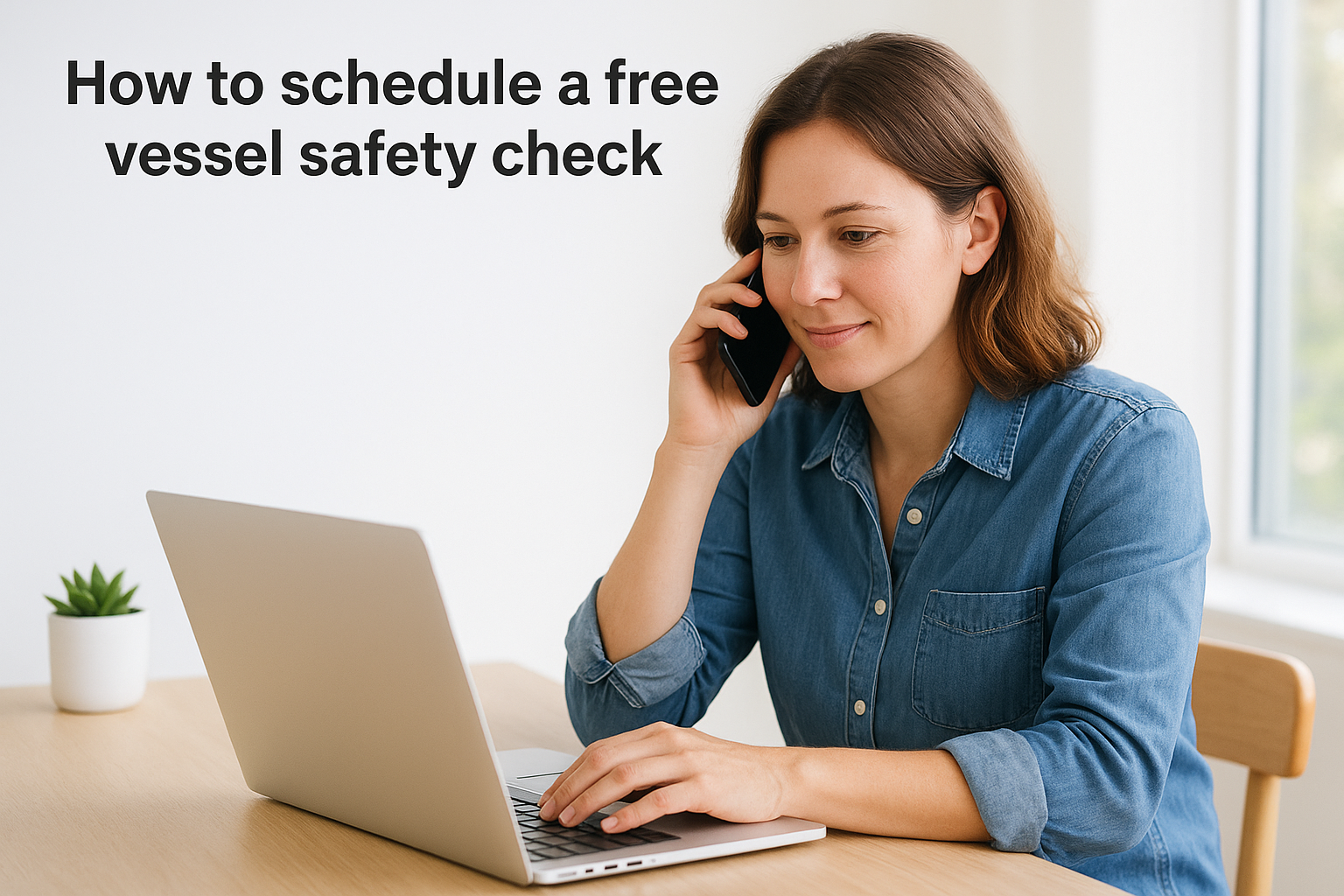
The entire process is handled directly between you and the volunteer examiner, with no fees, forms, or agency reports involved.
Finding a local examiner
Your fastest route is the USCG Auxiliary’s official locator at cgaux.org. Beyond that, there are a few other reliable ways to connect with an examiner:
- Contact your local Coast Guard station and ask for Auxiliary contacts
- Ask at a local marina or boat ramp where Auxiliary members often operate
- Reach out to a nearby boating or sailing club
What to expect when you contact an examiner
Once you reach an examiner, they will ask about your vessel type and length so they arrive with the correct checklist. From there, you agree on a date and a meeting location that fits your plans.
Your examiner will also confirm what documentation to have ready, such as your boat registration and any prior VSC decals, so the inspection moves forward without delays.
How to prepare and pass the check
Preparing for a uscg auxiliary vessel safety check does not require expensive upgrades or long hours. Most boats fail over small, fixable items that owners overlooked, and a focused review before the examiner arrives is usually enough to close those gaps.
Running through the checklist yourself 48 hours before your inspection gives you time to replace any expired or missing items without scrambling.
Do a self-inspection first
Before your examiner arrives, pull out every piece of safety equipment and check each item against the federal checklist at cgaux.org. Focus specifically on expiration dates, physical condition, and accessibility so nothing is buried under gear during the review.
Key items to lay out first:
- Life jackets for every person on board
- Visual distress signals with valid manufacture dates
- Fire extinguisher with a charged gauge
- Navigation lights in working order
Fix the common failure points
Expired flares, low fire extinguishers, and broken navigation lights are the most common reasons boats do not receive the VSC decal. Replace anything past its service date, recharge your extinguisher if the gauge reads low, and test every light the night before your inspection. Catching these problems yourself takes far less time than scheduling a second visit.
Next steps before you head to the water
A completed uscg auxiliary vessel safety check puts you in a strong position before you ever leave the dock. Schedule your inspection, run through the self-check, replace any expired gear, and confirm your documentation is organized and accessible on the day the examiner arrives.
Once you pass, your VSC decal is your confirmation that your vessel met federal standards. Keep every piece of safety equipment in the same accessible location after your inspection so it stays ready for every trip that follows.
If you’re heading to Destin and want to skip the work of outfitting and maintaining your own boat, our team handles all of that for you. Every vessel we put on the water is inspected, equipped, and ready to go so you can focus entirely on the experience. Book your next Destin water adventure and spend more time enjoying the Emerald Coast instead of checking gear lists.
Popular Crab Island Pages
- Crab Island Pontoon Rentals
- Crab Island Fishing Charters
- Crab Island Boat and Yacht Rentals
- Crab Island Parasailing
- Crab Island Jet Ski Rentals
- Crab Island Helicopter Rides
- Crab Island Snorkeling Tours
- Crab Island Paddleboard Rentals
- Crab Island Kayak Rentals
- Crab Island Bike Rentals
- Crab Island Shark Boat
- Crab Island Pirate Ship
- Crab Island Tiki Rentals
- Crab Island Snorkeling Tours


