If you’ve ever wondered how deep is deep sea fishing, you’re not alone. It’s one of the most common questions we hear from visitors booking fishing charters out of Destin, Florida. The short answer: most recreational deep sea trips fish in waters between 100 and 300 feet deep, though some ventures push well beyond that into 1,000+ foot depths depending on the target species.
But those numbers only tell part of the story. There’s a real difference between what a recreational angler considers "deep sea" and what marine biologists or commercial operations mean by the term. Depth ranges shift based on location, the fish you’re chasing, and the type of trip you’re on. Here in the Gulf of Mexico, where we at Original Crab Island operate our fishing charters, the continental shelf drops off relatively close to shore, giving Destin anglers access to serious offshore depths without burning half the day getting there.
This article breaks down the specific depths in both feet and meters, explains what separates nearshore from offshore from true deep-sea fishing, and helps you understand exactly what to expect when you head out past the coastline.
What "deep sea fishing" means in plain English
"Deep sea fishing" is a catch-all term that gets used loosely. In everyday conversation, it refers to fishing done far enough offshore that you’re no longer in shallow, protected waters near the coast. Most recreational anglers and charter captains use it to describe any trip that takes you beyond the 30-meter (100-foot) depth mark, which is roughly where inshore conditions give way to true offshore water.
Where the line between nearshore and offshore sits
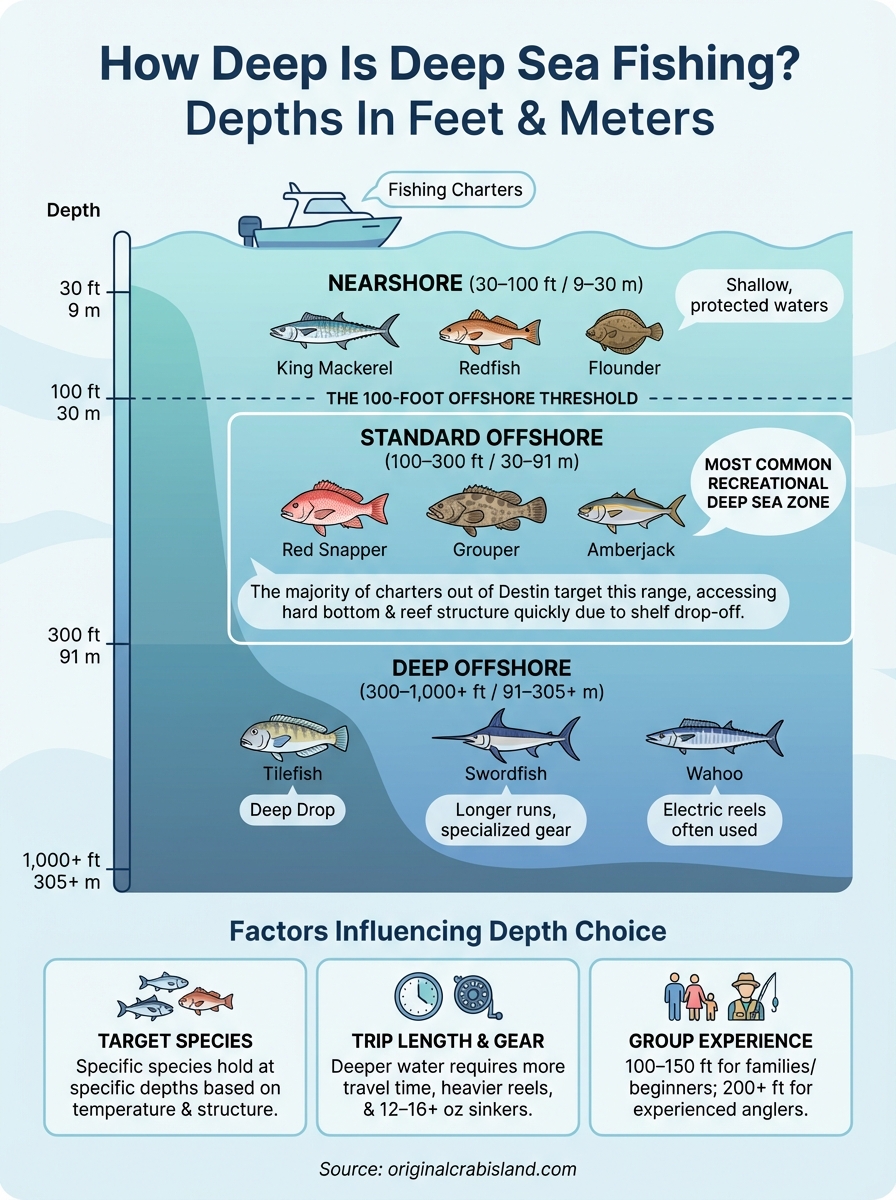
The fishing world generally splits into three zones: inshore, nearshore, and offshore. Inshore covers bays, estuaries, and water shallower than about 30 feet. Nearshore stretches from 30 to roughly 100 feet. Once you cross that 100-foot threshold, you’re in offshore territory, and that’s where most people start calling it deep sea fishing.
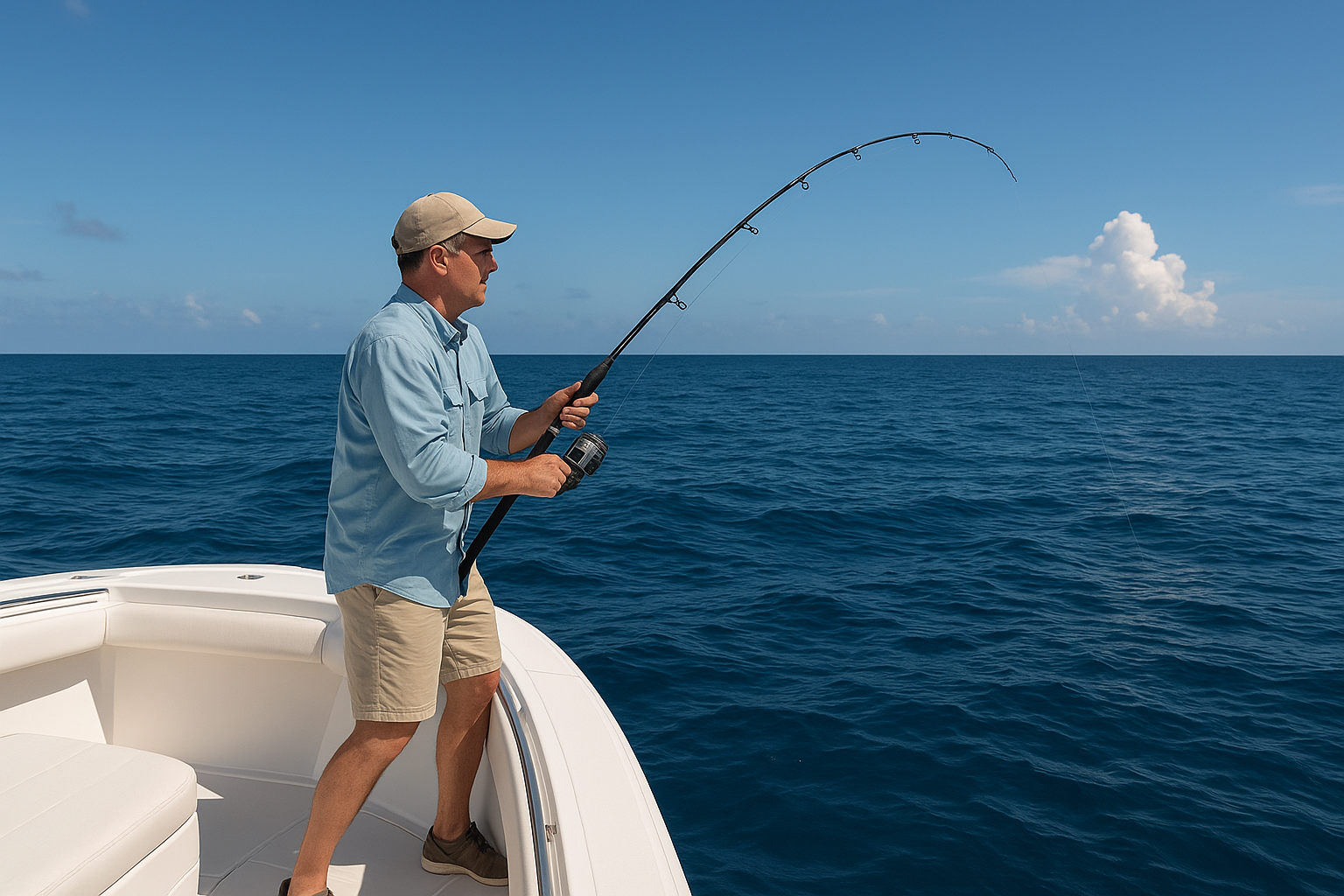
The 100-foot mark is the widely accepted starting point for recreational deep sea fishing, though many charters push into 150 to 300+ feet depending on the target species.
From Destin, that 100-foot depth sits surprisingly close to shore. The Gulf of Mexico’s continental shelf drops off steeply here, which means you can reach serious offshore water in under an hour from the harbor.
What the term actually covers
Understanding how deep is deep sea fishing requires separating recreational use from scientific and commercial definitions. Marine biologists define the "deep sea" as water below 200 meters (roughly 660 feet), where sunlight stops penetrating. Recreational charters, however, operate well above those thresholds, typically targeting species like grouper, snapper, and amberjack along the Gulf floor.
| Category | Depth Range | Common Target Species |
|---|---|---|
| Nearshore | 30–100 ft (9–30 m) | King mackerel, redfish, flounder |
| Offshore | 100–300 ft (30–91 m) | Grouper, snapper, amberjack |
| Deep offshore | 300–1,000+ ft (91–305+ m) | Tilefish, swordfish, wahoo |
Why depth matters for fish, gear, and comfort
When you understand how deep is deep sea fishing, you start to see why depth directly controls nearly every decision on a charter trip. From the species you can target to the gear you bring and the time you spend traveling, depth shapes the whole outing.
Fish live in specific depth zones
Different species hold at very specific depths based on water temperature and bottom structure. Red snapper cluster around 60 to 200 feet on reef and hard bottom. Push deeper to 300+ feet and you start finding tilefish and gag grouper. Target the wrong depth zone and you are simply fishing where your species does not live.
Knowing your target species before booking determines the depth your captain will aim for.
Gear and comfort shift with depth
Line weight, reel size, and sinker weight all increase as you go deeper. You also need to account for the physical toll of the run, since longer trips to deeper water can affect anyone prone to seasickness. Here is what changes as depth increases:
- Reels: Heavier conventional setups replace lighter spinning gear
- Sinkers: 8 to 16 oz weights become standard past 150 feet
- Travel time: Expect 45 to 90 minutes each way past 200 feet
Typical deep sea fishing depths in feet and meters
When people ask how deep is deep sea fishing, they usually want specific numbers. The answer depends on the type of trip, but most recreational charters fish somewhere between 100 and 1,000 feet depending on target species and season.
Recreational charter depth ranges
Most standard half-day and full-day charters out of Destin target depths between 100 and 300 feet. This range puts you over hard bottom and reef structure where red snapper, grouper, and amberjack feed. Your captain will adjust based on seasonal fish movements and water temperature shifts.
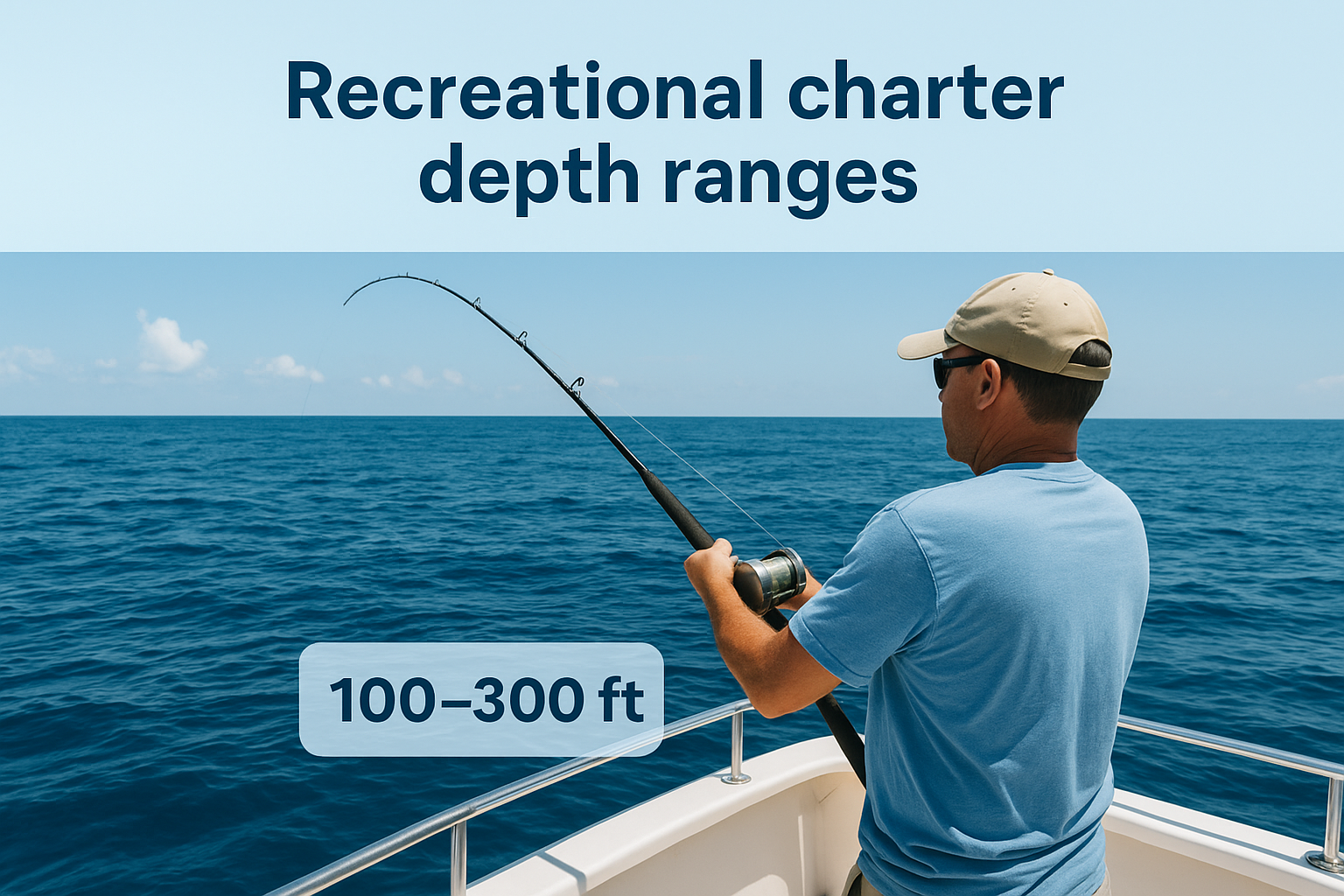
The 100 to 300-foot range covers the majority of recreational deep sea fishing trips and holds the species most anglers book specifically to catch.
| Trip Type | Depth Range (ft) | Depth Range (m) |
|---|---|---|
| Standard offshore | 100–200 ft | 30–61 m |
| Extended offshore | 200–400 ft | 61–122 m |
| Deep drop | 400–1,000 ft | 122–305 m |
When charters push past 300 feet
Some trips specifically target tilefish and swordfish, which require dropping lines to 400 to 1,000+ feet. These deep-drop trips demand more travel time and heavier specialized tackle, but they unlock species you simply cannot reach at standard offshore depths.
How to choose the right depth for your Destin trip
Choosing the right depth starts with knowing what you want to catch and how much time you have on the water. If you’re asking how deep is deep sea fishing and whether a specific depth fits your trip plans, the answer depends on three things: target species, trip length, and your group’s experience level. Destin sits close enough to deep Gulf water that you can reach multiple depth zones without burning most of your day traveling.
Match depth to your target species
Red snapper and amberjack dominate the 100 to 200-foot range and represent the most popular catch for first-time offshore anglers out of Destin. If your group wants a shorter run with solid action, booking a trip targeting that standard offshore depth window gives you the best odds without a long, tiring ride.
Matching your depth to your target species before you book saves time on the water and puts you over fish from the start.
Factor in your group’s comfort
Longer runs to deeper water increase the likelihood of seasickness for anyone sensitive to offshore swells. If your group includes first-timers or younger kids, starting at 100 to 150 feet keeps the ride manageable while still delivering a real offshore experience. Here is a quick reference to help you decide:
- Families and beginners: 100 to 150 feet
- Experienced anglers: 200 to 400 feet
- Deep-drop enthusiasts: 400 feet and beyond
What changes with depth: species, rigs, and tactics
Understanding how deep is deep sea fishing goes beyond just knowing the numbers. Depth reshapes every part of your trip, from the fish you can realistically target to the gear your captain rigs up before you even leave the dock. The deeper you go, the more these variables stack up against a simple approach.
Species shift as you go deeper
Red snapper and amberjack dominate the 100 to 200-foot range and represent the most reliable targets for a standard Destin charter. Push past 300 feet and tilefish and deeper-holding grouper take over, with swordfish requiring drops well past 1,000 feet in some Gulf regions. Each species holds at a specific depth based on water temperature and bottom structure.
Targeting the right depth zone for your chosen species is the single biggest factor in whether you bring fish home.
Rigs and tactics follow the fish
Heavier sinkers, sturdier reels, and longer drops become necessary as depth increases. At standard offshore depths, a 6 to 8-ounce weight gets you to the bottom cleanly. Beyond 300 feet, you need 12 to 16-ounce sinkers and, on some deep-drop trips, electric reels to manage the line efficiently and keep your bait exactly where the fish are feeding.
A quick recap
Now you know how deep is deep sea fishing and what those depths actually mean for your time on the water. Recreational charters typically fish between 100 and 300 feet, which covers the most popular Gulf species like red snapper, grouper, and amberjack. Deeper trips pushing past 400 feet open up tilefish and swordfish, but they require heavier gear and longer runs. Your target species should drive the depth you book, not the other way around.
Destin gives you a real advantage here. The Gulf’s continental shelf drops off fast, putting serious offshore water within easy reach of the harbor. That means your group spends more time fishing and less time traveling. Whether you’re chasing your first snapper at 150 feet or planning a deep-drop session, the depth options out of Destin are hard to beat anywhere on the Gulf Coast. Book a fishing charter with Original Crab Island and put your group over the right fish at the right depth.
Popular Crab Island Pages
- Crab Island Pontoon Rentals
- Crab Island Fishing Charters
- Crab Island Boat and Yacht Rentals
- Crab Island Parasailing
- Crab Island Jet Ski Rentals
- Crab Island Helicopter Rides
- Crab Island Snorkeling Tours
- Crab Island Paddleboard Rentals
- Crab Island Kayak Rentals
- Crab Island Bike Rentals
- Crab Island Shark Boat
- Crab Island Pirate Ship
- Crab Island Tiki Rentals
- Crab Island Snorkeling Tours


