Most people use the terms interchangeably, but the jet ski vs waverunner difference actually comes down to two competing brands with distinct designs, histories, and riding experiences. If you’ve ever stood at a rental dock wondering which one to pick, or argued with a friend about what to call that thing bouncing across the waves, you’re not alone. It’s one of the most common mix-ups in personal watercraft (PWC) culture.
Kawasaki’s Jet Ski and Yamaha’s WaveRunner each bring something different to the water, from hull design and engine performance to how they feel under your feet (or seat). Understanding those differences matters whether you’re buying your first PWC or just trying to choose the right rental for a day on the Gulf. Here at Original Crab Island, we put riders on the water in Destin every day, so we hear this question constantly and know it deserves a straight answer.
This article breaks down what separates these two iconic brands, covers their origins, compares their performance and design, and helps you figure out which PWC actually fits your skill level and goals.
Why the Jet Ski vs WaveRunner label causes confusion
The confusion starts with how language works around popular products. When one brand becomes dominant enough in a category, people start using that brand name to describe every product in the category, regardless of who made it. You’ve probably done the same thing with facial tissue ("Kleenex") or clear adhesive tape ("Scotch tape"). The same pattern applies to personal watercraft, and the jet ski vs waverunner difference gets buried in exactly this way.
How brand names become everyday words
Linguists call this process genericization, but you don’t need the technical term to recognize it. When Kawasaki launched the original Jet Ski in 1973, it was the first stand-up personal watercraft most Americans had ever seen. The product was so novel and visible that the name planted itself in everyday vocabulary long before other manufacturers entered the market. By the time Yamaha introduced the WaveRunner in 1987, most riders were already calling any PWC a "jet ski" by default.
When a brand name becomes a generic label, the actual product differences between competing brands become nearly invisible to the average buyer.
Yamaha’s WaveRunner was built from the start as a sit-down, two-person watercraft, which made it a fundamentally different product from Kawasaki’s stand-up design. But because the Kawasaki name had already taken hold in everyday speech, both machines got lumped under the same label. That gap between the actual hardware and the words people use to describe it is exactly where the confusion about these two brands lives.
Why rental docks and beach vendors make it worse
Walk up to almost any beach rental operation in the United States and you’ll hear staff use "jet ski" as a catch-all term for every PWC on the dock, whether it’s made by Kawasaki, Yamaha, Sea-Doo, or anyone else. This isn’t carelessness; it’s simply how the word has settled into the tourism and rental industry. Customers understand "jet ski" to mean the fast watercraft you ride on the water, so rental businesses use the term to communicate quickly.
The practical result is that you might never actually ride a Kawasaki Jet Ski at a beach rental shop, even when the staff calls it one. Most rental fleets today run Yamaha WaveRunners or Bombardier Sea-Doos because of their sit-down stability and durability. Knowing this helps you ask better questions before you book, so you understand exactly what machine you’re climbing onto.
Jet Ski vs WaveRunner: the real differences
The core jet ski vs waverunner difference isn’t just branding. These two machines started with different design philosophies, and those differences still show up in how each one handles, who it’s built for, and what kind of ride you get.
Stand-up vs sit-down: the design split
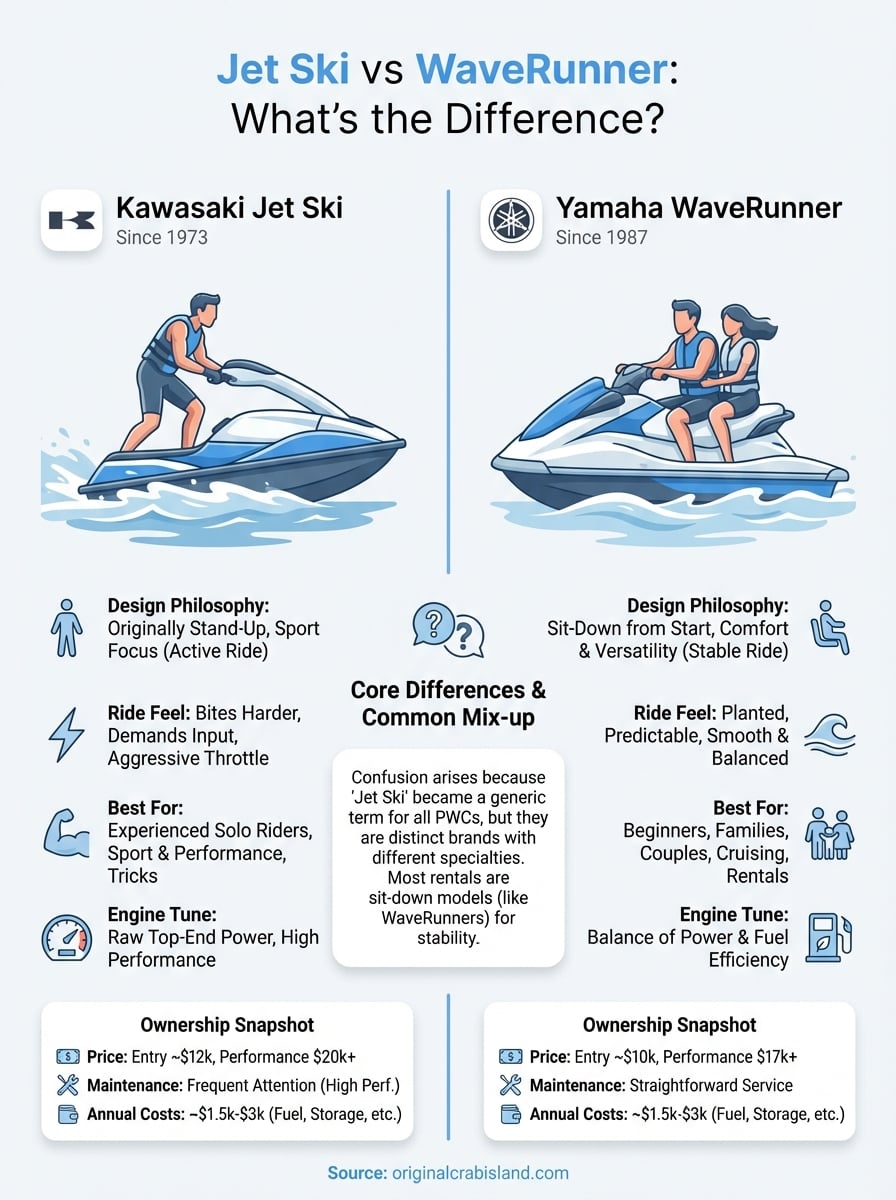
Kawasaki’s Jet Ski line originally launched as a stand-up watercraft, meaning you ride it the way you’d stand on a surfboard. That design demands balance, core strength, and active body movement to steer. Yamaha built the WaveRunner from day one as a sit-down, multi-rider craft, which lowered the skill floor dramatically and opened the machine up to couples and families rather than just experienced solo riders.
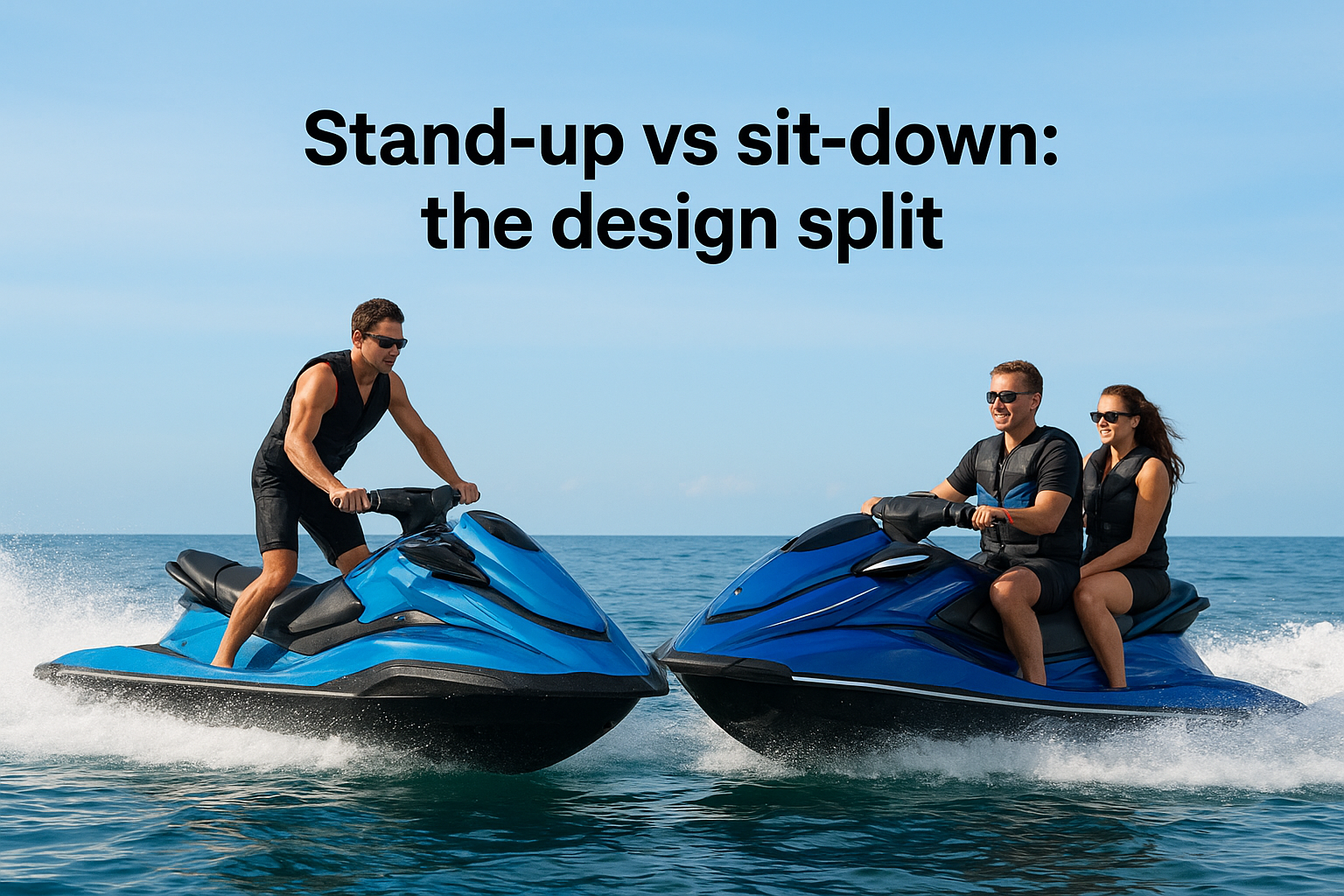
The sit-down design is the reason WaveRunners dominate rental fleets: they’re accessible to first-time riders without much coaching.
Today, Kawasaki does produce sit-down Jet Ski models, so the stand-up distinction isn’t absolute anymore. Still, Kawasaki’s identity remains tied to performance and sport riding, while Yamaha leans into comfort and versatility across its WaveRunner lineup.
Engine output and handling feel
Both brands run four-stroke supercharged engines in their top-tier models, but they tune their machines differently. Kawasaki’s Jet Ski Ultra series pushes toward raw top-end power, built for riders who want speed as the primary experience. Yamaha’s WaveRunner FX and VX lines balance power with hull stability and fuel efficiency, making them better suited for longer cruises or riders carrying passengers.
You’ll feel that difference immediately when you open the throttle. The Kawasaki bites harder and demands more rider input, while the Yamaha feels planted and predictable at speed.
How to choose the right PWC for your trip
Once you understand the jet ski vs waverunner difference, the next step is figuring out which machine actually fits your trip. Your answer depends on three things: your experience level, your group size, and your goals on the water. Getting that match right before you book saves you from an uncomfortable ride or a machine that feels like too much to handle.
Match the machine to your experience level
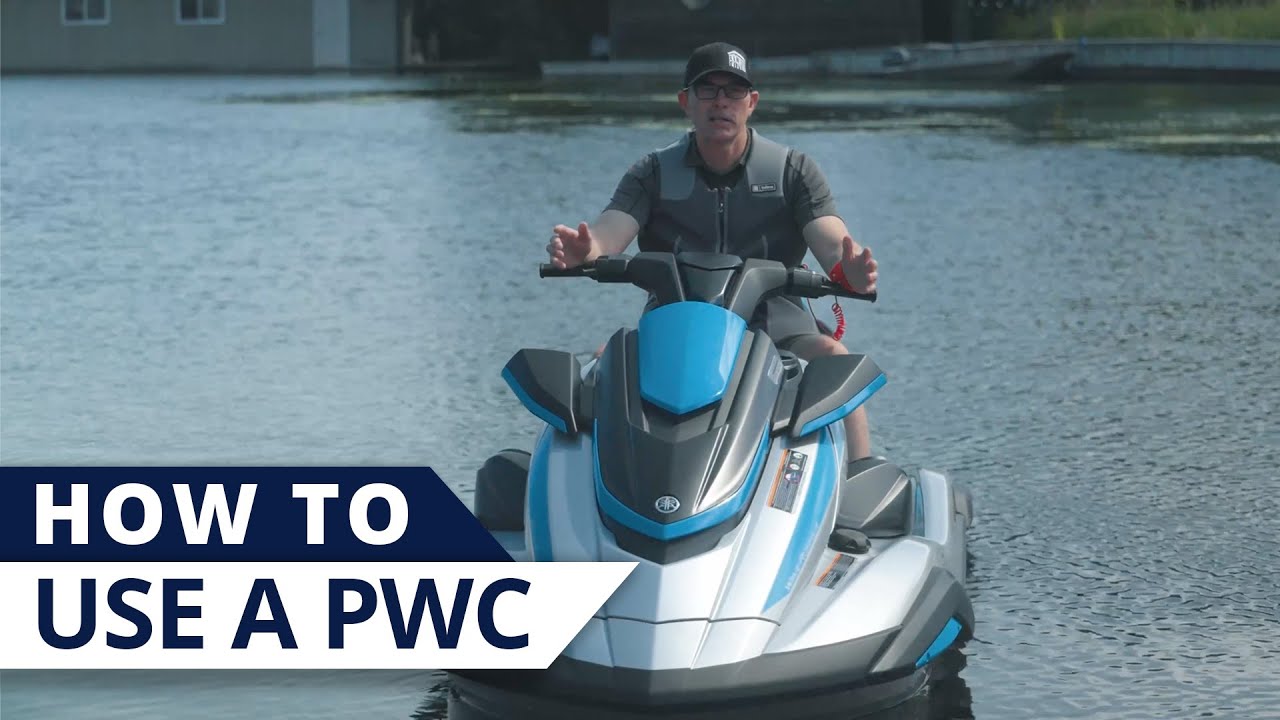
If you’ve never ridden a PWC before, a sit-down WaveRunner-style machine is the right starting point. The stable hull makes it far easier to control at moderate speeds, and you can bring a passenger without worrying about balance. Kawasaki’s stand-up Jet Ski design suits riders who already have water experience and want a physically demanding, responsive ride.
First-time riders who try a stand-up PWC without prior experience usually spend more time falling off than actually riding.
Here’s a quick breakdown by skill level:
- Beginner: Sit-down craft with a stable hull and low seat height
- Intermediate: Sit-down performance model with higher horsepower
- Advanced: Stand-up or sport-tuned PWC with aggressive throttle response
Think about your group size and goals
Your group size changes the equation entirely. A two- or three-person sit-down craft handles couples and small families well, while a solo performance model suits riders focused purely on speed and handling.
If your goal is a relaxed cruise or sightseeing trip, stability and fuel range matter more than raw horsepower. Match the machine to the actual activity you’re planning, not just the one that sounds most exciting on paper.
Costs, maintenance, and what owners should expect
Understanding the jet ski vs waverunner difference goes beyond the ride itself when you’re considering ownership. Both brands carry similar price ranges in their comparable model tiers, but the long-term costs and upkeep commitments differ enough to factor into your buying decision.
Purchase price and running costs
New Kawasaki Jet Ski models start around $12,000 for entry-level sit-down versions and climb past $20,000 for the Ultra series. Yamaha WaveRunners follow a comparable pricing curve, with the VX line opening near $10,000 and the FX series pushing toward $17,000 and above. Used models from both brands typically sell for 30 to 50 percent less depending on age, hours logged, and condition.
Fuel, storage, insurance, and registration fees add roughly $1,500 to $3,000 per year to your total ownership cost beyond the purchase price.
Here’s a basic cost comparison between model tiers:
| Model Tier | Kawasaki Jet Ski | Yamaha WaveRunner |
|---|---|---|
| Entry-level | ~$12,000 | ~$10,000 |
| Mid-range | ~$15,000 | ~$13,000 |
| Performance | $20,000+ | $17,000+ |
What maintenance actually looks like
Both brands require seasonal maintenance that includes impeller inspection, spark plug replacement, oil changes, and hull checks. Yamaha WaveRunners have a strong reputation among mechanics for parts availability and straightforward service intervals, which keeps labor costs more predictable over time.
Kawasaki’s performance models run harder and may need more frequent attention to the supercharger and cooling system if you use the machine aggressively. Budget around $300 to $600 annually for routine service on either brand, and keep an eye on the wear ring around the impeller since saltwater riding accelerates that component’s degradation faster than freshwater use.
Safety and local rules for Destin and Crab Island
No matter which side of the jet ski vs waverunner difference you land on, the rules on the water apply equally to every PWC. Destin enforces specific speed limits and navigation zones, and Crab Island sits in a high-traffic area where ignoring those rules puts you and other swimmers at real risk.
Knowing the local rules before you launch is just as important as knowing how to operate the machine.
Speed zones and no-wake areas near Crab Island
Crab Island and the surrounding Choctawhatchee Bay are designated slow-speed, minimum-wake zones in several stretches. Florida law requires PWC operators to maintain a safe distance from other vessels, swimmers, and structures at all times. The Destin Bridge area and the sandbar itself see heavy foot traffic during peak season, so staying at idle or slow speed near these zones isn’t optional.
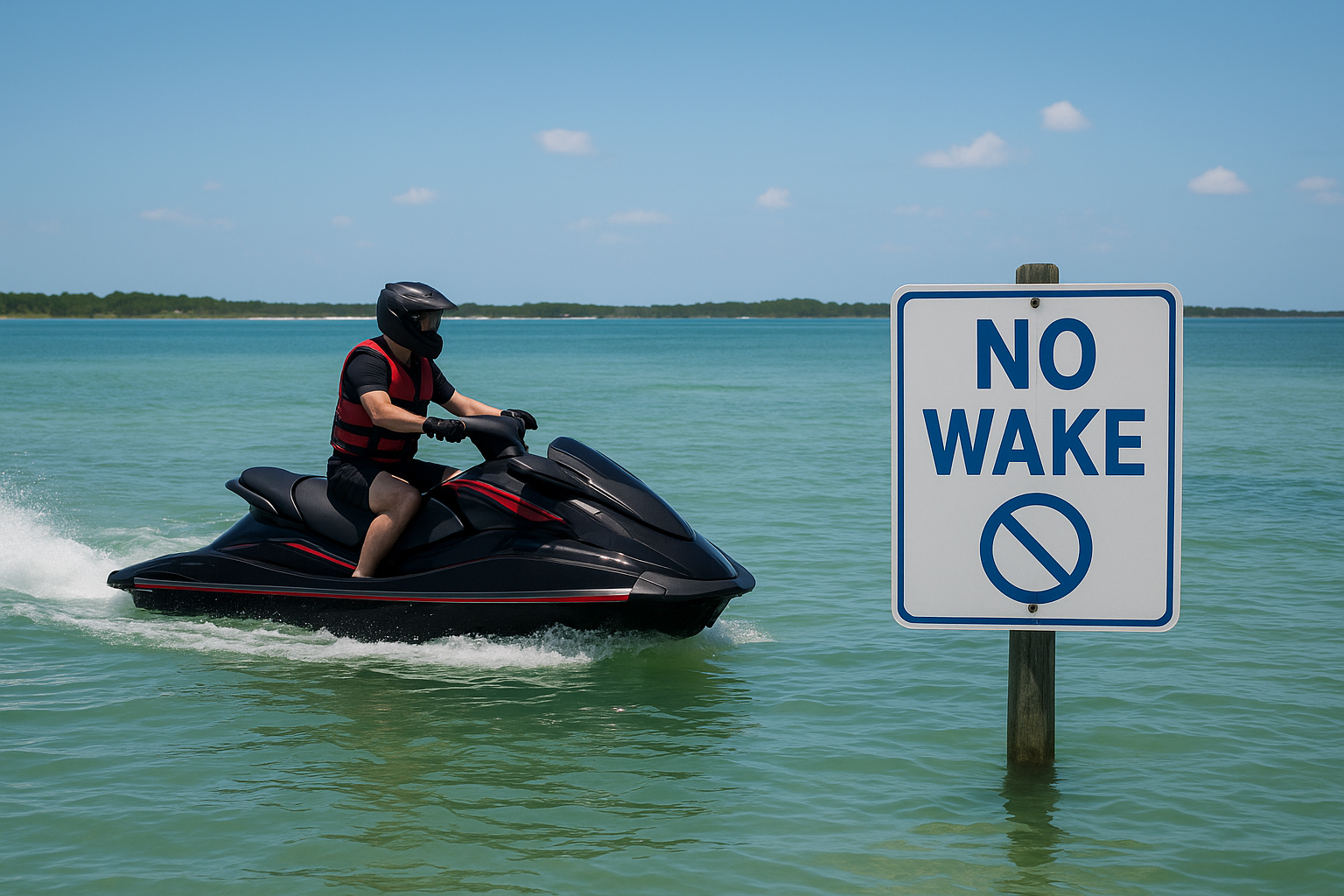
Florida’s Fish and Wildlife Conservation Commission publishes updated zone maps and boating regulations that you should review before your trip. Penalties for reckless operation near a swim area include fines and potential suspension of your boating privileges.
What you need before you ride
Florida law requires anyone born on or after January 1, 1988 to carry a state-approved boating safety education card while operating a PWC. You’ll also need a valid photo ID and a kill switch lanyard attached to your body whenever the engine is running. Most rental operators will walk you through these requirements, but knowing them ahead of time keeps your day on the water running smoothly without delays at the dock.
Make your pick and plan your ride
The jet ski vs waverunner difference comes down to a straightforward choice: stand-up sport performance from Kawasaki or stable, sit-down versatility from Yamaha. If you’re a first-time rider or bringing passengers along, a WaveRunner-style machine gives you the best experience without fighting the craft. If you want a physically demanding, high-performance ride and you already have water experience, a Kawasaki Jet Ski fits that goal well.
Either way, you don’t need to own one to enjoy a great day on the water in Destin. Renting puts you on a well-maintained machine without storage, maintenance, or upfront cost. Before you arrive, review the local speed zones and safety requirements covered in this article so your first minutes on the water go smoothly.
Ready to ride? Book your jet ski rental at Original Crab Island and get out on the Gulf this season.
Popular Crab Island Pages
- Crab Island Pontoon Rentals
- Crab Island Fishing Charters
- Crab Island Boat and Yacht Rentals
- Crab Island Parasailing
- Crab Island Jet Ski Rentals
- Crab Island Helicopter Rides
- Crab Island Snorkeling Tours
- Crab Island Paddleboard Rentals
- Crab Island Kayak Rentals
- Crab Island Bike Rentals
- Crab Island Shark Boat
- Crab Island Pirate Ship
- Crab Island Tiki Rentals
- Crab Island Snorkeling Tours


