
You see those colorful parachutes floating high above the emerald waters and wonder if it’s actually safe up there. Is parasailing safe enough to risk strapping yourself to a boat and launching hundreds of feet into the air? You’re not alone in asking. Every year, thousands of first time flyers face this exact question while standing on the dock, watching others soar overhead. The truth is that parasailing accidents happen, but they’re rare when operators follow proper safety protocols.
This article breaks down five critical factors that determine whether your parasailing experience will be thrilling or terrifying. You’ll learn how to spot a reputable operator, what the actual safety statistics reveal, and which weather conditions should keep you grounded. We’ll also cover the equipment inspection standards you should demand and the physical requirements you need to meet before taking flight. Armed with this knowledge, you’ll make an informed decision about whether parasailing belongs on your vacation checklist.
1. Choosing a reputable operator
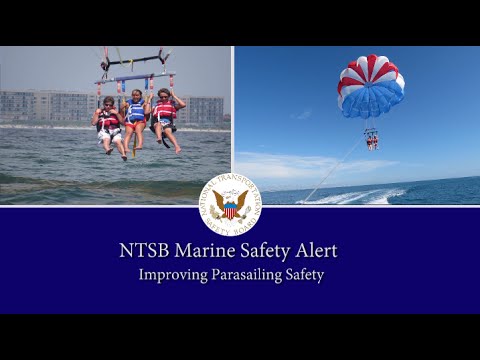
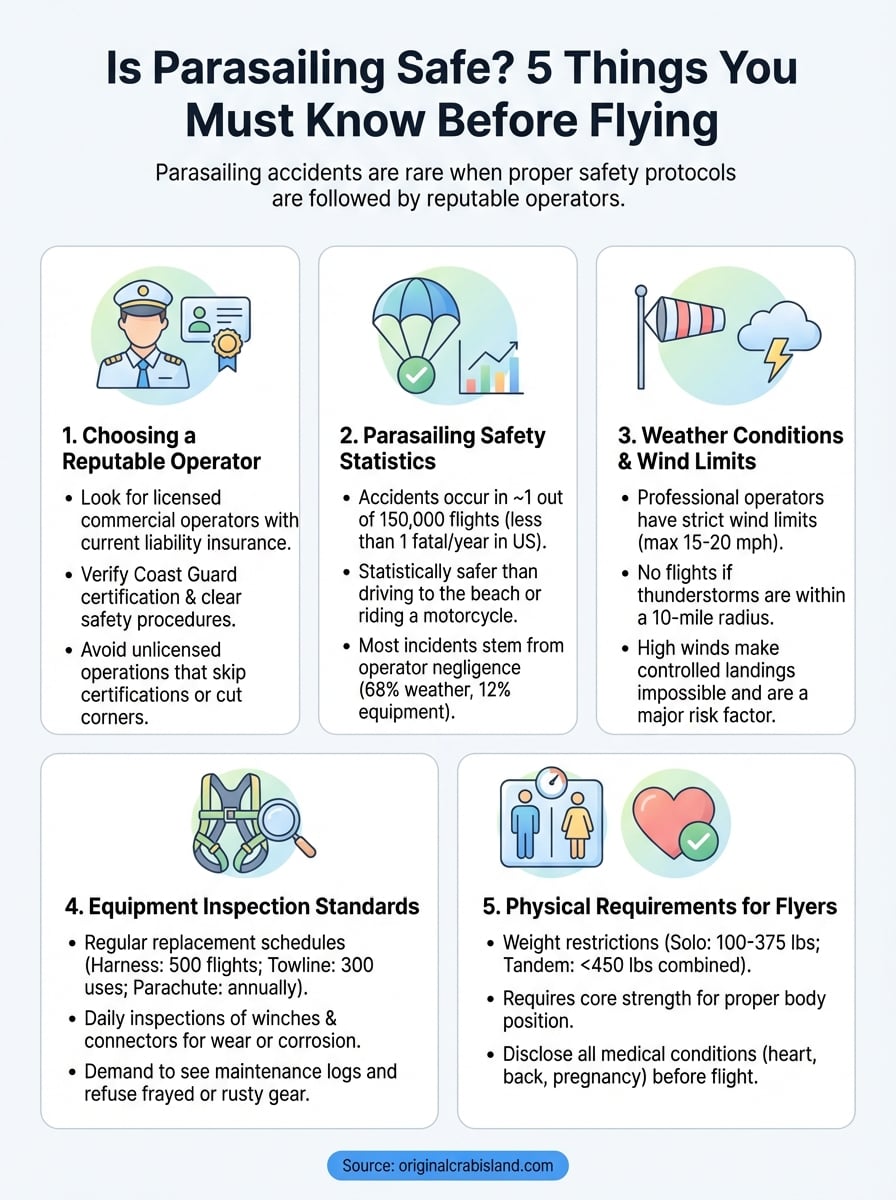
Your parasailing operator makes or breaks your safety in the air. Licensed commercial operators follow strict protocols for equipment maintenance, weather monitoring, and crew training, while unlicensed operations cut corners that put you at risk. The difference between a professional outfit and a backyard operation often comes down to insurance coverage, regular inspections, and accountability to regulatory bodies.
Understanding the risks
Unlicensed operators pose the biggest threat to your safety. Unregulated parasailing businesses skip expensive safety certifications, use outdated equipment, and hire inexperienced crew members who lack proper training. These operators often charge lower prices to attract customers but sacrifice safety standards to maximize profits. When accidents happen with unlicensed operators, you’ll find limited or no insurance coverage to handle medical expenses or legal claims.
The majority of parasailing fatalities and serious injuries trace back to operators who ignored weather warnings or used faulty equipment.
How to ensure safety
Start by asking if the operator holds current liability insurance and meets United States Coast Guard regulations for commercial parasailing. Check online reviews specifically mentioning safety procedures and how crews handled rough conditions or equipment issues. Legitimate operators display their certifications prominently and welcome questions about their safety record.
Look for companies that limit flights based on wind speed restrictions (typically 15-20 mph maximum) and wave height. Reputable operators will cancel your reservation without penalty when conditions turn dangerous, even if you’re already at the dock. Ask about their equipment inspection schedule and whether they replace harnesses, towlines, and parachutes according to manufacturer recommendations. You deserve straight answers to these questions before you hand over your credit card.
2. Parasailing safety statistics
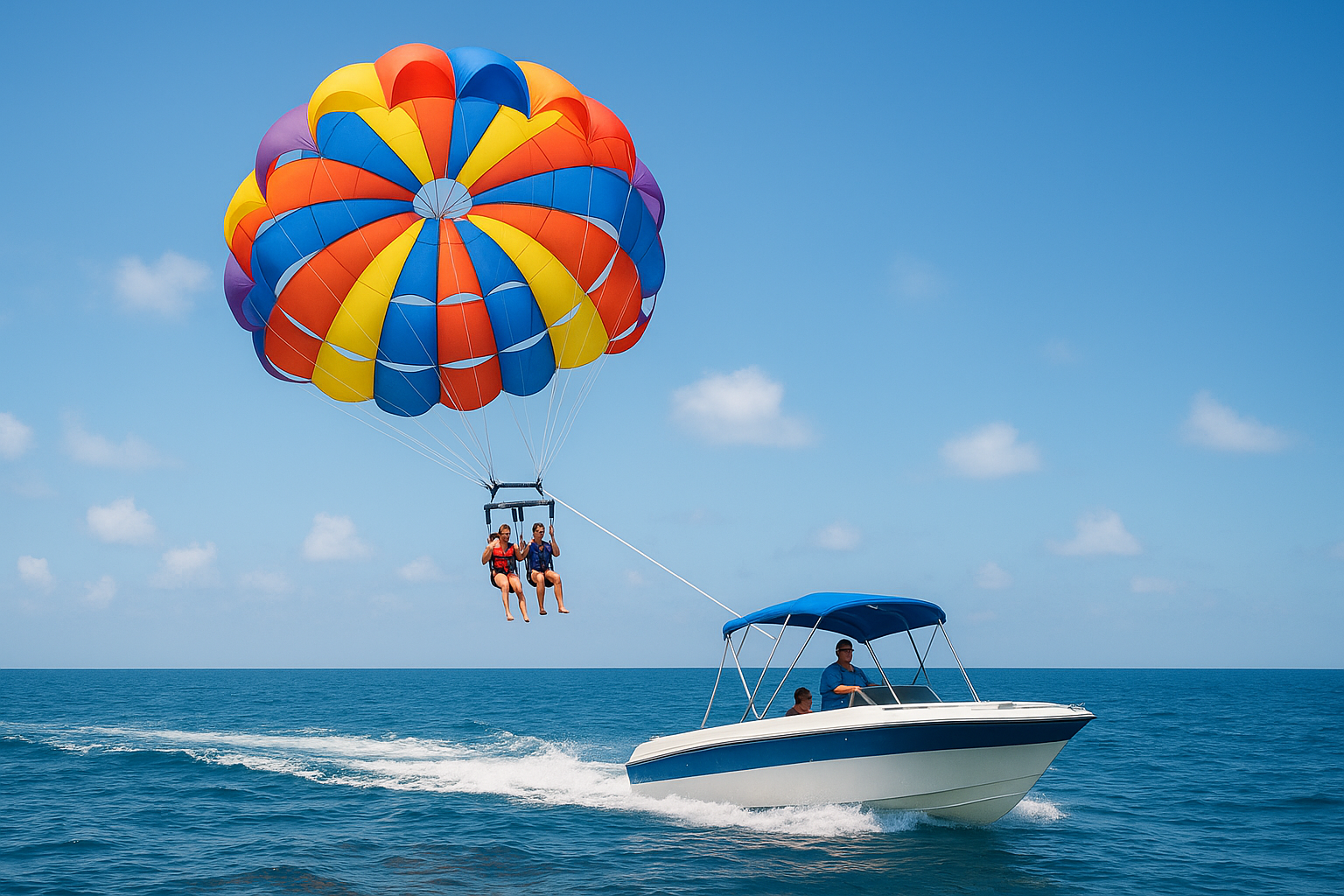
The numbers tell a reassuring story about parasailing safety. Parasailing accidents occur in roughly 1 out of every 150,000 flights, making this activity statistically safer than riding a motorcycle or even driving to the beach. The Parasail Safety Council tracks incidents across North America and reports that properly regulated commercial operations maintain an exceptional safety record when compared to other adventure sports.
Understanding the risks
Most parasailing injuries stem from operator negligence rather than inherent dangers in the activity itself. Equipment failures account for only 12% of reported accidents, while weather-related incidents make up 68% of serious cases. The remaining 20% involve improper harnessing or docking procedures during takeoff and landing. Fatal accidents remain extremely rare, averaging less than one per year across millions of annual flights in the United States.
Statistically speaking, is parasailing safe? The data shows you face greater risk driving to the parasailing dock than you do while airborne.
How to ensure safety
Use these statistics to evaluate your chosen operator’s track record. Ask directly about their accident history over the past five years and compare it to industry averages. Operators with zero incidents demonstrate superior safety protocols and equipment maintenance. Cross-reference their claims by searching public safety databases and local news reports for any unreported problems.
3. Weather conditions and wind limits
Weather determines whether your parasailing flight happens at all. Professional operators refuse to launch when wind speeds exceed 15 to 20 mph or when thunderstorms appear within a 10-mile radius. These limits exist because gusty winds can slam you into the water during descent, while lightning poses an obvious threat when you’re tethered to a metal cable hundreds of feet in the air.
Understanding the risks
High winds create unpredictable flight patterns that make controlled landings impossible. Winds above 20 mph generate powerful updrafts and downdrafts that can snap towlines or swing you violently from side to side. Sudden weather changes catch inexperienced operators off guard, leaving them scrambling to reel you in before conditions worsen. Rain reduces visibility for boat crews and makes equipment slippery and harder to manage during your return.
Sixty-eight percent of serious parasailing accidents occur when operators ignore weather warnings and launch in marginal conditions.
How to ensure safety
Check the hourly weather forecast yourself before heading to your scheduled flight. Watch for wind speed predictions, storm warnings, and wave heights that might force cancellations. Call your operator two hours before departure to confirm they’re still flying and ask about current wind conditions at the launch site. If winds measure above 15 mph or you see dark clouds forming, reschedule without hesitation regardless of what the operator says.
4. Equipment inspection standards
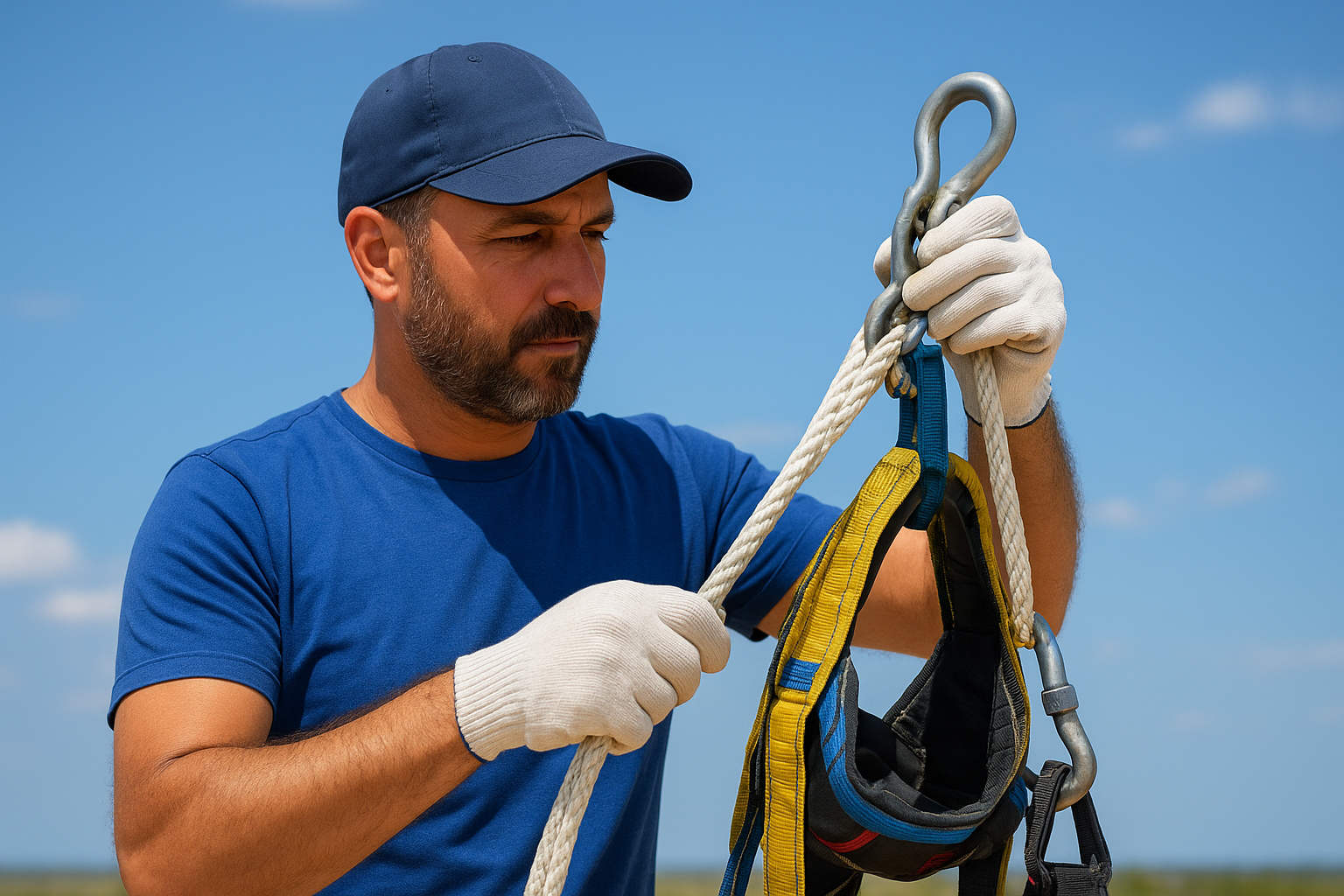
Your parasailing equipment needs regular inspection schedules that meet or exceed manufacturer specifications. Professional operators replace harnesses every 500 flights, towlines after 300 uses, and parachutes annually regardless of visible wear. The winch system, quick-release mechanisms, and all metal connectors require inspection before each day’s first flight to catch stress fractures or corrosion that could cause catastrophic failures.
Understanding the risks
Worn equipment fails without warning when subjected to wind stress and passenger weight. Frayed towlines snap mid-flight, dropping you into the water from hundreds of feet up. Corroded quick-release clips jam during emergencies, preventing crews from detaching you from dangerous situations. Damaged harnesses spread stress unevenly across your body, causing painful injuries even during smooth flights or leading to complete separation from the parachute.
Equipment that looks fine to untrained eyes often hides internal damage that only professional inspection reveals.
How to ensure safety
Ask your operator when they last replaced major components and request to see their maintenance logs. Watch the crew inspect your harness before fitting it and look for visible wear patterns like fraying stitches or discolored webbing. Refuse any equipment showing rust, tears, or makeshift repairs using duct tape or zip ties. Legitimate operators welcome these questions and show you their inspection records without defensiveness.
5. Physical requirements for flyers
Physical limitations affect your parasailing safety more than most operators admit. Weight restrictions typically range from 100 to 375 pounds per person, with tandem flights requiring combined weights under 450 pounds. Your physical condition matters because you need enough core strength to maintain proper body position during takeoff and landing. Age restrictions vary, but most operators require children under 6 years old to fly tandem with an adult.
Understanding the risks
Weak upper body strength leads to harness discomfort and difficulty controlling your position during wind gusts. Passengers exceeding weight limits stress the parachute beyond its design capacity, increasing the risk of equipment failure or uncontrolled descents. Heart conditions, pregnancy, back problems, and recent surgeries all create dangerous complications when combined with the physical stress of rapid altitude changes and G-forces during takeoff.
Is parasailing safe for someone with pre-existing medical conditions? Only your doctor can make that call, but operators should refuse to fly anyone who reveals serious health concerns.
How to ensure safety
Disclose all medical conditions to your operator before signing waivers, even if you think they seem minor. Ask about specific weight measurements using scales rather than visual estimates that operators sometimes use to avoid turning away paying customers. Verify that children meet minimum age and weight requirements independently, as some operators bend rules to accommodate families. Skip parasailing if you’ve had surgery within the past three months or if your doctor has restricted physical activities.
Enjoying a safe flight
You now know the answer to "is parasailing safe" depends entirely on the choices you make before leaving the dock. Reputable operators with clean safety records, proper certifications, and strict weather policies give you the thrilling experience without unnecessary risk. The statistics prove that parasailing remains remarkably safe when you skip the bargain operators and demand professional standards.
Your preparation determines your peace of mind during the flight. Verify equipment condition, confirm weight limits, disclose medical conditions, and trust your instincts if something feels off about the operation. Thousands of visitors soar above the Emerald Coast every year and return with nothing but incredible memories and stunning photos.
Ready to experience Destin’s crystal waters from a breathtaking new perspective? Original Crab Island offers parasailing with certified crews who prioritize your safety above all else. Book your flight and discover why parasailing over these turquoise waters creates the highlight of any Florida vacation.
Popular Crab Island Pages
- Alquiler de pontones en Crab Island
- Chárters de pesca en Crab Island
- Crab Island Boat and Yacht Rentals
- Parapente acuático en Crab Island
- Alquiler de motos acuáticas en Crab Island
- Crab Island Helicopter Rides
- Crab Island Snorkeling Tours
- Crab Island Paddleboard Rentals
- Crab Island Kayak Rentals
- Alquiler de bicicletas en Crab Island
- Crab Island Shark Boat
- Crab Island Pirate Ship
- Crab Island Tiki Rentals
- Crab Island Snorkeling Tours


