Crab Island draws thousands of visitors to Destin, Florida every year, and most of them show up without knowing the crab island rules that could save them from a fine or a ruined afternoon. There’s no entrance gate, no posted signs on the sandbar, and no one handing you a rule book when you pull up. That’s where confusion starts.
At Original Crab Island, we send boaters and groups out to the sandbar daily. We see what happens when people don’t know about alcohol regulations, anchor zones, or who actually needs a boating license. Some of these rules are Florida state law. Others are local ordinances specific to Destin and the Choctawhatchee Bay. Either way, violating them can mean citations, gear confiscation, or worse.
This guide breaks down the five most important rules and safety tips you need before heading to Crab Island in 2026, covering everything from legal drinking age enforcement on the water to required safety equipment on your vessel.
1. Book a legit boat rental or captain
Getting to Crab Island legally starts before you leave the dock. You need a licensed operator or a properly registered vessel to access the sandbar, and skipping this step is one of the fastest ways to get flagged by the U.S. Coast Guard or Okaloosa County marine patrol.
Use legal access only and skip risky shortcuts
Every vessel operating in Destin’s waterways must be properly registered and operated by someone who meets Florida’s requirements. Paddling over from a random shoreline or hitching a ride on an unlicensed vessel puts you outside the legal framework that governs crab island rules in this area.
Okaloosa County has increased on-water enforcement presence at Crab Island during peak summer months, and citations for unregistered or improperly operated vessels are common.
Pick the right option for your group size and vibe
Pontoon boats work well for families and larger groups who want space to relax and anchor near the sandbar. For smaller groups who want more flexibility, a deck boat or jet ski rental lets you cover more of the water.
Know what shuttle boats can and cannot do in 2026
Shuttle boats can transport passengers to the sandbar, but they cannot legally sell or distribute alcohol on board. They must also follow U.S. Coast Guard capacity limits based on the vessel’s certification, and operators are required to display their documentation number visibly.
Ask these questions before you book with any operator
Before you pay a deposit, confirm these specifics with any rental or charter company:
- Does the captain hold a valid U.S. Coast Guard operator’s license?
- Is the vessel currently registered in Florida?
- Does the rental include life jackets for every passenger?
- What is the cancellation policy for bad weather?
Plan your launch spot, timing, and return plan
Peak crowds at Crab Island build quickly after 10 a.m. Launch from a permitted public boat ramp in Destin, aim to arrive early for a better anchor position, and confirm your return pickup window before you leave the dock.
2. Follow Florida boating license and safety gear rules
Florida enforces boating education requirements and mandatory safety gear rules on every waterway, including the stretch between Destin and Crab Island. Ignoring these rules puts you at risk of a citation before you even anchor.
Know who needs a Florida boater education card
Anyone born on or after January 1, 1988 must carry a Florida Boater Education Card to legally operate a motorized vessel. Renters typically receive a temporary operator certificate through their rental company, but confirm this before you leave the dock.
Meet life jacket requirements before you leave the dock
Every passenger on board must have a properly sized, Coast Guard-approved life jacket. Rental operators are required to supply these, but confirm the count matches your group size before departure.
Keep kids safe with the under-6 life jacket rule
Children under 6 years old must wear a life jacket at all times on a vessel under 26 feet, per Florida state law. This is one of the crab island rules that carries a mandatory fine with no warnings issued.
Florida Fish and Wildlife Conservation Commission officers actively patrol Crab Island and will board your vessel to verify compliance.
Stay ready for law enforcement checks on the water
Keep your registration documents and boater ID accessible at all times. Officers can and do perform random stops without warning.
Avoid the most common paperwork and ID mistakes
Bring physical copies of your boater education card and vessel registration rather than relying on a phone screenshot. Digital versions are not always accepted on the water.
3. Handle alcohol the legal way at Crab Island
Alcohol is legal at Crab Island, but several crab island rules govern how you bring it, consume it, and store it. Vendors on the water cannot sell or serve alcohol, so any drinks you plan to have need to come with you from shore.
Understand what you can bring and what vendors cannot sell
You can bring sealed, pre-purchased alcohol onto your boat or to the sandbar. Floating vendors at Crab Island are not licensed to sell alcohol, and purchasing from unlicensed sellers puts you in violation of Florida law.
Skip glass and pack safer drink containers
Glass containers are prohibited at Crab Island. Pack drinks in plastic or aluminum containers to stay compliant and avoid fines from patrol officers.
Prevent boating under the influence and designate a captain
Florida treats boating under the influence the same as a road DUI. Designate a sober operator before you leave the dock and keep that person off the drinks for the entire trip.
Florida law sets the legal BAC limit for boat operators at 0.08%, and FWC officers conduct active sobriety checks on the water.
Manage heat, dehydration, and mixing alcohol with sun
Heat and alcohol accelerate dehydration faster than most people expect. Drink at least one water for every alcoholic beverage you consume throughout the day.
Keep your cooler setup legal and easy to clean up
Pack a sealed, lidded cooler and carry all bottles and cans back with you when you leave. Leaving trash on the sandbar can result in a littering citation from Okaloosa County patrol.
4. Anchor and operate safely in a crowded sandbar
Crab Island packs dozens of boats into a tight space, and the crab island rules around anchoring and vessel operation exist to protect everyone in that area. Poor anchoring decisions and speeding near swimmers cause most of the preventable accidents on the sandbar each season.
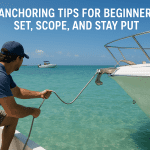
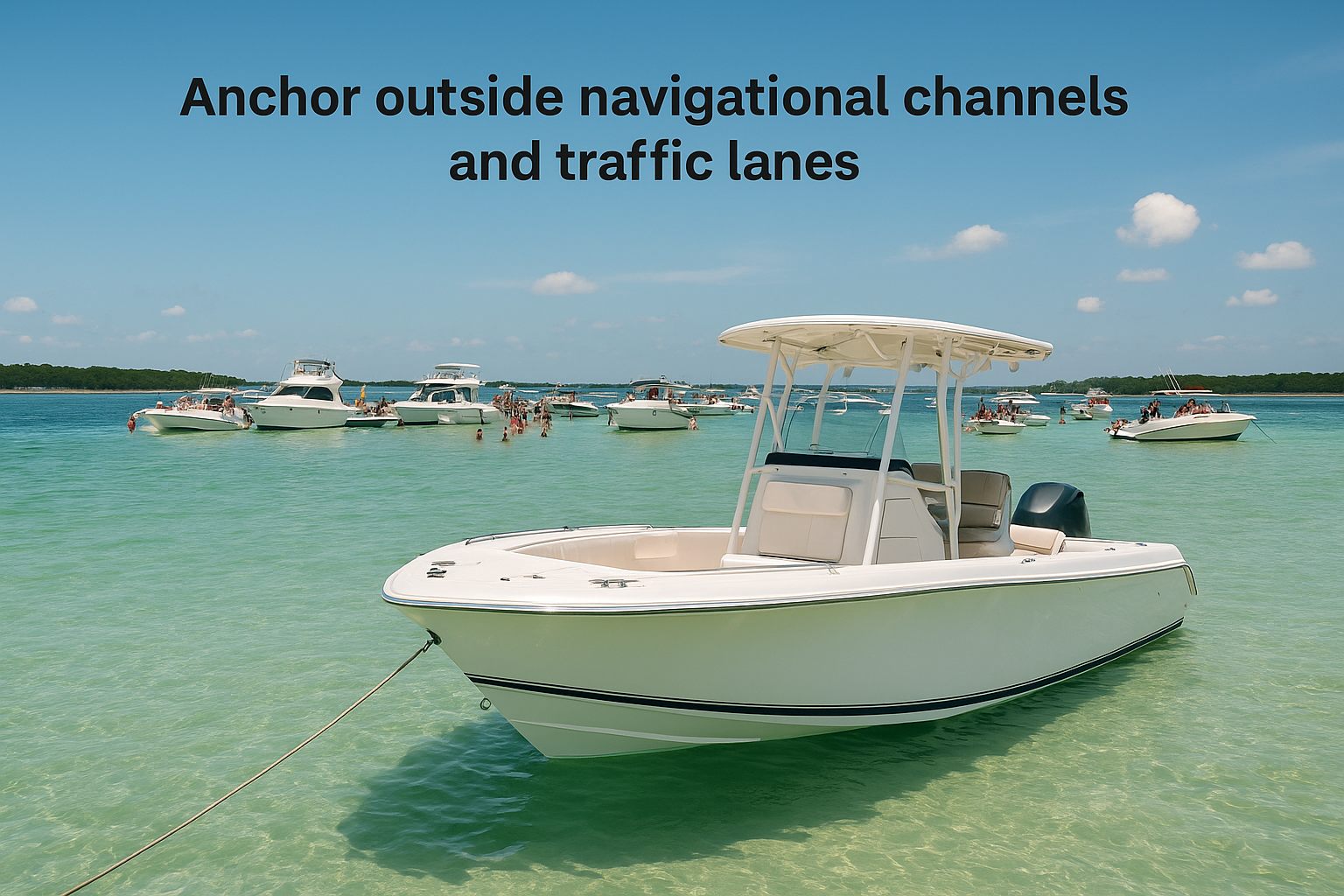
Anchor outside navigational channels and traffic lanes
Drop your anchor well away from marked channels and keep your vessel out of active boat traffic lanes. Anchoring inside a navigational channel is illegal under both Florida state law and federal regulations, and patrol officers will act on it immediately.
Follow idle speed and no-wake zones near boats and swimmers
Idle speed zones surround Crab Island during peak hours. Your wake can knock people off paddleboards, injure swimmers, and damage neighboring vessels, so reduce speed well before you reach the crowd.
FWC officers issue no-wake citations on the spot, and fines increase for repeat violations during the same outing.
Do not tie off to bridge pilings, markers, or buoys
Tying to any navigational aid is a federal violation regardless of how temporary it seems. Secure your vessel using your own anchor gear only.
Know the 2026 overnight anchoring limits for businesses
Commercial operators cannot anchor overnight at Crab Island under current Okaloosa County rules. Private boaters should verify current limits with FWC before planning to stay past sunset.
Use anchor lines, sandbar stakes, and spacing that prevent collisions
Keep at least 10 feet of clearance between your vessel and neighboring boats. Sandbar stakes marked with bright flags help other operators spot your lines before crossing them.
5. Swim smart around currents, tides, and wildlife
Crab Island looks shallow and calm, but the water around the sandbar carries hazards that surprise visitors every season. Following crab island rules for swimming and wildlife protects your group from the most common injuries on the sandbar.
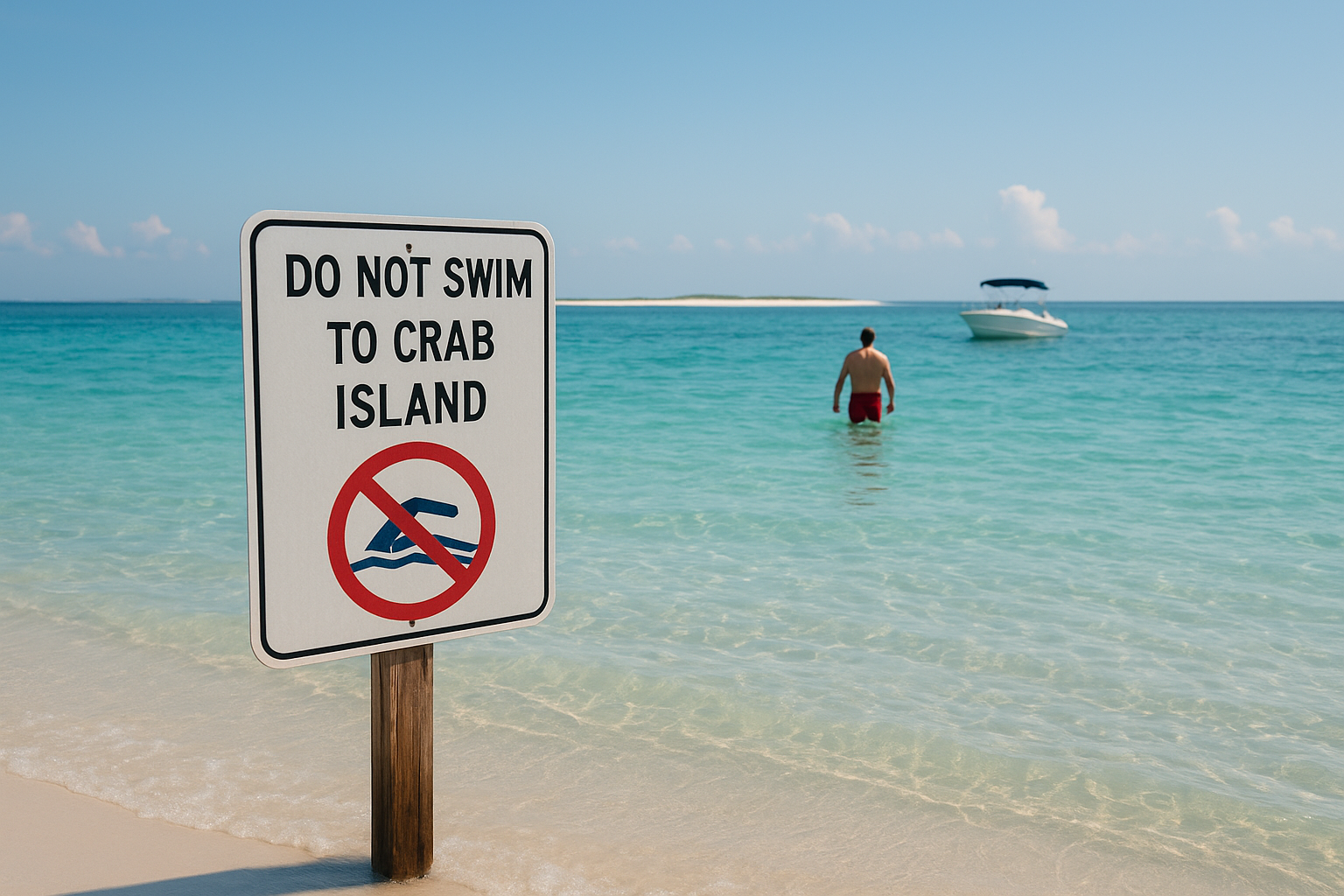
Do not swim to Crab Island and do not wander into deeper water
Never swim to Crab Island from shore. Boat traffic between the sandbar and the Destin bridge creates serious strike hazards for anyone crossing open water.
Treat the current like a real hazard even in shallow areas
Tidal currents shift quickly in the bay, and ankle-deep water near the sandbar edge can pull you off balance. Keep children in arm’s reach at all times.
The National Weather Service publishes daily tide charts for the Destin area you can check before heading out.
Skip diving in shallow water and watch for boats and props
Never dive headfirst into the sandbar water. Depths change with tides, and spinning propellers from passing vessels pose a serious injury risk to anyone in the water.
Time your visit with tide and visibility in mind
Low tide shrinks the sandbar and speeds up currents along the edges. Plan your arrival during mid-to-high tide for more stable, safer swimming conditions.
Respect marine life, protect seagrass, and pack out trash
Avoid standing on seagrass beds visible through the clear water, since Florida law protects these habitats. Carry all trash back to shore when you leave.
Final checklist
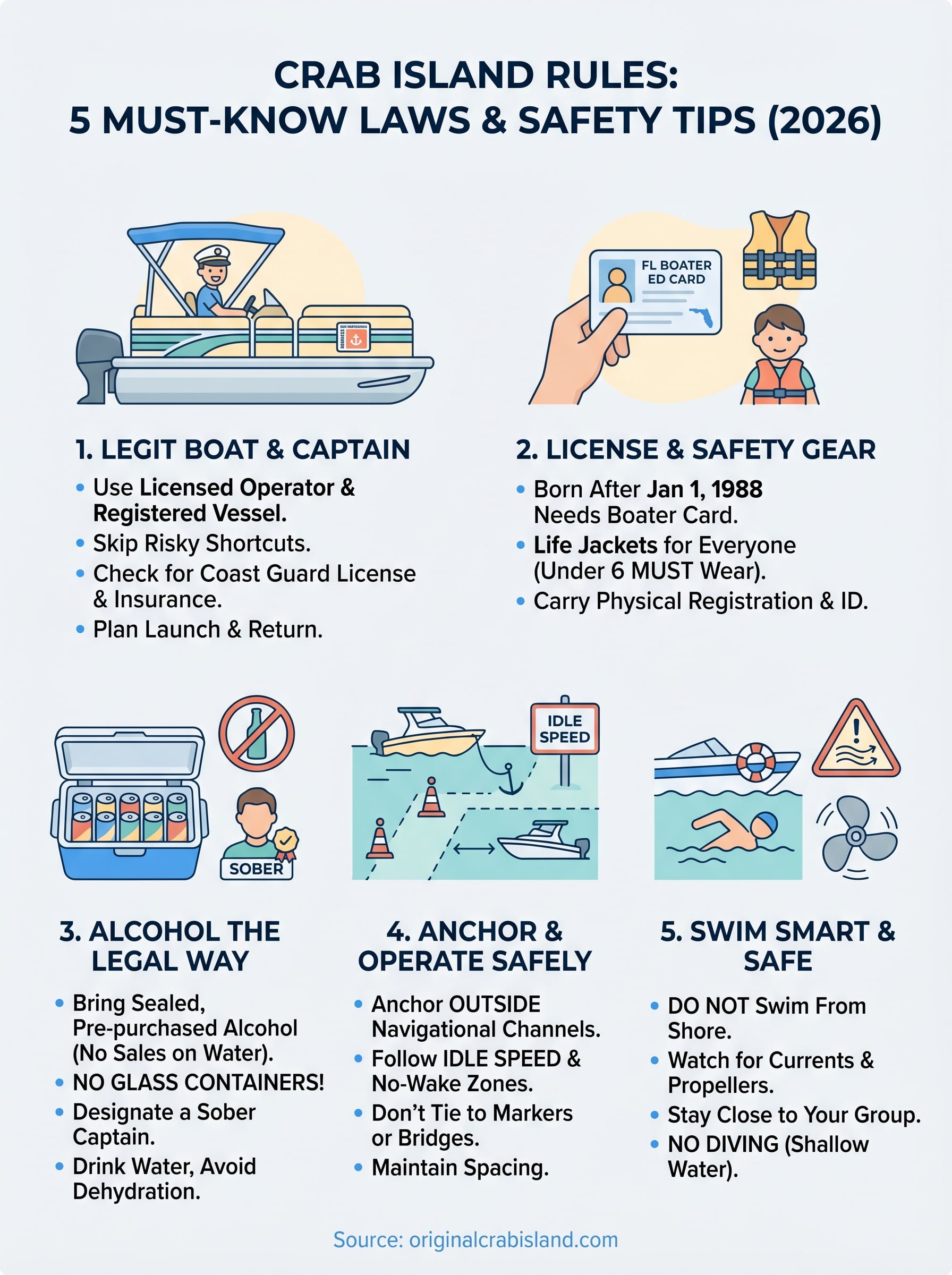
These five crab island rules cover everything that matters before you leave the dock in 2026. Book a licensed operator or registered vessel, carry your Florida Boater Education Card if you were born after January 1, 1988, and make sure every passenger has a properly fitted life jacket. Pack drinks in plastic or aluminum containers only, designate a sober captain before departure, and bring all your trash back to shore.
On the water, anchor outside navigational channels, respect idle speed zones around swimmers and boats, and never tie off to markers or buoys. When you get in the water, stay close to your group, skip the headfirst dives, and watch for boat traffic around the sandbar edges.
Following these rules protects your group and keeps your day on the water exactly what you came for. Ready to head out? Book a pontoon or boat rental with Original Crab Island and start your trip the right way.
For more options, explore our Crab Island services página.
Popular Crab Island Pages
- Alquiler de pontones en Crab Island
- Chárters de pesca en Crab Island
- Crab Island Boat and Yacht Rentals
- Parapente acuático en Crab Island
- Alquiler de motos acuáticas en Crab Island
- Crab Island Helicopter Rides
- Crab Island Snorkeling Tours
- Crab Island Paddleboard Rentals
- Crab Island Kayak Rentals
- Alquiler de bicicletas en Crab Island
- Crab Island Shark Boat
- Crab Island Pirate Ship
- Crab Island Tiki Rentals
- Crab Island Snorkeling Tours