Nothing kills a good day on the water faster than watching your boat drift away from the spot you just picked out. If you’re new to boating around Destin, Florida, especially heading out to Crab Island, knowing a few solid anchoring tips for beginners can mean the difference between a relaxing afternoon and a stressful one. Getting your anchor right is one of those fundamental skills that experienced boaters take for granted but rarely explain well to newcomers.
At Original Crab Island, we put renters on pontoons, jet skis, and other watercraft every single day. We see firsthand how proper anchoring technique matters, particularly on a shallow sandbar where dozens of boats gather in close quarters. That’s exactly why we put this guide together, to give you practical, no-fluff advice you can use on your very next trip.
Below, you’ll find five straightforward tips covering everything from choosing the right anchor for your setup to dialing in your scope ratio so you actually stay put. Whether you’re renting a pontoon for the first time or you just bought your own boat, these basics will help you anchor with confidence instead of guesswork.
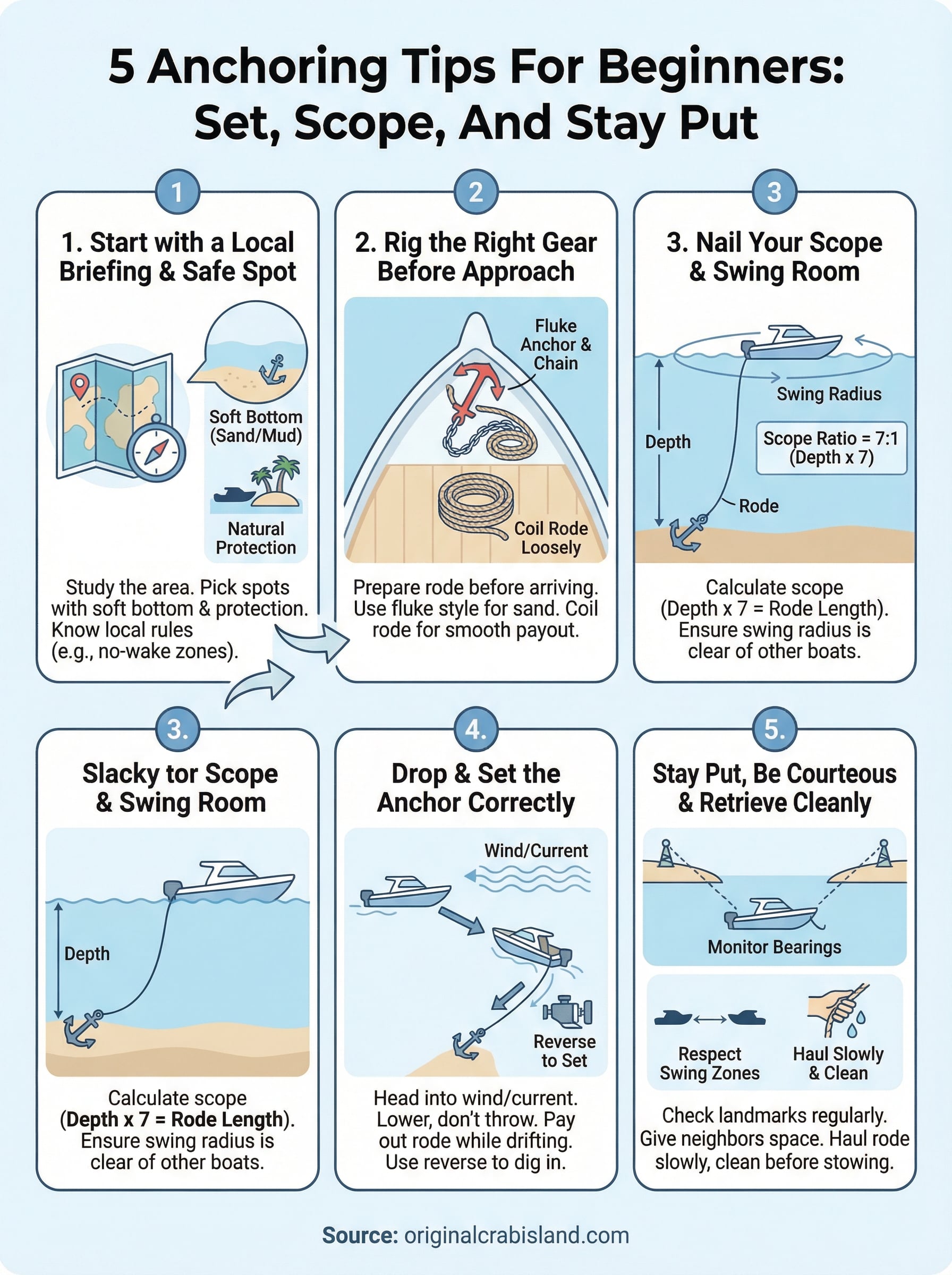
1. Start with a local briefing and a safe spot
Before you even touch your anchor line, you need to know where you’re going and what the bottom looks like when you get there. Skipping this step is the number-one mistake beginners make, and it turns a fun outing into a frantic scramble. Taking 10 minutes to study the area before you leave the dock saves you a lot of trouble later.
What "a good anchorage" looks like for beginners
A good anchorage gives you soft bottom material, like sand or mud, so your anchor can dig in and hold. Hard rock or heavy vegetation makes setting an anchor unreliable. You also want enough depth to swing without grounding out when the tide drops, but not so deep that you need an impractical amount of rode to reach the bottom. Shallow sandbars with gentle slopes, like those around Destin, are genuinely beginner-friendly once you understand the basic layout.
Picking a spot with natural protection from wind and boat wake makes a measurable difference in how well your anchor holds throughout the day.
Crab Island and Destin rules to know before you anchor
Crab Island sits in the middle of a busy, regulated waterway, so you need to know local rules before you drop anything. The Choctawhatchee Bay system has no-wake zones and designated areas where anchoring is permitted or restricted. Check with the U.S. Coast Guard or Florida Fish and Wildlife Conservation Commission for current local regulations before heading out.
How Original Crab Island can help you start safer
When you rent through Original Crab Island, the staff gives you a practical briefing before you leave. They cover where to anchor safely, current conditions, and any local guidelines relevant to that day. You get actionable, location-specific guidance rather than generic advice, which is especially valuable if this is your first time on these waters.
2. Rig the right gear before you approach
Rushing your approach is one of the most common beginner mistakes on the water. Taking five minutes to rig your gear correctly before you get close to your chosen spot keeps things smooth and prevents scrambling at the worst possible moment.
Anchor and rode basics in plain English
Your anchor rode is the combination of chain and rope connecting your anchor to the boat. For sandy, shallow areas like Crab Island, a fluke-style anchor works well because the flukes dig into soft sand quickly. Use a short section of chain between the anchor and your rope to add weight, which keeps the pull angle low and improves holding power.
A good rule of thumb is to have at least 150 feet of rode on board, even in shallow water, so you’re never caught short.
How to set up your bow for a clean drop
Feed your rode up through the bow cleat or chock so it runs cleanly over the side without tangling. Keep the excess coiled loosely on deck so it pays out smoothly when the anchor drops rather than piling up in a mess.
Quick pre-drop safety checks that prevent injuries
Before you approach, confirm no one is standing on loose rode and that the bitter end is secured to the boat. Losing your entire anchor line overboard because it wasn’t tied off is a completely avoidable problem.
3. Nail your scope and swing room every time
Scope is the ratio of rode length to water depth, and getting it right is one of the most overlooked anchoring tips for beginners. Too little scope and your anchor skips across the bottom. Too much and you swing into neighboring boats.
How to calculate scope with a simple formula
The standard recommendation is a scope ratio of 7:1, meaning for every one foot of water depth, you let out seven feet of rode. In eight feet of water, that means paying out 56 feet of line. For calm, protected spots like Crab Island, a 5:1 ratio can work, but 7:1 gives you a reliable safety margin.
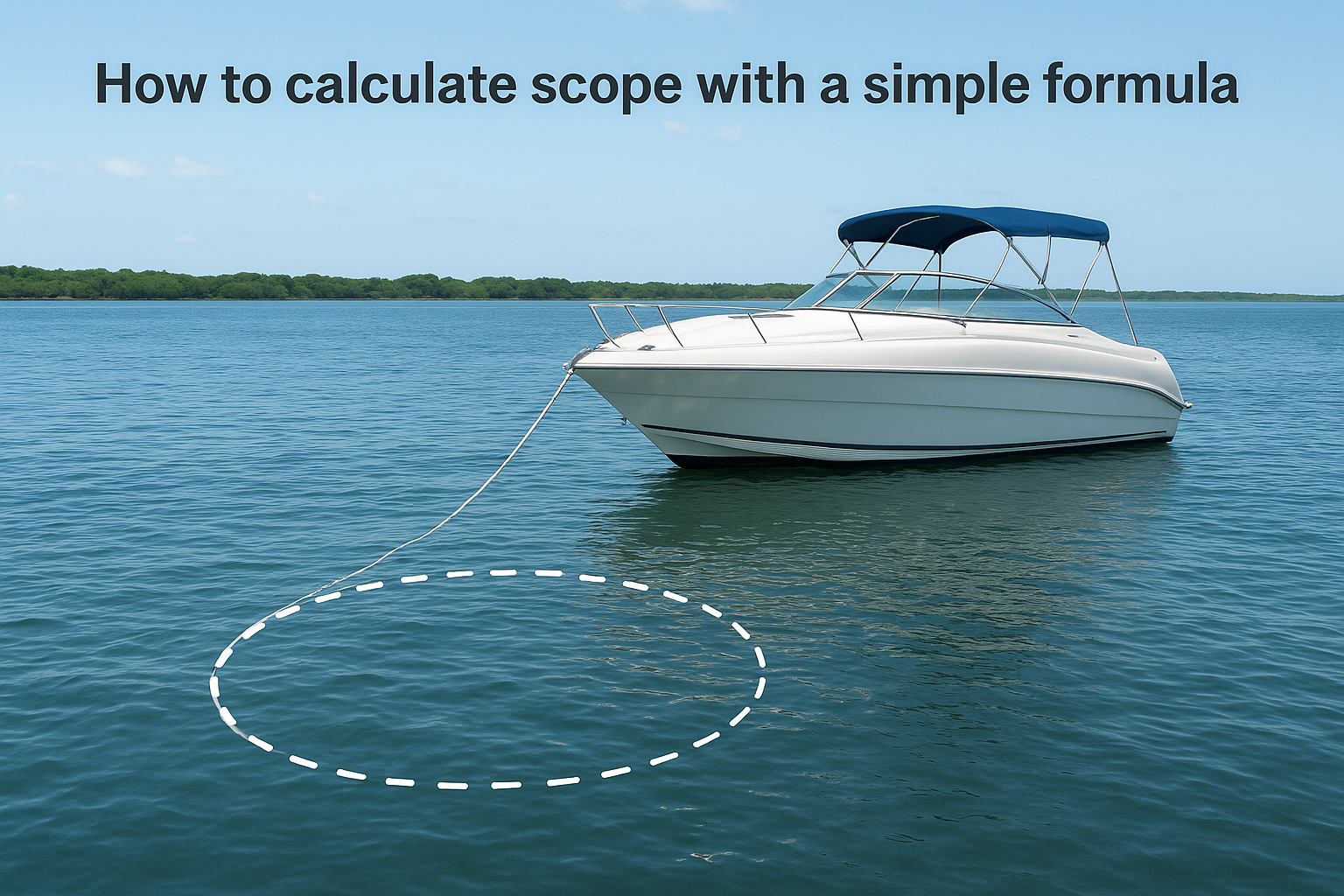
A simple way to remember it: depth times seven equals the minimum rode you should let out.
How wind, current, and tide change your numbers
Strong wind or tidal movement puts more horizontal load on your anchor, which means your scope needs to go up, not down. In choppy conditions, bump your ratio to 10:1 to keep the pull angle low and your anchor holding firm.
How to judge swing radius so you don’t hit anyone
Your swing radius equals roughly the amount of rode you’ve let out. Picture a circle that size around your bow cleat and confirm no other boats or obstacles fall inside it before you commit to the spot.
4. Drop and set the anchor the right way
Getting your scope right means nothing if your drop technique is sloppy. Approaching the spot correctly and executing the drop in the right sequence turns all that prep into actual holding power. These steps cover where many anchoring tips for beginners pay off most.
The step-by-step approach into wind or current
Head into the wind or current as you approach, whichever force is stronger. Stop the boat just past your target, shift to neutral, then follow this sequence:
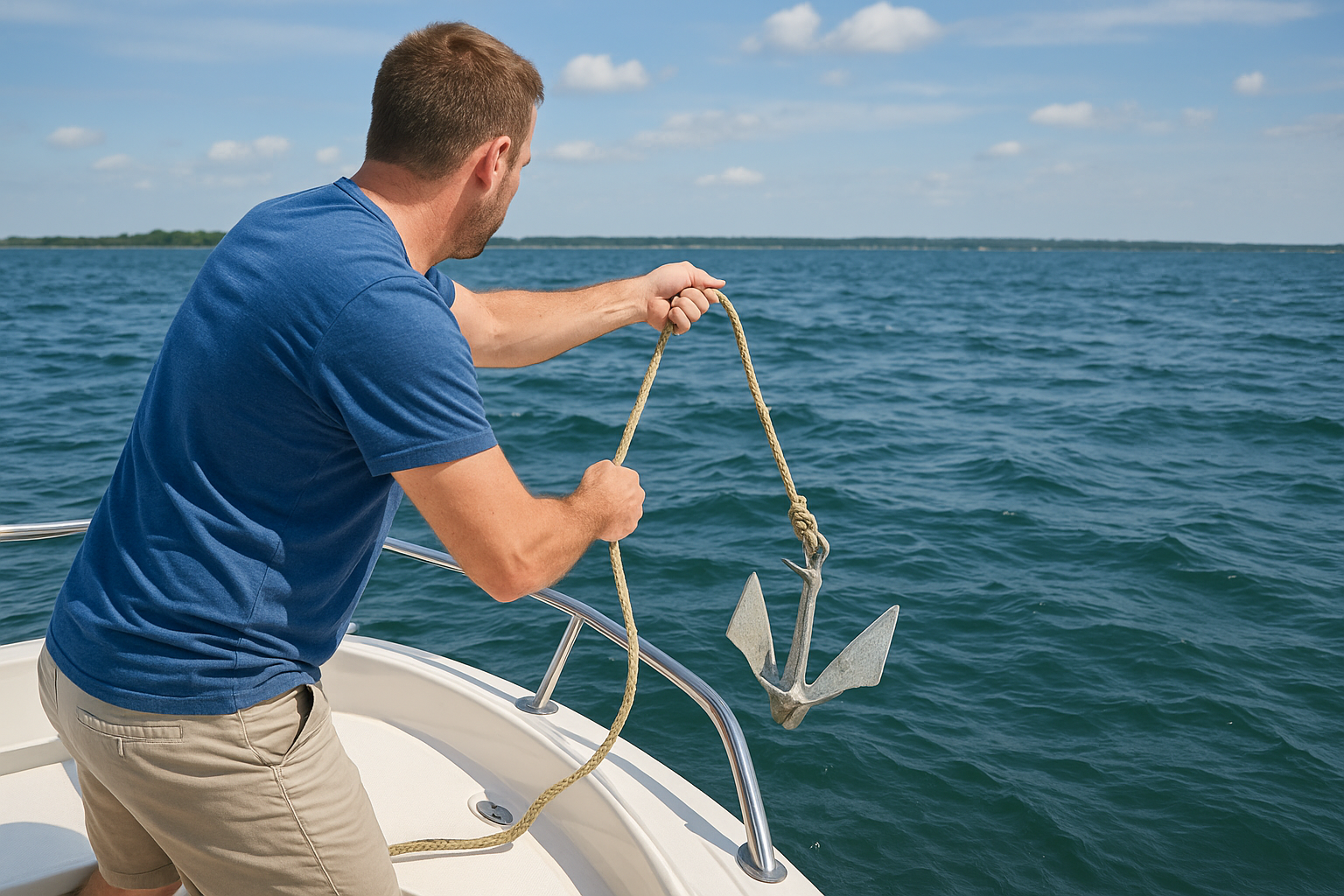
- Lower the anchor hand-over-hand until it hits bottom
- Let the boat drift back as you pay out rode
- Cleat off once you’ve reached your target scope
How to set the anchor without dragging
Once the rode comes tight, apply a brief burst of reverse throttle to dig the flukes into the bottom. Keep the throttle input steady rather than gunning it hard.
Letting the boat’s natural drift do most of the work first gives the anchor time to orient and bite properly.
How to confirm you’re set using simple tests
Pick two fixed landmarks on shore and watch them for 60 seconds. If they stay aligned relative to your position, the anchor is holding.
Place your hand on the taut rode as a second check. Rhythmic tugging or vibration through the line means the anchor is skipping across the bottom and needs to be reset.
5. Stay put, stay courteous, and retrieve cleanly
Dropping the anchor correctly gets you 90% of the way there, but staying alert while you relax keeps that good spot working for you all day. Following through on these final steps rounds out the anchoring tips for beginners that actually matter when the sandbar fills up around you.
How to monitor for dragging without stressing out
Check your landmark bearings every 20 to 30 minutes, especially after wind shifts or passing boat wakes disturb the water. If your reference points no longer line up, pull up and reset promptly rather than waiting and hoping for the best.
Catching a drag early means a quick reset; ignoring it means drifting into someone else’s afternoon.
Basic anchoring etiquette in a crowded sandbar
Give neighboring boats adequate room when you arrive, and never anchor so close that your swing circles overlap. If someone anchored before you, their swing zone takes priority and you adjust your position to fit around them, not the other way around.
How to pull the anchor safely and avoid tangles
Motor slowly forward to reduce tension on the rode before you start pulling. Then follow these steps:
- Haul hand-over-hand, rinsing sand and mud off as it comes up
- Stow the anchor flat and secure so it can’t shift while you’re underway
This protects anyone standing near the bow and keeps your deck clear for the ride back.
Quick wrap-up before you crack a cooler
These five anchoring tips for beginners cover everything you need to go from uncertain to confident the next time you head out on the water. Pick a protected spot with soft bottom, rig your gear before you approach, calculate your scope correctly, execute a clean drop into wind or current, and stay alert once you’re settled. Each step builds on the last, so skipping one tends to create problems that the others can’t fix.
The good news is that practice makes all of this fast. After a handful of trips, the sequence becomes second nature. If you want to spend your next Destin day on the water without the guesswork, the staff at Original Crab Island can set you up with the right rental and a straightforward local briefing before you leave the dock. Book your outing, follow these steps, and enjoy the afternoon. For more options, explore our Destin page. For more options, explore our Destin fishing charters page. For more options, explore our our rentals página.
Popular Crab Island Pages
- Alquiler de pontones en Crab Island
- Chárters de pesca en Crab Island
- Crab Island Boat and Yacht Rentals
- Parapente acuático en Crab Island
- Alquiler de motos acuáticas en Crab Island
- Crab Island Helicopter Rides
- Crab Island Snorkeling Tours
- Crab Island Paddleboard Rentals
- Crab Island Kayak Rentals
- Alquiler de bicicletas en Crab Island
- Crab Island Shark Boat
- Crab Island Pirate Ship
- Crab Island Tiki Rentals
- Crab Island Snorkeling Tours


