Destin, Florida sits on the Gulf of Mexico where the bottom is mostly sand and soft mud, which means anchoring can go sideways fast if you don’t have the right gear. At Original Crab Island, we spend our days on these waters running pontoon rentals, fishing charters, and guided trips to Crab Island’s famous sandbar. We’ve dragged, set, and reset more anchors than we can count, and we know firsthand what holds and what doesn’t in the best anchor for sand and mud debate.
The wrong anchor will skip across a soft bottom or pull free the moment the current shifts, not exactly ideal when you’re floating over a sandbar with your family or trying to hold position on a fishing spot. Anchor design, fluke shape, and weight all play a role, and the differences between types matter more than most people realize in soft substrate conditions.
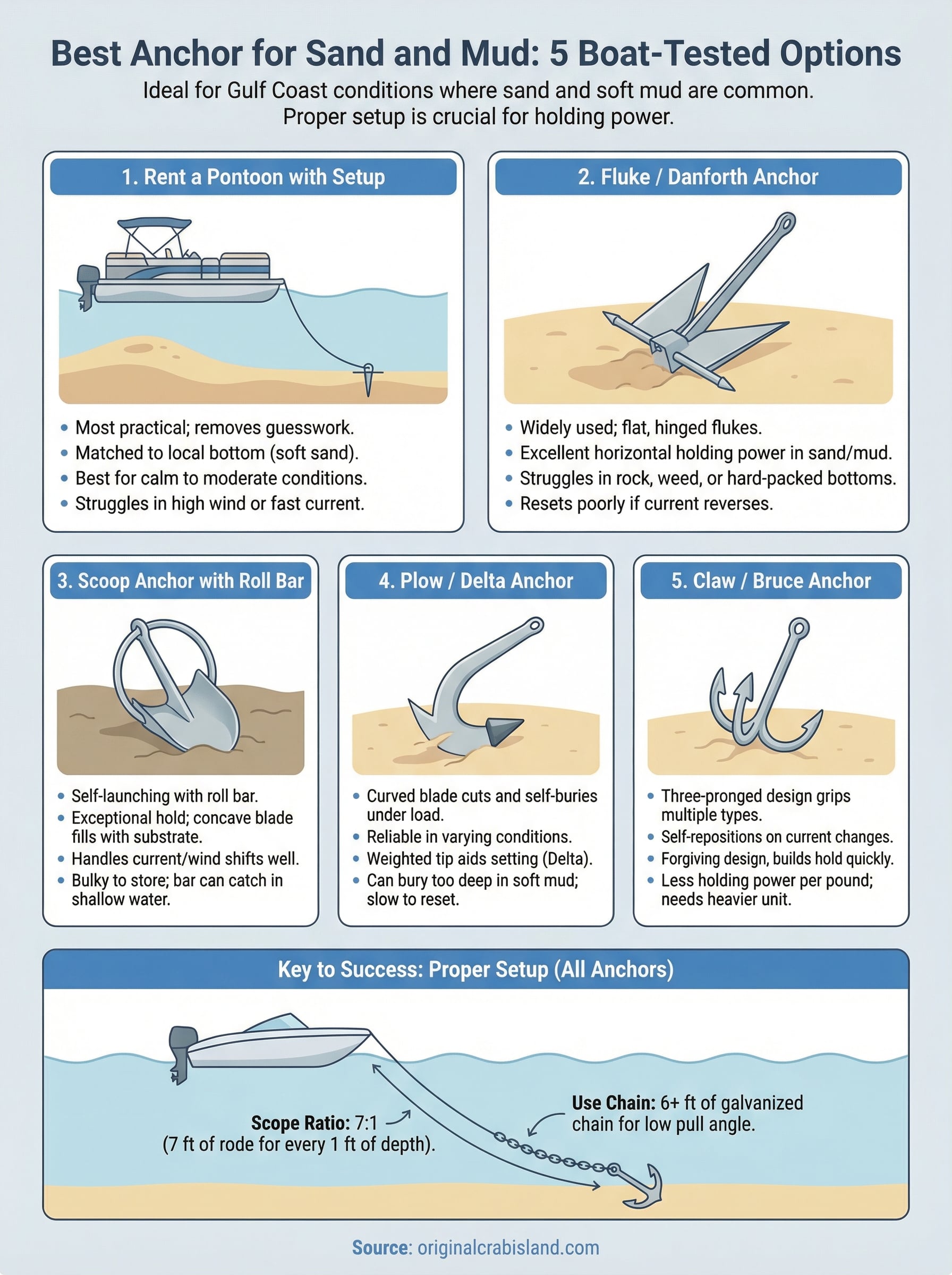
We put together this list of 5 boat-tested options that actually perform in the sandy, muddy bottoms common across the Gulf Coast and similar waters. Each anchor is evaluated for holding power, ease of setting, and overall reliability, so you can pick the right one for your boat and the conditions you’ll face out there.
1. Rent a pontoon with a sandbar anchor setup
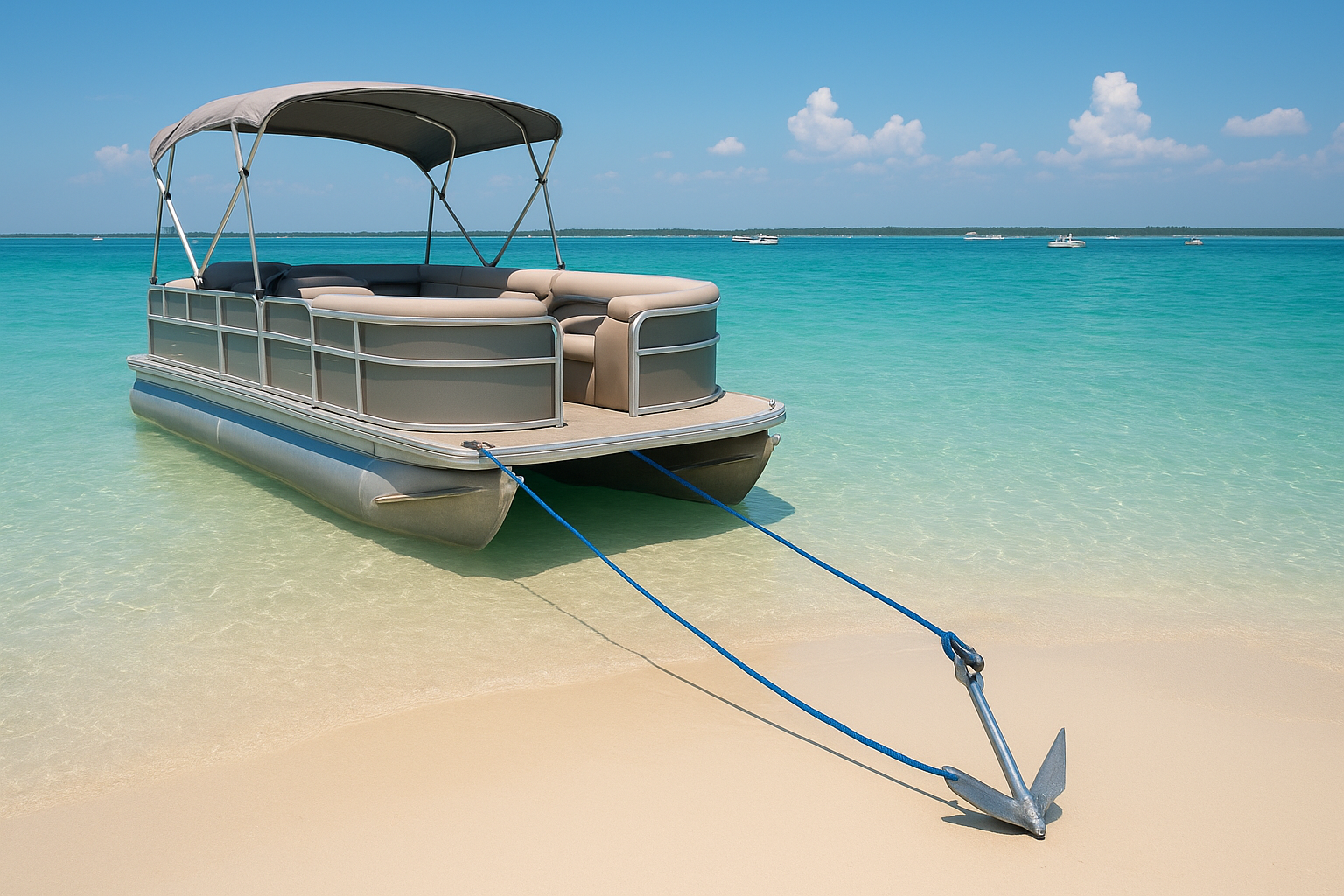
If you’re visiting Crab Island or a similar Gulf Coast sandbar without a boat, renting a pontoon with a built-in anchor setup is the most practical option on this list. Most reputable rental operators rig their boats with anchors suited to the local bottom, which in Destin means soft sand and occasional mud in the shallows around the sandbar.
Why it works in sand and mud
Pontoon rentals in sandbar-heavy areas typically come equipped with fluke-style or spike anchors chosen for shallow, sandy conditions. The setup is already matched to the local bottom, so you skip the guesswork entirely. On a busy weekend at Crab Island, dozens of pontoons sit anchored side by side, and the boats that stay put are almost always running the right anchor for the conditions.
A pre-rigged rental removes the guesswork from anchoring in soft substrate, which matters more than most people expect when a current shift can drag a poorly set anchor in minutes.
When it struggles
Even the best sandbar setup has limits. If wind picks up sharply or passing wakes put repeated load on the anchor line, a light spike or small fluke can break free. Rental anchors are sized for calm to moderate conditions, not for fast tidal current or rough open water. Watch for these specific situations:
- Wind above 15 knots sustained
- Anchoring in channel water with active current
- Wakes from large vessels passing at speed
What to check before you leave the dock
Before you pull away, confirm the rental includes at least one anchor and enough rode to reach the bottom with proper scope. A 7:1 scope ratio is a solid standard: for every foot of water depth, deploy seven feet of anchor line.
- Verify the shackle connecting the chain to the anchor is pinned tight.
- Confirm the bow cleat is secure and properly mounted.
- Ask the rental staff what bottom conditions to expect at your destination.
Price range
Pontoon rentals with sandbar anchor setups typically run $350 to $700 for a half-day, depending on boat size and the operator. That price covers everything you need with no separate gear purchase.
Original Crab Island’s pontoon rentals include anchor setups matched to local Gulf Coast conditions, so you arrive at the sandbar ready to drop anchor and stay put.
2. Fluke or Danforth anchor
The Danforth, also called a fluke anchor, is the most widely used option for sandy and muddy bottoms on the Gulf Coast. Its flat, hinged flukes dig into soft substrate quickly and build strong horizontal holding power once set. For boaters searching for the best anchor for sand and mud, this design delivers reliable performance at a reasonable price point.
Why it works in sand and mud
The fluke design works by pivoting downward as load is applied, driving the pointed tips into the bottom. Soft sand and mud allow the flukes to bury deeply, which is what creates solid hold. Once set, a properly sized Danforth resists lateral movement even when wind or current shifts direction gradually over time.
When it struggles
Danforth anchors have trouble in rocky or weedy bottoms where the flukes can’t penetrate or get fouled before they set. Hard-packed sand causes the flukes to skip along the surface without biting in. The anchor also resets poorly if the current reverses sharply.
Sizing and setup
Match anchor weight to your boat length and beam. A 13-lb Danforth handles boats up to 20 feet; a 22-lb model works for boats between 20 and 28 feet. Run at least 6 feet of chain between the anchor and rope rode to keep the pull angle low and horizontal.
A low pull angle is essential: any upward force lifts the flukes out of the bottom instead of driving them deeper.
Price range
Danforth-style anchors cost $30 to $120 depending on size and material. Galvanized steel models hold up well in saltwater and are the better long-term investment for coastal boating.
3. Scoop anchor with roll bar
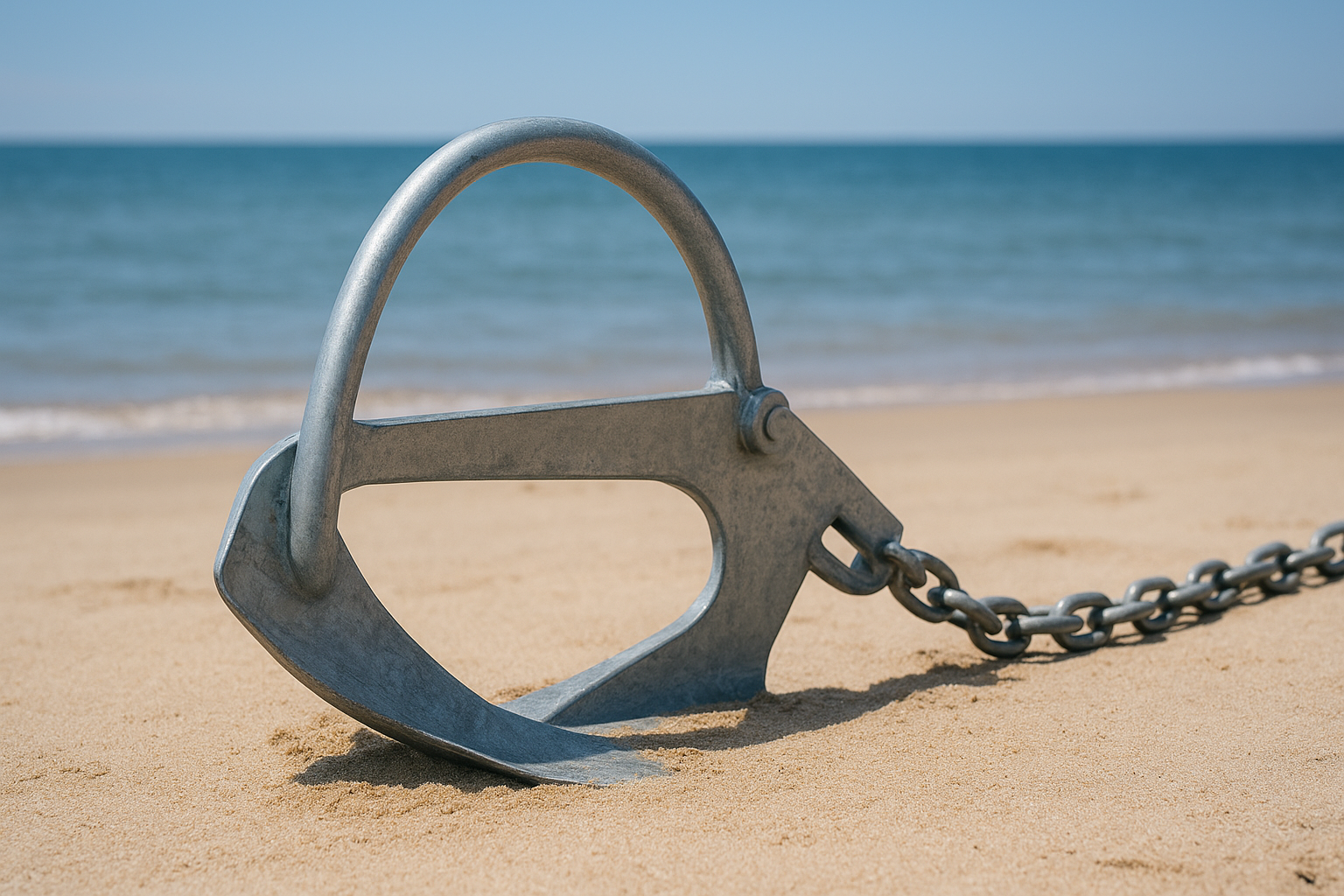
The scoop anchor, often sold under the Rocna or Manson Supreme name, features a concave scoop-shaped blade and a roll bar that tips the anchor into the correct position before it sets. For boaters who want a self-launching anchor that works across multiple bottom types, the scoop design is one of the strongest performers in the best anchor for sand and mud category.
Why it works in sand and mud
The roll bar forces the tip down automatically as the anchor sinks, so it enters the bottom at the right angle every time without adjustment. Once the scoop buries, it develops exceptional holding power relative to its weight because the concave blade fills with substrate and resists pull in any direction. Current reversals and wind shifts don’t dislodge it the way they can a Danforth.
The self-orienting roll bar removes the single biggest cause of anchoring failure: an anchor that lands on its side and never sets properly.
When it struggles
The roll bar adds bulk and weight, which makes storage awkward on smaller boats. In extremely shallow water, the bar can catch on the bottom before the blade buries fully.
Sizing and setup
A 10-kg scoop anchor handles most boats up to 30 feet. Pair it with 6 to 8 feet of galvanized chain and nylon rode to absorb shock loads and keep the pull angle low.
Price range
Scoop anchors with roll bars run $150 to $400 depending on size and brand. Galvanized steel is the practical choice for saltwater use.
4. Plow or Delta anchor
The plow anchor and its fixed-shank variant the Delta share a curved, pointed blade that cuts into soft substrate and self-buries under load. Both designs have built a strong reputation on boats that need to hold in varying conditions, and they remain a go-to choice for cruisers and charter operators across the Gulf Coast.
Why it works in sand and mud
The plow shape drives the tip into the bottom the moment the rode goes tight, and continued load pulls the blade deeper rather than lifting it out. Sand and mud allow the tip to penetrate quickly, which means holding power builds fast after the anchor sets. Delta anchors add a weighted tip that keeps the point oriented downward even before contact, making self-setting more reliable than a traditional two-piece plow.
A weighted tip on a Delta anchor removes the need to back down slowly, which matters when you’re anchoring in current and want the anchor set before the boat swings sideways.
When it struggles
Plow anchors have trouble in very soft mud where the blade buries so deeply that retrieval becomes a real fight. They also reset slowly when a current reversal lifts them free, which is a limitation compared to scoop designs.
Sizing and setup
A 14-lb Delta handles boats up to 30 feet reliably. Pair it with 6 feet of galvanized chain and nylon rope rode to reduce shock loading on the set.
Price range
Plow and Delta anchors typically cost $80 to $250, depending on size and material, making them a practical mid-range option for the best anchor for sand and mud applications.
5. Claw or Bruce anchor
The claw anchor, originally sold under the Bruce brand, uses a three-pronged curved blade that grips multiple bottom types without requiring a full reset after direction changes. Gulf Coast charter operators use it for its consistent behavior in sandy and muddy substrate, exactly the conditions you encounter around a popular Gulf sandbar.
Why it works in sand and mud
The three curved prongs spread load across multiple contact points, so the anchor buries steadily as the rode tightens. A wind shift or current reversal simply rolls the claw into a new position rather than pulling it free from the bottom.
The claw’s self-repositioning design makes it one of the more forgiving anchors when tidal swings reverse overnight current direction.
Sand and mud let the prongs penetrate without much resistance, which means holding power builds quickly after you set the anchor and back down on it.
When it struggles
The claw produces less holding power per pound than modern scoop designs, so you need a heavier unit for equivalent performance. Avoid it in these specific situations:
- Very soft, deep mud where the prong geometry loses lateral resistance
- Hard or rocky bottoms where the prongs can’t bite in
Sizing and setup
A 14-lb claw handles most boats up to 30 feet in moderate conditions.
Use 6 feet of galvanized chain between the anchor and your rope rode to keep the pull angle flat and maximize hold in sand and mud.
Price range
Claw anchors run $60 to $180 based on size, placing them at the budget-friendly end of the best anchor for sand and mud options.
Galvanized steel holds up better than painted steel in saltwater and is the more practical long-term choice for coastal boating.
Quick wrap-up
Each anchor type on this list performs differently in soft substrate, and the right choice depends on your boat size, the conditions you expect, and how much storage space you have. For most Gulf Coast boating in sand and mud, a Danforth handles calm days well, a scoop with roll bar handles current reversals better, and a Delta or claw covers you when conditions shift without warning. If you want a clean shortcut to the best anchor for sand and mud experience without buying any gear, a pre-rigged rental removes the whole question from the equation.
Visiting Destin and planning a trip to the sandbar? Your quickest path to a day on the water is skipping the gear research entirely and booking a rental with everything already set up for local Gulf Coast conditions. Reserve a pontoon rental at Original Crab Island and spend your time on the water instead of worrying about whether your anchor will hold. For more options, explore our Pontoon rentals page. For more options, explore our Deep sea fishing Destin page. For more options, explore our Servicios página.
For more options, explore our Destin pontoon boat prices página.
Popular Crab Island Pages
- Alquiler de pontones en Crab Island
- Chárters de pesca en Crab Island
- Crab Island Boat and Yacht Rentals
- Parapente acuático en Crab Island
- Alquiler de motos acuáticas en Crab Island
- Crab Island Helicopter Rides
- Crab Island Snorkeling Tours
- Crab Island Paddleboard Rentals
- Crab Island Kayak Rentals
- Alquiler de bicicletas en Crab Island
- Crab Island Shark Boat
- Crab Island Pirate Ship
- Crab Island Tiki Rentals
- Crab Island Snorkeling Tours


