 Let me tell you something. After 34 years running boats out of Destin, I’ve watched a lot of people experience a lot of incredible things on the water. But nothing, and I mean nothing, beats the look on someone’s face when they spot their first dolphin gliding past their pontoon. Name’s Captain Mike Smith, and if you’re heading to the famous sandbar, you’re going to want to know everything about Crab Island dolphins and dolphin sightings before you go.
The good news? You’ve got better odds out here than just about anywhere else on the Emerald Coast. The bay is rich with marine life, the dolphins know it, and they cruise through Crab Island regularly. Stick with me and I’ll show you how to maximize your chances of one of those moments you’ll be talking about for years.
Why Crab Island Is a Dolphin Hotspot
First, let’s talk about why Crab Island dolphins and dolphin sightings are so common out here. The Choctawhatchee Bay, where Crab Island sits just north of the Destin bridge, is one of the most dolphin friendly stretches of water in the Gulf Coast region. The Atlantic bottlenose dolphin calls this bay home year round, not just as a passing visitor. They live here, raise their young here, and hunt the fish that pour in and out of the pass with every tide change.
That tide flow is the secret ingredient. When water moves between the Gulf and the bay through the East Pass, it brings fish with it, and dolphins follow the fish. Crab Island sits right in the path of that movement, which is why Crab Island dolphins and dolphin sightings happen almost daily during the warmer months. You’re not hoping for a freak occurrence. You’re hanging out in their dining room.
Best Times for Crab Island Dolphin Sightings
If you want to stack the odds in your favor, timing matters. Here’s what I’ve learned over three decades of watching for Crab Island dolphins and dolphin sightings.
Early morning is hands down my favorite. The water is calm, the boat traffic is light, and the dolphins are most active feeding. Sunrise on the bay with a pod cruising through is the kind of thing that makes grown adults misty eyed. Get out there by 7 AM and you’ve put yourself in the prime window.
Late afternoon and sunset is the other golden window. As the heat eases and the bay quiets down, the dolphins come back out to feed before nightfall. Many of the best Crab Island dolphins and dolphin sightings happen in that hour or two before sunset, with the light turning everything gold.
Midday still produces sightings, but the bay is busier, noisier, and the dolphins tend to hang in deeper channels rather than weaving through the anchored boats. You’ll still see them, just maybe not as close.
How Tides Affect Crab Island Dolphins and Dolphin Sightings
Tides are everything when it comes to Crab Island dolphins and dolphin sightings. Since dolphins follow fish, and fish move with the tides, your odds shift throughout the day.
Incoming tides bring fish in from the Gulf, and the dolphins often ride that current right past Crab Island. Outgoing tides push baitfish out toward the pass, and dolphins set up shop nearby to feed. Slack tide, that brief window when the water is neither rising nor falling, tends to be quieter for sightings.
If you can plan your visit around a tide change, especially an incoming tide in the early morning, you’re putting yourself in the best possible position for Crab Island dolphins and dolphin sightings.
“I’ve been spotting dolphins on this bay since I was a kid running my granddad’s skiff,” says Captain Mike Smith. “The Crab Island dolphins and dolphin sightings haven’t slowed down in 34 years. If anything, the pods around here have grown. Folks come from all over the country hoping to see one in the wild, and most of them leave with a story. That’s a pretty special thing to be part of.”
Where to Look at Crab Island
 Once you’re at the sandbar, knowing where to look makes a huge difference. The dolphins don’t usually swim through the densest cluster of anchored boats. They move along the edges, in the deeper channels just outside the main party.
Scan the water along the bridge side of Crab Island. That channel runs deeper and dolphins use it as a highway. Watch the edges of the sandbar where shallow meets deep. Look toward the East Pass, which is their main route in and out of the bay. And keep an eye on the horizon line between boats, because that’s often where a fin breaks the surface first.
A pair of polarized sunglasses helps more than you’d think. They cut the glare and let you spot fins and shadows in the water from much farther away. That’s a tip most first time visitors don’t know, and it has made a real difference in Crab Island dolphins and dolphin sightings for plenty of my passengers.
What You’re Actually Seeing
The dolphins around Crab Island are Atlantic bottlenose dolphins, which average 6 to 12 feet long and travel in pods of anywhere from 2 to 15. You’ll usually see a dorsal fin breaking the surface as they come up to breathe, often followed by the slow arc of their back. Sometimes you’ll see a tail slap or a full breach if they’re feeling playful or chasing fish.
Mothers with calves are a particularly special sight, and Crab Island dolphins and dolphin sightings often include young calves swimming tucked alongside their mom. The calves learn the bay from the older dolphins, which is part of why these pods stick around generation after generation.
How Close Will They Get?
This is the question I get asked constantly. The honest answer is: it depends on the day. Some days the dolphins keep their distance and you watch from 50 yards. Other days a pod will swim right past your boat, close enough that you can hear them exhale through their blowholes. That sound is unforgettable.
Federal law (the Marine Mammal Protection Act) requires that we keep a respectful distance and never chase, feed, or harass wild dolphins. So we don’t chase them down. But here’s the cool part: when you sit quietly, anchored at Crab Island, the dolphins often come to you. They’re curious, and a still boat is interesting to them. Some of the closest Crab Island dolphins and dolphin sightings I’ve ever had came from simply sitting still and letting the dolphins decide.
Dolphin Etiquette for the Best Sightings
A few simple habits will boost your odds and keep these incredible animals thriving for the next generation of visitors.
- Don’t chase or motor toward them. Boats running hard at dolphins scare them off and stress them out. Cut your engine and let them approach if they choose.
- Never feed wild dolphins. It’s illegal, it makes them dependent on people, and it puts them in danger from boats. Same goes for tossing food scraps overboard.
- Keep noise reasonable. Loud music and shouting can push dolphins away from spots where they’d otherwise feed.
- Watch quietly when you spot them. The best Crab Island dolphins and dolphin sightings happen when you let the moment unfold rather than chasing it.
Year Round Sightings, Seasonal Patterns
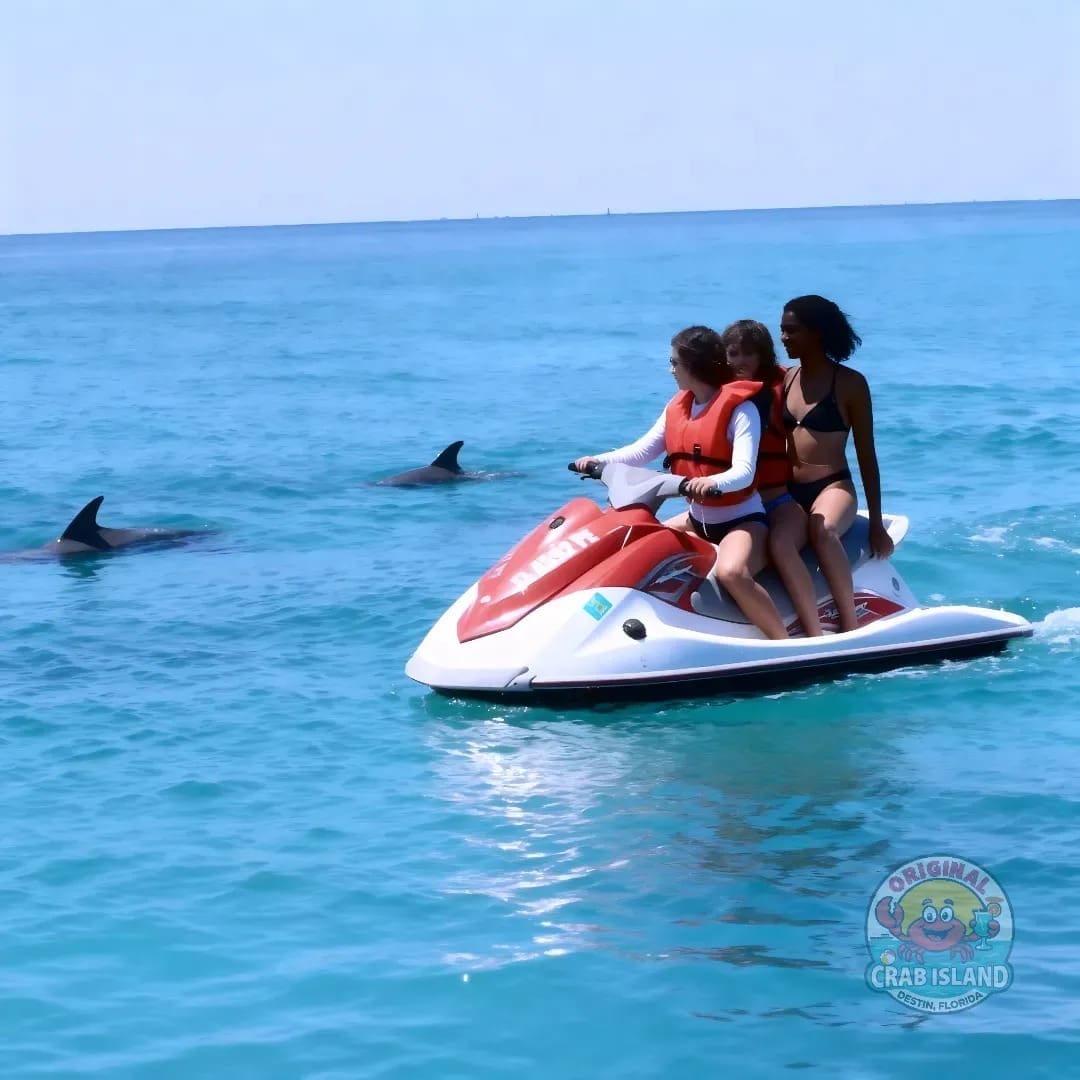 A lot of visitors assume you have to come in summer for dolphin sightings, but that’s not true. The dolphins live here year round. Crab Island dolphins and dolphin sightings happen in every season.
Summer brings the most active feeding and the most consistent close encounters. Spring and fall offer fewer crowds and dolphins that often roam more freely without dodging boat traffic. Winter is the quietest season at the sandbar, but the dolphins are still here, and a calm winter morning on the bay can deliver some of the most peaceful sightings of the year.
What Boats and Charters Offer
If you really want to maximize your odds, getting out on the water with a knowledgeable captain is the way to go. Whether you’re on a pontoon, a private charter, or a guided tour, the captains running boats around here track the dolphins daily and know where they’ve been showing up. We share that intel with each other, and we share it with our passengers. When you book through Original Crab Island, the team can point you toward the boats and timing that give you the best shot at Crab Island dolphins and dolphin sightings.
Come See For Yourself
After 34 years out here, the Crab Island dolphins and dolphin sightings still get me every time. They’re wild, they’re free, and they choose to share this bay with us. Show up early, watch the water, respect the rules, and odds are very good that you’ll get your moment. And once you do, you’ll understand why we never get tired of it. For more options, explore our Original Crab Island services página.
