Renting a jet ski in Destin sounds like the perfect way to explore Crab Island and the Emerald Coast, until you realize there’s a rulebook involved. Understanding Florida personal watercraft laws isn’t just about avoiding fines; it’s about keeping yourself and everyone around you safe on the water.
Whether you’re a first-time rider or bringing the whole family out for some fun, Florida has specific regulations covering who can operate a PWC, what certifications you need, life jacket requirements, and when you’re allowed to ride. Missing even one detail can turn an exciting day into an expensive headache, or worse, a dangerous situation.
At Original Crab Island, we help visitors navigate these rules every day through our jet ski rentals in Destin. This guide breaks down everything you need to know before hitting the water, from age restrictions to required safety courses, so you can focus on the fun part.
Why Florida PWC laws matter
Florida’s waters attract millions of visitors each year, and personal watercraft account for a significant portion of boating accidents and injuries in the state. These laws exist because jet skis can reach speeds over 60 mph, operate in shallow waters where swimmers gather, and require split-second decision making. You’re not just protecting yourself when you follow the rules; you’re protecting every person sharing the water with you.
Safety consequences of ignoring PWC regulations
Accidents happen fast on a jet ski. Collision injuries involving personal watercraft tend to be more severe than other boating accidents because riders have no protective barrier between them and the water, other boats, or fixed objects. Florida law enforcement and the Coast Guard report that operator inexperience and failure to follow basic safety rules cause the majority of PWC incidents. When you skip required safety courses or let someone underage operate a rental, you’re gambling with real consequences that can include serious injury or death.
Florida Fish and Wildlife Conservation Commission data shows that personal watercraft accidents consistently rank among the top types of boating incidents in the state.
Financial and legal penalties you face
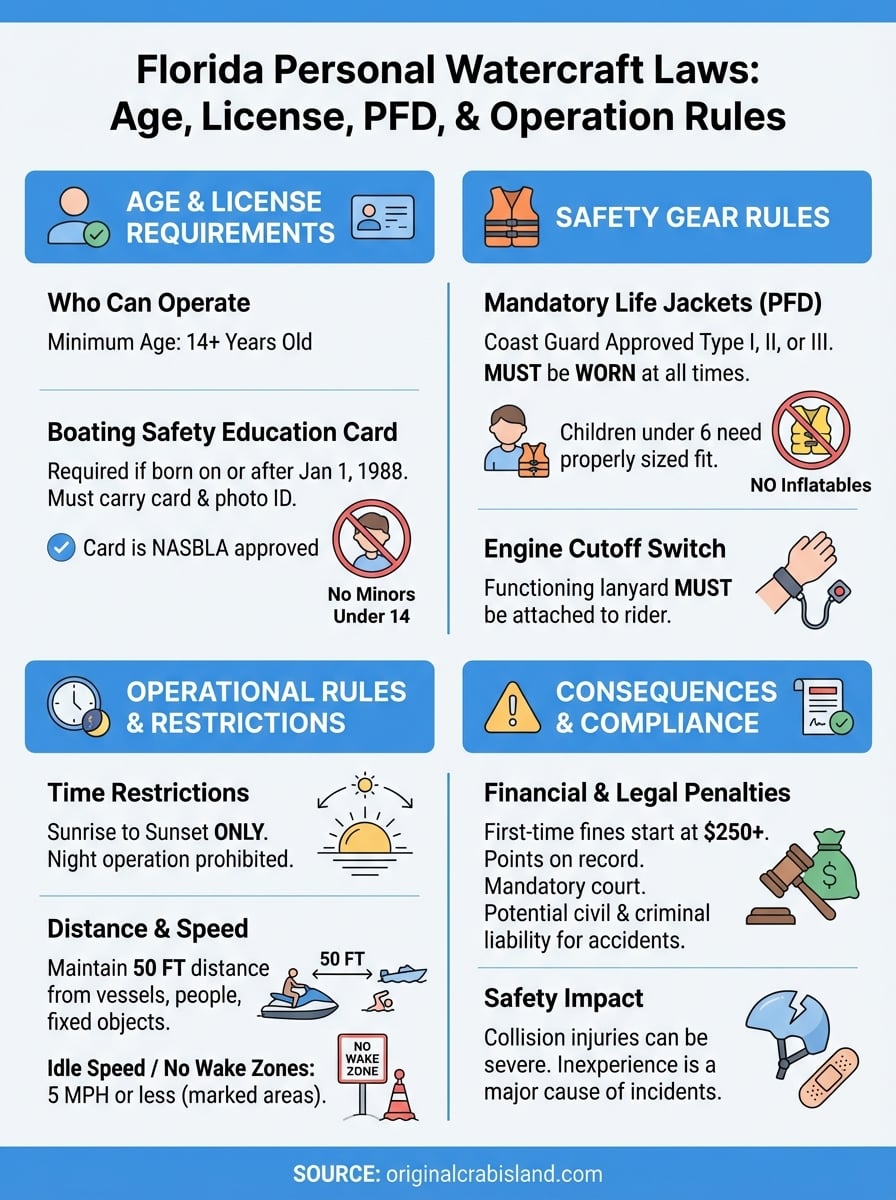
Breaking Florida personal watercraft laws costs you money, and sometimes much more. First-time violations for operating without proper certification can result in fines starting at $250, plus mandatory court appearances and points on your driving record. Rental companies hold you financially responsible for any violations that occur while you’re operating their equipment. If your violation causes an accident, you’re looking at potential civil liability, criminal charges, and skyrocketing insurance rates. Local law enforcement actively patrols popular areas like Crab Island, and they know exactly what to look for when spotting illegal operation.
Who can operate or rent a PWC in Florida
Florida personal watercraft laws set clear age limits and education requirements that affect both operators and rental companies. You can’t just hand the keys to anyone who wants to ride, and rental companies face serious liability if they allow unqualified operators on their equipment. Understanding these requirements protects you from legal trouble and ensures everyone stays safe on the water.
Age requirements for PWC operators
You must be at least 14 years old to legally operate a personal watercraft in Florida. Anyone born on or after January 1, 1988 needs to complete an approved boating safety course and carry their certification while operating. Children under 14 cannot operate a PWC under any circumstances, even with adult supervision. Rental companies won’t let you rent to minors, and they verify both age and certification status before handing over the keys.
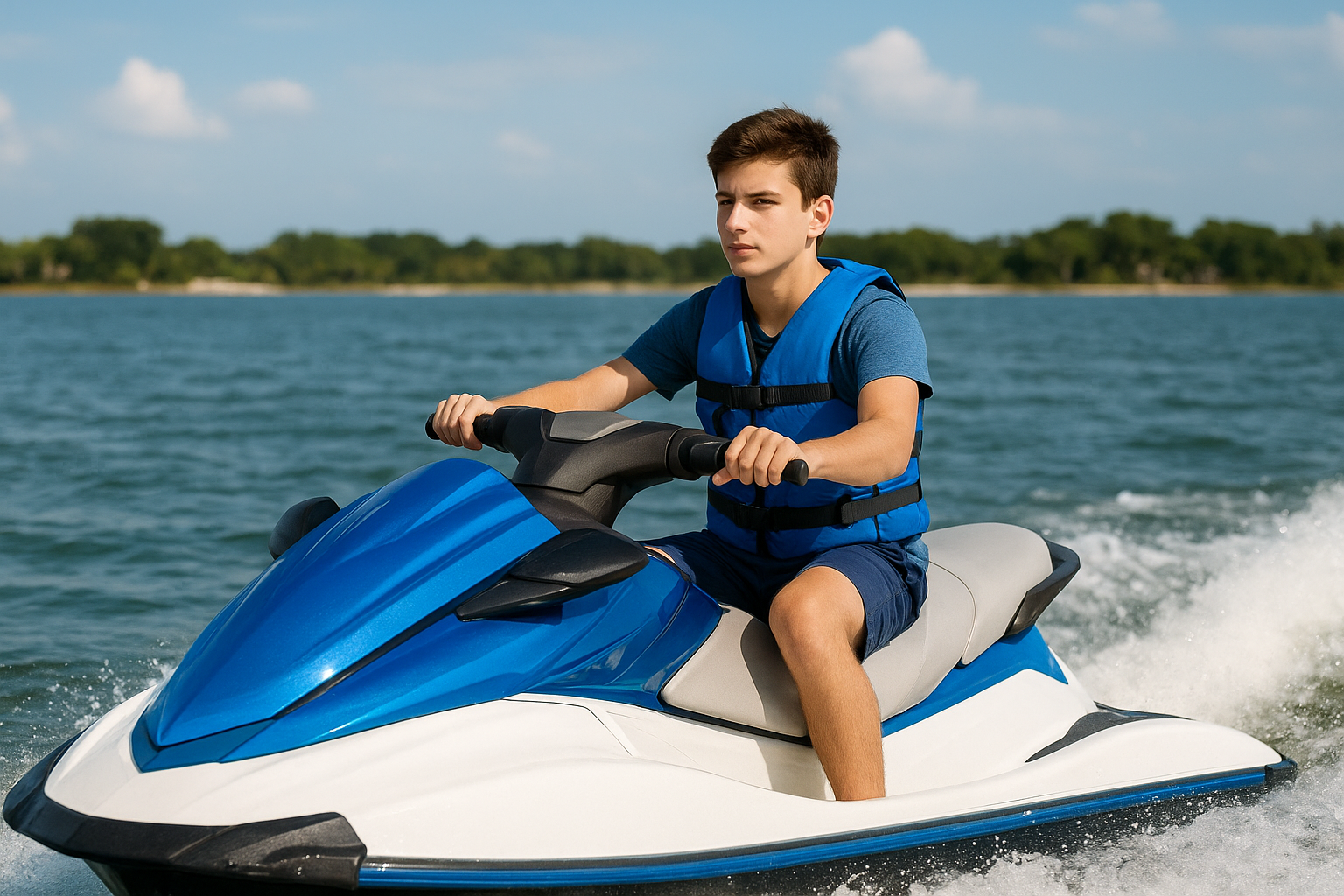
Florida law makes no exceptions to the 14-year minimum age requirement for PWC operation.
Boating safety education requirements

Your Florida Boater Education Card proves you completed an approved safety course through the Fish and Wildlife Conservation Commission or a National Association of State Boating Law Administrators (NASBLA) approved provider. The course covers navigation rules, safety equipment, and proper PWC operation. You only need to take the course once, and your certification remains valid for life.
What safety gear Florida requires on PWCs
Florida personal watercraft laws mandate specific safety equipment that you must have on board before leaving the dock. Rental companies check this gear before you take off, but understanding what’s required helps you verify everything yourself. Missing even one required item can result in fines and having your ride cut short by marine patrol.
Life jacket requirements for PWC riders
Every person on your personal watercraft must wear a Coast Guard approved Type I, II, or III life jacket at all times while the engine is running. Florida law doesn’t allow you to simply have PFDs on board; they must be properly fastened and worn. Inflatable life jackets don’t count as approved devices for PWC operation. Children under six years old need properly sized jackets that fit their weight and chest measurements.
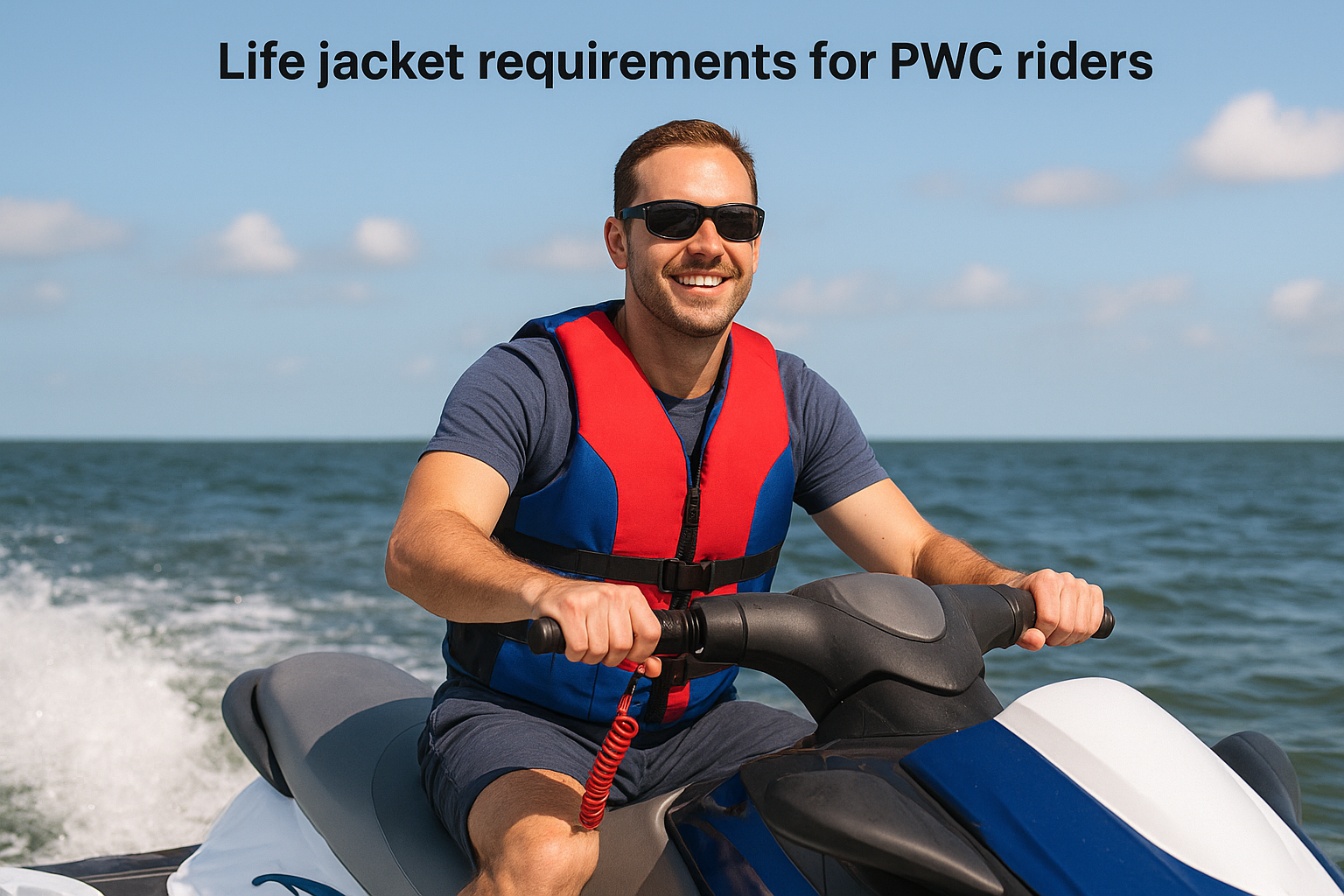
Florida requires life jackets to be worn, not just carried, on all personal watercraft.
Additional required safety equipment
Your PWC must have a functioning engine cutoff switch (lanyard) that attaches to your wrist or life jacket, stopping the engine if you fall off. You also need a sound producing device like a whistle or horn that’s audible for at least half a mile. Fire extinguishers aren’t required on PWCs because they’re considered open vessels, but you must have proper ventilation.
Where and when you can ride a PWC in Florida
Florida personal watercraft laws restrict both the times and locations where you can legally operate a jet ski. These rules protect swimmers, wildlife, and other boaters in areas where PWCs pose the greatest risk. Understanding these boundaries keeps you legal and helps you plan your ride around Destin’s most popular spots.
Time restrictions for PWC operation
You cannot operate a personal watercraft between sunset and sunrise in Florida. Law enforcement defines these times by official National Weather Service data, not by when it "looks dark" outside. Violating this rule carries mandatory fines and potential equipment seizure.
Rental companies often won’t let you take equipment out near sunset to ensure you return before the legal cutoff. This protects both you and their business from violations and liability.
Florida prohibits all personal watercraft operation during nighttime hours for safety reasons.
Location and distance requirements
You must stay at least 50 feet away from other vessels, people in the water, and fixed structures unless you’re traveling at idle speed. No-wake zones require the slowest possible speed while maintaining steerage, typically 5 mph or less. Certain areas around Destin completely prohibit PWC operation, including marked swimming zones and protected wildlife areas.
Operating within 100 feet of military or commercial vessels violates federal law under any circumstances. Local authorities actively patrol these restricted zones around Crab Island and Destin Harbor.
How to stay compliant when renting in Destin
Rental companies in Destin take Florida personal watercraft laws seriously because they face steep penalties for allowing unqualified operators on their equipment. You need to come prepared with specific documents and be ready for a verification process before you get the keys. Understanding what rental companies check saves you time at the dock and prevents last-minute disappointments when you show up without the right credentials.
What documents you must bring
You need valid government-issued photo identification that proves you meet the minimum age requirement of 14 years old. Anyone born on or after January 1, 1988 must also present their Florida Boater Education Card or an equivalent NASBLA-approved certification. Rental companies scan or photograph these documents for their records and liability protection. Your driver’s license alone doesn’t qualify as boating certification, even if you’ve rented jet skis before in other states.
Rental companies cannot legally allow you on a PWC without proper age verification and boating certification.
What rental companies verify before departure
Rental staff walk you through a mandatory safety briefing that covers basic operation, local no-wake zones, and emergency procedures. They fit you with an approved life jacket and verify the engine cutoff lanyard works properly. Most companies require you to sign a liability waiver acknowledging you understand all restrictions on time, location, and operation.
Before you head to Crab Island
Florida personal watercraft laws protect everyone enjoying the Emerald Coast, from first-time visitors to experienced riders. You now know the age requirements, certification rules, mandatory life jacket regulations, and operational restrictions that keep you legal on the water. Checking off these requirements before you arrive saves you from turning away at the dock or facing citations from marine patrol during your ride.
Rental companies handle most of the safety equipment and verification process, but you control whether you show up with proper identification and boating certification. Double-checking your documents the night before prevents disappointment when you’re ready to explore the crystal-clear waters around Destin. Weather conditions and local regulations can change, so confirm your rental details and any area-specific restrictions with your operator.
Original Crab Island provides fully compliant jet ski rentals with all required safety equipment and comprehensive briefings before you launch. Our staff verifies your credentials, walks you through proper operation, and points out the best spots to ride while staying within legal boundaries.
Popular Crab Island Pages
- Alquiler de pontones en Crab Island
- Chárters de pesca en Crab Island
- Crab Island Boat and Yacht Rentals
- Parapente acuático en Crab Island
- Alquiler de motos acuáticas en Crab Island
- Crab Island Helicopter Rides
- Crab Island Snorkeling Tours
- Crab Island Paddleboard Rentals
- Crab Island Kayak Rentals
- Alquiler de bicicletas en Crab Island
- Crab Island Shark Boat
- Crab Island Pirate Ship
- Crab Island Tiki Rentals
- Crab Island Snorkeling Tours


