Planning a day on the water in Destin? Before you untie any dock lines, you need to understand Florida boating license requirements. The state doesn’t technically issue a "boating license," but it does require most operators to carry a Boating Safety Education Identification Card, and the rules around who needs one depend on your age and the vessel you’re driving.
At Original Crab Island, we help visitors hit the water every day, from pontoon rentals to jet ski adventures around Crab Island and the Emerald Coast. We hear questions about boating credentials constantly, and the confusion is understandable. Florida’s regulations involve age cutoffs, horsepower thresholds, and an approved safety course that each come with their own details.
This guide breaks down exactly what you need to legally operate a boat in Florida: who’s required to get the card, how to complete the safety course, and which exemptions might apply to you. Whether you’re a first-time boater or a returning visitor brushing up on the rules, you’ll find everything you need right here before booking your next trip on the water.
What Florida requires to operate a boat

Florida does not issue a traditional boating license the way states issue driver’s licenses. Instead, the state requires qualifying operators to carry a Boating Safety Education Identification Card, which you earn by completing an approved boating safety course. This distinction matters because the card proves you have completed education and safety training, not simply that you passed a skills test on the water.
The Boating Safety Education Identification Card
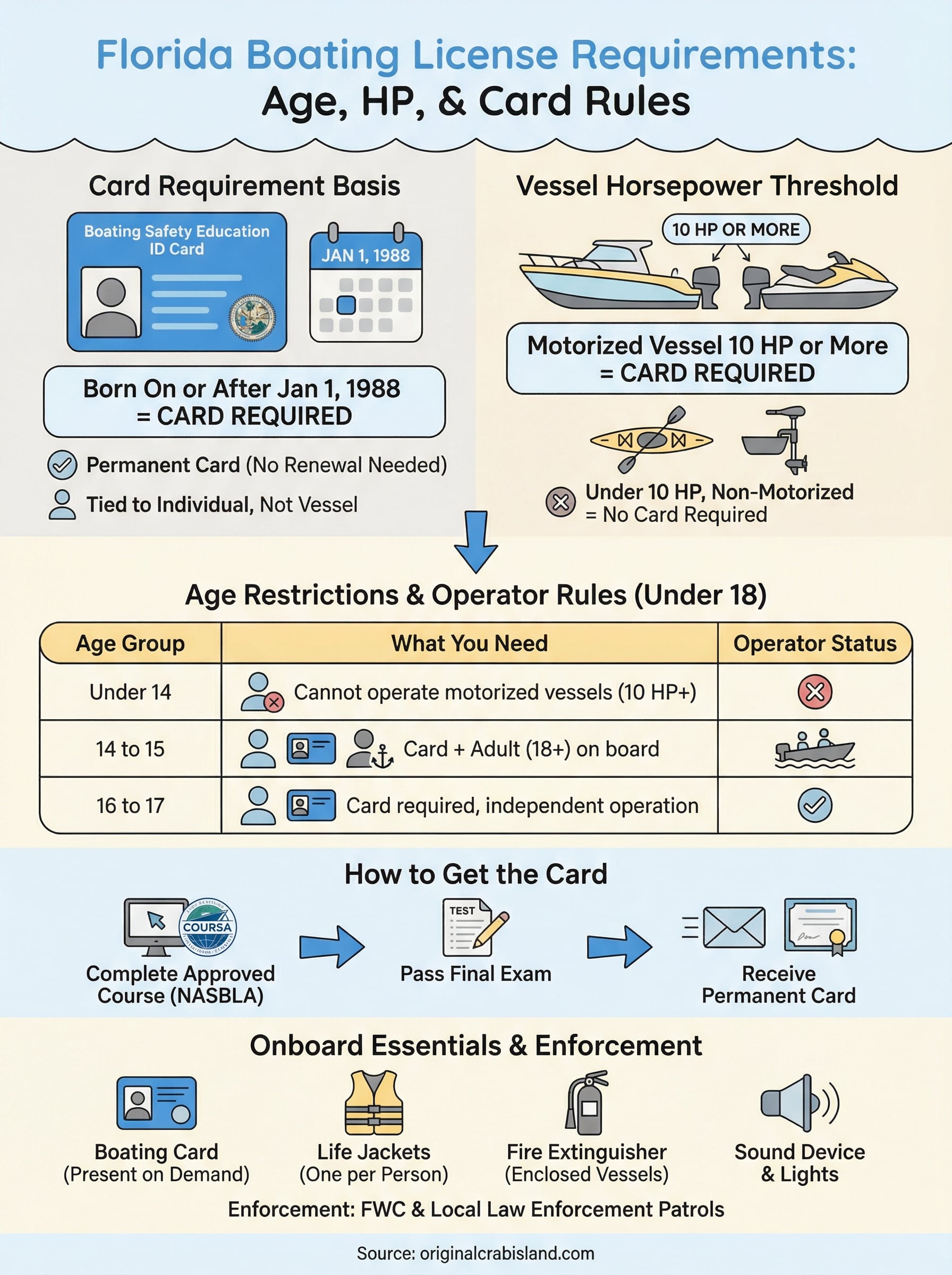
The Florida Fish and Wildlife Conservation Commission (FWC) oversees boating regulations across the state. To receive your card, you must complete a course approved by the National Association of State Boating Law Administrators (NASBLA). Once you finish the course and pass the required exam, you receive a permanent card that you carry any time you operate a motorized vessel.
Florida’s Boating Safety Education Identification Card is permanent and does not require renewal once issued.
Your card is tied to you personally, not to any specific boat. That means it applies regardless of whether you’re renting a pontoon, driving a personal watercraft, or operating someone else’s vessel. You do not need to retake the course if you move to Florida or switch between different types of boats.
The role of vessel horsepower
Vessel horsepower is one of the core factors Florida uses to determine whether you need the card at all. The requirement applies when you operate a motorized vessel with 10 horsepower or more. If you’re paddling a kayak or running a small electric trolling motor below that threshold, the card requirement does not apply to you.
This horsepower rule matters most when you’re renting equipment on vacation. Most rental boats, jet skis, and personal watercraft in Destin exceed the 10 HP threshold significantly, so the card requirement will apply in nearly every practical boating scenario visitors encounter.
Additional state regulations you need to know
Beyond the card, Florida law requires that you follow all federal and state navigation rules, carry appropriate safety equipment on board, and register your vessel if it is motorized. While the card itself covers the education requirement within florida boating license requirements, you are still responsible for having life jackets, fire extinguishers, and navigation lights where required by law.
Florida also requires that anyone operating a personal watercraft watch a mandatory FWC safety video before use, even if they already hold a Boating Safety Education Identification Card. Rental operators typically handle this step, but confirming it before you head out is always a smart move.
Who must have the Boating Safety Education ID Card
The requirement to carry a Boating Safety Education ID Card applies to a specific group of people based on their birth year and age. Understanding exactly who falls under this rule is a core part of knowing florida boating license requirements fully before you get on the water.
Born on or after January 1, 1988
Florida law requires that anyone born on or after January 1, 1988 carry the Boating Safety Education Identification Card to operate a motorized vessel with 10 HP or more. If your birthday falls on or after that date, you need the card with you every time you operate a qualifying vessel. If you were born before January 1, 1988, you are exempt from carrying the card, though completing the safety course is still worthwhile if you are unfamiliar with Florida’s waterways and navigation rules.
Anyone born on or after January 1, 1988 must carry their Boating Safety Education ID Card whenever they operate a motorized vessel rated at 10 HP or more in Florida.
Operators under 18
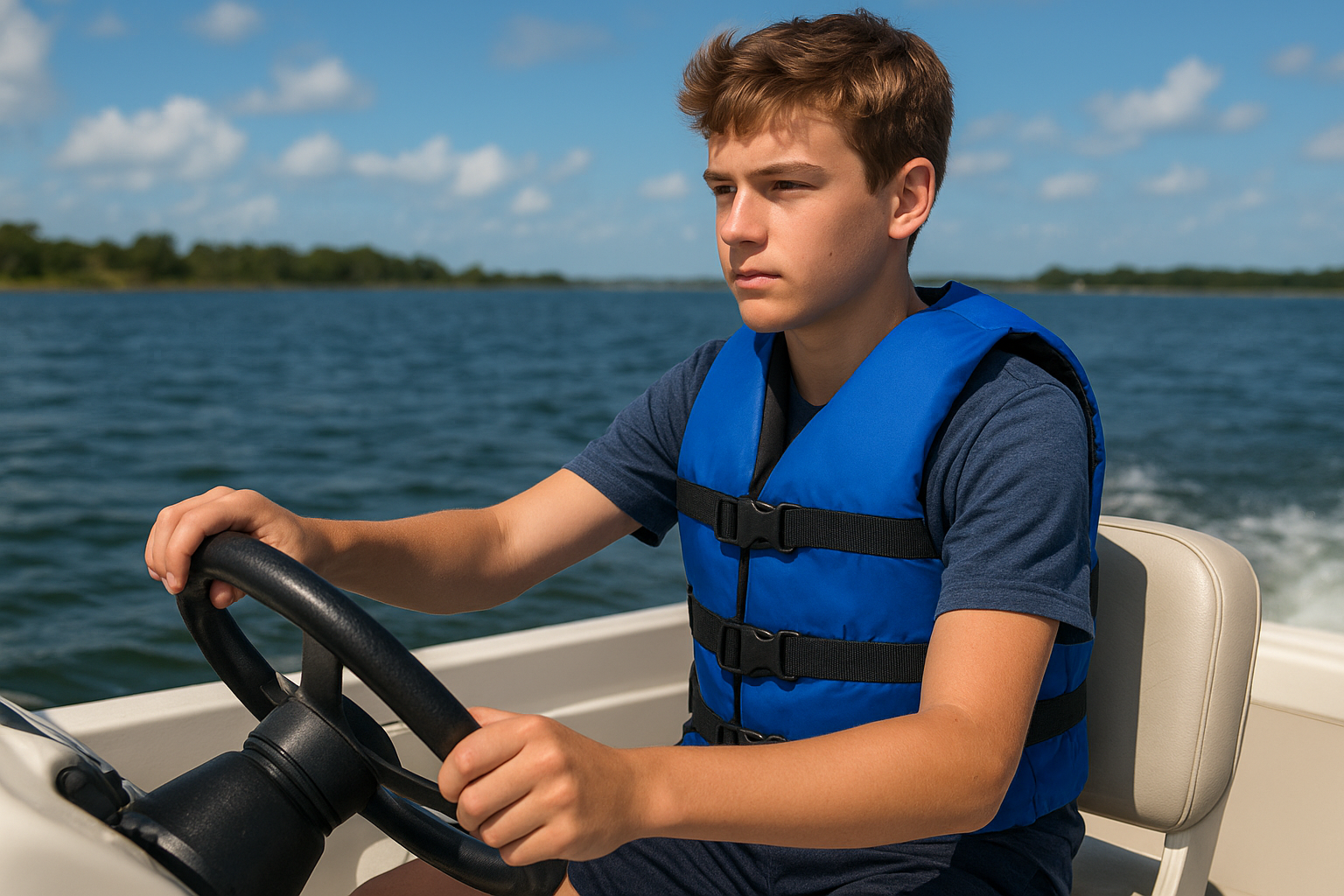
Younger operators face stricter restrictions on top of the card requirement. Anyone under 14 years old cannot legally operate a vessel powered by 10 HP or more on Florida waters at all. Riders between 14 and 15 may only operate such a vessel when a responsible adult who is at least 18 years old is on board at all times. Once you turn 16, you can operate a qualifying vessel independently as long as you carry your Boating Safety Education ID Card.
| Age Group | What You Need |
|---|---|
| Under 14 | Cannot operate motorized vessels (10 HP+) |
| 14 to 15 | Card required + adult (18+) on board |
| 16 to 17 | Card required, independent operation allowed |
| 18+ born on or after Jan 1, 1988 | Card required |
| 18+ born before Jan 1, 1988 | No card required |
Age and horsepower rules that trip people up
The age and horsepower rules within florida boating license requirements catch many visitors off guard, especially when they assume the rules are simpler than they are. Two scenarios come up repeatedly: teenagers trying to operate a rental vessel and adults who underestimate how many boats clear the 10 HP threshold.
The 14-to-15 age window
Operators between 14 and 15 years old sit in a specific window that surprises many families. They can legally operate a motorized vessel rated at 10 HP or more, but only when a responsible adult 18 or older stays on board for the entire trip. That adult does not need to be at the helm, but they must be physically present on the vessel at all times.
If your teenager is 14 or 15, an adult must remain on board the entire time they operate any motorized vessel rated at 10 HP or more.
Many families assume a quick solo loop is fine once a teen shows confidence on the water. That assumption is wrong, and enforcement on busy waterways like those around Destin is active. Once your teenager turns 16 and carries their Boating Safety Education ID Card, they can operate a qualifying vessel independently.
Why 10 HP catches people off guard
The 10 HP cutoff sounds low, but it eliminates far fewer boats than most people expect. Nearly every rental vessel you’ll find in Destin, from pontoon boats to jet skis, runs well above that threshold. Even many small outboard motors used for bay fishing clear the 10 HP limit with room to spare.
Assuming a small or older boat doesn’t trigger the card requirement is one of the most common mistakes renters make. Check the engine rating on any vessel before you decide the rules don’t apply to you.
How to get a Florida boater card step by step
Getting your Boating Safety Education ID Card is straightforward and completely self-directed if you prefer to work at your own pace. Florida accepts courses delivered in person, through a classroom setting, or via an approved online provider. The process typically takes a few hours, and you walk away with a permanent credential that never expires and applies to every motorized vessel you operate in the state.
Choose an approved course
Your first step is finding a course that the National Association of State Boating Law Administrators (NASBLA) has approved. Florida’s Fish and Wildlife Conservation Commission maintains a list of accepted providers on their official site at myfwc.com. Most courses are available entirely online, which makes it easy to finish before your trip rather than scrambling after you arrive in Destin.
Complete your approved boating safety course before you travel so your card arrives before your trip starts.
Courses cover navigation rules, safety equipment requirements, and Florida-specific regulations. Most providers charge a modest fee, and you must pass a final exam to receive your certificate of completion.
Complete the course and get your card
After passing the exam, your course provider submits your information to the FWC. You receive a temporary certificate almost immediately, which you can carry while your physical card is processed. Keep that temporary certificate on you because law enforcement accepts it during that waiting period.
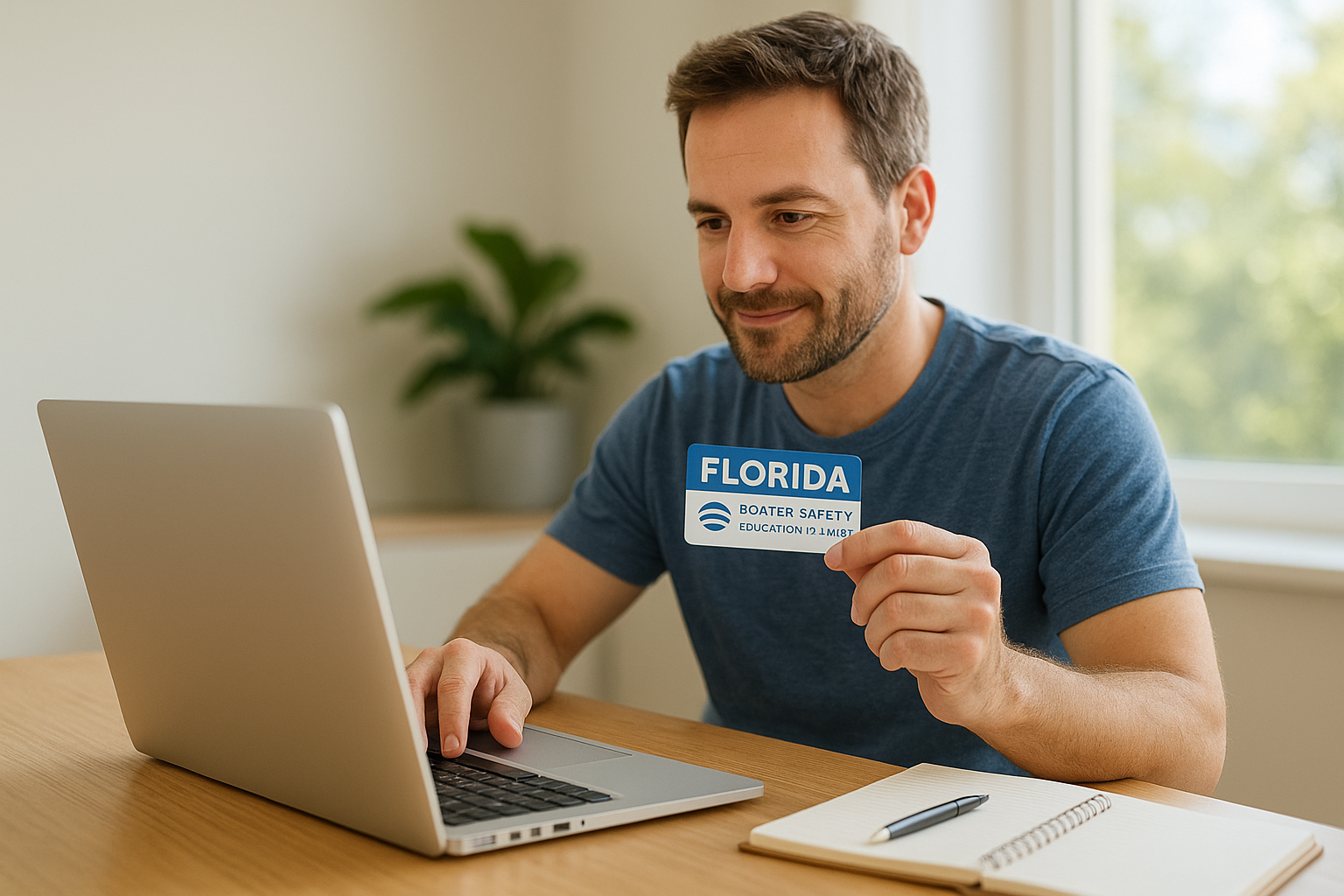
Your permanent Boating Safety Education ID Card arrives by mail, usually within a few weeks. Once you have it, carry it every time you operate a motorized vessel that meets the florida boating license requirements threshold. The card belongs to you personally, so you never need to repeat the process regardless of which boat you operate or how many times you visit Florida.
What to carry, exemptions, and enforcement
Knowing the rules is only half the job. Carrying the right documents and understanding which exemptions apply to your situation keeps you legal the moment a marine patrol officer pulls alongside your vessel.
What to have on the water
Your Boating Safety Education ID Card must be on your person, not stored back at the rental office or left in your bag on shore. Florida law requires you to present it on demand to any law enforcement officer. If your card hasn’t arrived yet, your temporary certificate from the course provider serves as a valid substitute during that window.
Keep your card or temporary certificate physically on you every time you operate a motorized vessel, not just somewhere on the boat.
Beyond the card itself, federal and Florida law require specific safety equipment on board: one Coast Guard-approved life jacket for every person, a fire extinguisher on enclosed vessels, visual distress signals, and functioning navigation lights for operation after dark. Rental operators typically supply this equipment, but you are responsible for confirming it’s present and accessible before you leave the dock.
Who is exempt
A few specific groups fall outside the standard florida boating license requirements. Anyone born before January 1, 1988 does not need to carry the card, though the vessel’s safety equipment requirements still apply fully. Licensed Coast Guard personnel, law enforcement officers operating official vessels, and non-residents operating under a valid boating certificate from their home state also qualify for exemption.
How enforcement works
Florida Fish and Wildlife Conservation Commission officers and local law enforcement actively patrol waterways around Destin, particularly during peak season. Officers can stop any vessel at any time to check for proper credentials and safety equipment. Fines for operating without a required card or missing safety gear are real, and they can cut your vacation short fast.
Ready to boat in Destin
You now have a complete picture of florida boating license requirements: who needs the card, how age and horsepower rules apply, how to complete an approved course, and what to carry on the water. Meeting these requirements takes a few hours of your time before your trip, and it puts you on the water confident and fully legal from the moment you leave the dock.
Destin’s waterways around Crab Island and the Emerald Coast rank among the best boating destinations in the country, and arriving prepared lets you focus entirely on the experience instead of paperwork. Whether you want to rent a pontoon, take out a jet ski, or explore the Gulf with friends or family, Original Crab Island has the equipment, the crew, and the local knowledge to make your time on the water worth every minute.
Book your Destin water adventure today and get out on the water the right way.
Popular Crab Island Pages
- Alquiler de pontones en Crab Island
- Chárters de pesca en Crab Island
- Crab Island Boat and Yacht Rentals
- Parapente acuático en Crab Island
- Alquiler de motos acuáticas en Crab Island
- Crab Island Helicopter Rides
- Crab Island Snorkeling Tours
- Crab Island Paddleboard Rentals
- Crab Island Kayak Rentals
- Alquiler de bicicletas en Crab Island
- Crab Island Shark Boat
- Crab Island Pirate Ship
- Crab Island Tiki Rentals
- Crab Island Snorkeling Tours


