You’re ready for a day on the water, but standing at the dock with your keys in hand, a nagging question hits you. Did you check everything? Missing a critical safety item or skipping a pre-departure inspection can turn an exciting boat trip into a stressful situation. Most boating accidents happen because someone overlooked something simple, not because of bad luck or rough conditions.
A boating safety checklist gives you a clear system to follow before you untie those dock lines. You’ll catch problems while you’re still at the marina, not miles offshore. This simple habit protects your passengers, keeps you compliant with Coast Guard regulations, and lets everyone relax and enjoy the ride.
This guide walks you through every item you need to check before departure. You’ll learn what equipment must be onboard, how to inspect your boat’s critical systems, and the best way to brief your crew. By the time you finish reading, you’ll have a repeatable process that takes the guesswork out of safe boating.
Why a boating safety checklist matters before departure
You face real consequences when you skip your pre-departure checks. The U.S. Coast Guard responded to over 4,000 boating accidents in a recent year, and most involved boats that weren’t properly equipped or maintained. A missing fire extinguisher, expired flares, or malfunctioning bilge pump doesn’t seem critical until you need it. That’s when a simple oversight becomes a genuine emergency.
Your boating safety checklist protects you from three major risks: legal trouble, equipment failure, and passenger injury. Coast Guard officers can board your vessel and inspect your safety gear at any time. Missing required items means fines and a ruined day on the water. Beyond compliance, your checklist catches mechanical problems before they strand you offshore. You’ll spot a loose battery connection, low fuel, or worn dock lines while you can still do something about it.
A systematic check takes 15 minutes but prevents hours of trouble on the water.
The checklist also builds confidence in your crew. When passengers see you methodically inspect everything, they trust your judgment and relax into the experience.
Step 1. Plan your route and check conditions
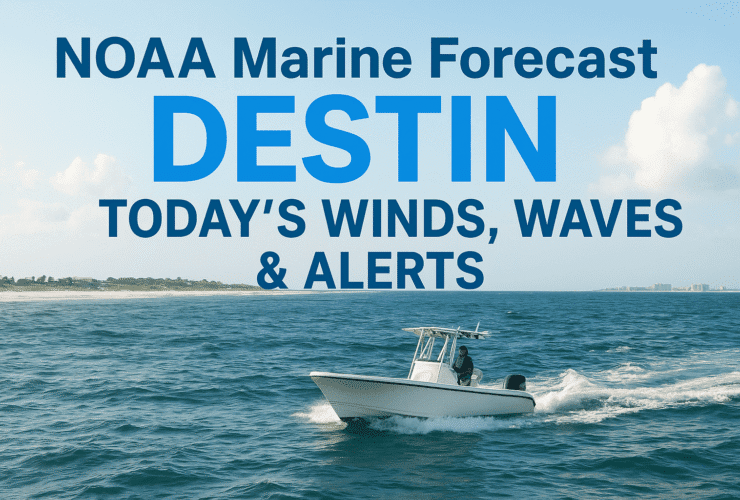
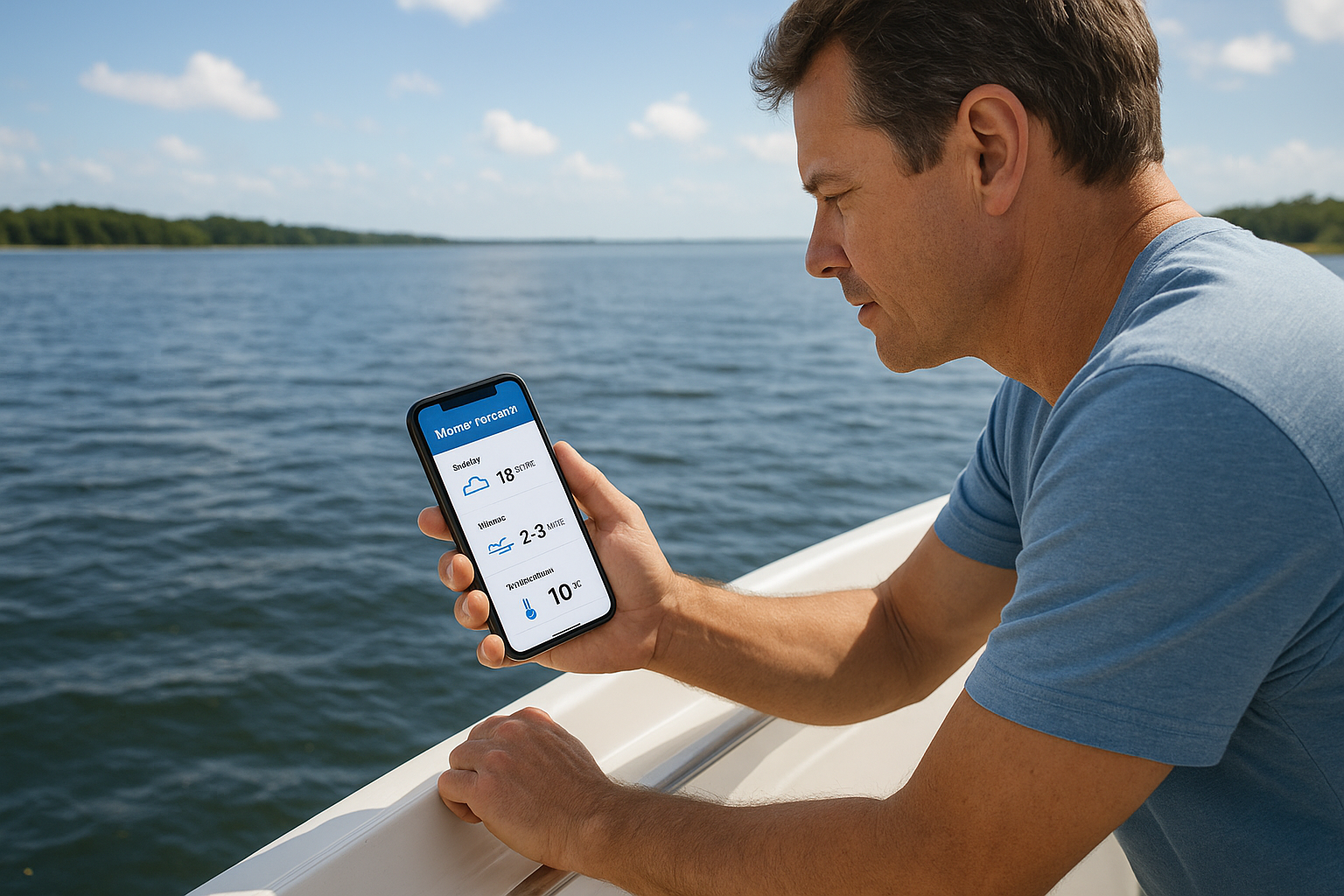
Your boating safety checklist starts before you touch any equipment. Open your weather app and check the marine forecast for your departure time and planned route. You need to know wind speed, wave height, and any storm warnings that might appear during your trip. Weather changes fast on the water, so conditions that look perfect at dawn can turn dangerous by noon.
Check weather and water conditions
Pull up the National Weather Service marine forecast for your specific area. Look at wind predictions (anything over 15 knots creates rough conditions for smaller boats), wave heights, and tide charts. You should also check the water temperature because it affects how long someone can survive if they fall overboard.
Set alerts on your phone for weather updates throughout the day. Conditions shift rapidly near coastlines.
Check forecasts one hour before departure, not the night before.
File a float plan
Write down your departure time, destination, expected return, and passenger list. Text or email this information to a reliable contact on shore. Include your boat description, registration number, and emergency contacts. This simple step helps rescuers find you if something goes wrong.
A complete float plan template should include:
- Boat name and registration number
- Number of passengers and their names
- Departure and return times
- Planned route and stops
- Emergency contact information
- Radio frequencies you’ll monitor
Step 2. Check required safety gear

Walk through your boat and physically touch each piece of required equipment. Don’t just assume items are where they belong because you saw them last week. Your boating safety checklist must verify that everything meets Coast Guard standards and remains in working condition. Missing or expired gear means fines during random inspections and real danger if an emergency strikes.
Personal flotation devices
Count your life jackets and match the number to your passenger list. You need one wearable PFD (Type I, II, or III) per person, plus they all must fit properly. Check each jacket for rips, broken straps, or faded approval labels. Boats over 16 feet also require one throwable flotation device (Type IV) like a ring buoy or cushion.
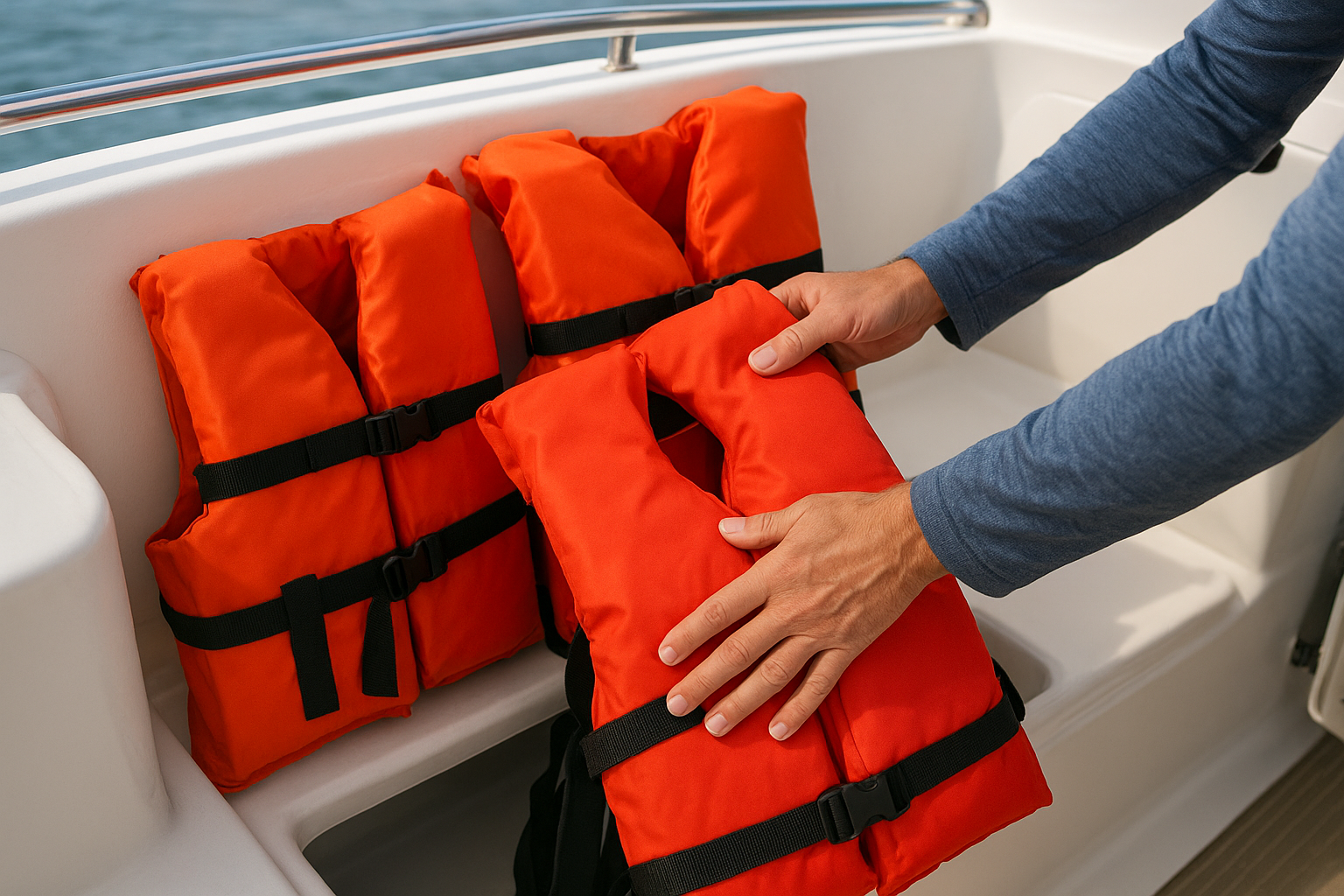
Store PFDs in an accessible location where everyone can grab them quickly. Tell passengers where to find them before you leave the dock.
Coast Guard regulations require children under 13 to wear their PFD at all times on a moving vessel.
Fire extinguishers and visual distress signals
Verify your fire extinguisher shows a full pressure gauge and hasn’t passed its inspection date. Boats under 26 feet need at least one B-1 type extinguisher, while larger vessels require two B-1s or one B-2. Mount the extinguisher within arm’s reach of the helm, not buried in a storage compartment.
Check your flare expiration dates and count your signals. You need three daytime and three nighttime signals if your boat exceeds 16 feet. Replace any flares older than 42 months.
Sound signaling devices
Test your horn or whistle to confirm it works. Carry at least one sound device, though two provides backup if your primary horn fails. Boats over 39 feet also need a bell for fog signals.
Step 3. Inspect boat systems and fuel
Your boating safety checklist must include mechanical systems that keep you moving and safe on the water. Walk around your boat and physically inspect each system, starting with the engine compartment and ending with your fuel gauge. A quick visual check catches leaks, loose connections, and worn parts before they fail offshore. These inspections take only minutes but prevent breakdowns that could leave you drifting miles from shore.
Check the engine and electrical systems
Open your engine compartment and look for any fluid leaks, frayed wires, or loose battery connections. Turn on your ignition and verify that all dashboard gauges respond correctly. Your oil pressure, temperature, and voltage readings should fall within normal ranges before you start the engine.
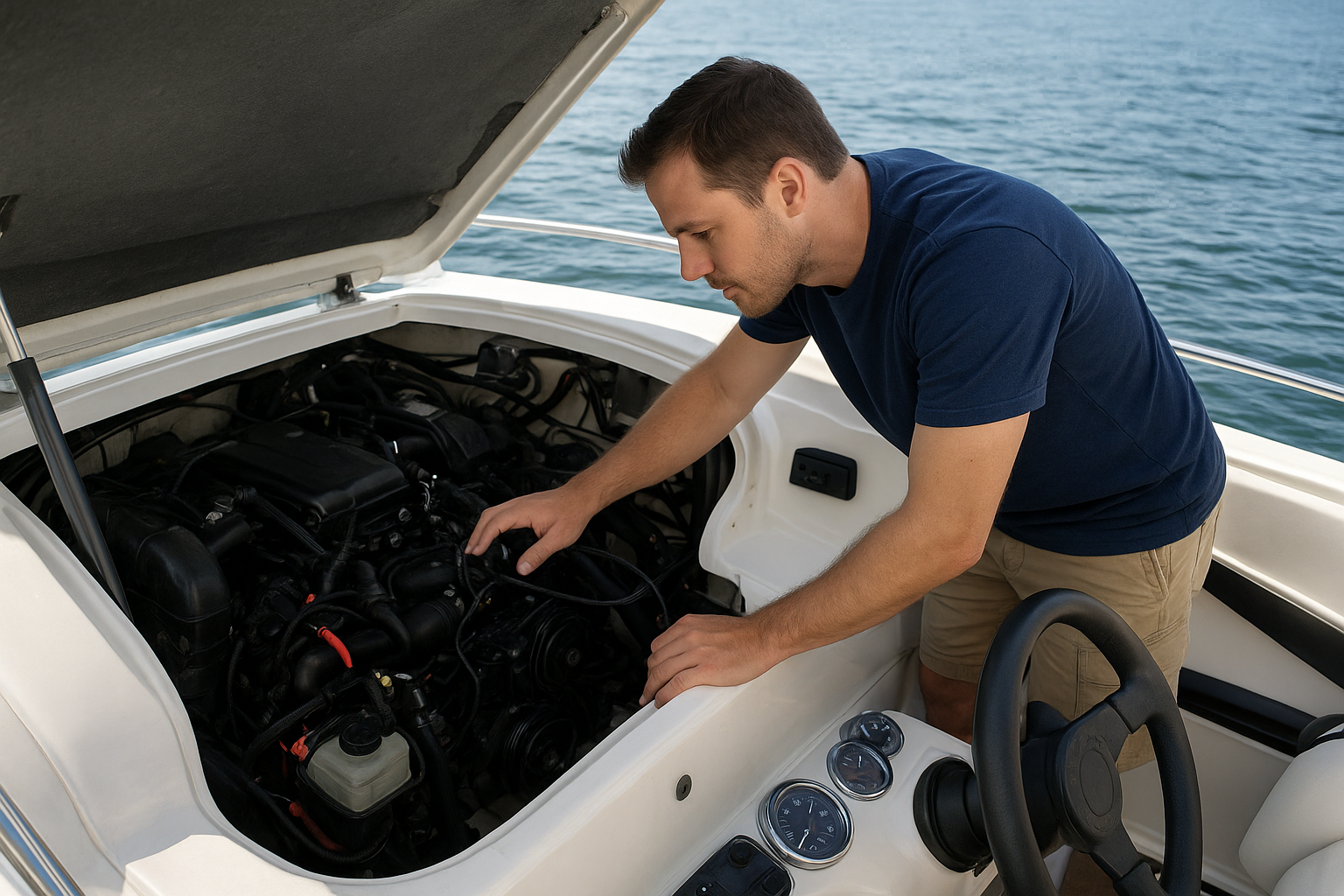
Test your bilge pump by pouring a bucket of water into the bilge and watching it activate automatically. Check that your navigation lights, running lights, and interior lights all illuminate properly. Dead batteries or faulty switches strand more boats than rough seas.
A fully charged battery and working bilge pump rank among your most critical safety systems.
Verify fuel levels and ventilation
Check your fuel gauge and calculate whether you have enough for your planned trip plus a reserve margin. The three-thirds rule works well: one-third out, one-third back, one-third reserve. Top off your tank if needed, following proper fueling procedures at the dock.
Run your blower fan for at least four minutes before starting any gasoline engine. This ventilates the engine compartment and clears any fuel vapors that could ignite. Smell for gasoline fumes near the engine, bilge, and fuel tank. Any fuel odor means you have a leak that needs immediate repair.
Step 4. Brief your crew and secure the boat
Your boating safety checklist isn’t complete until everyone on board understands the safety procedures and your boat is properly secured for departure. Gather your passengers at the dock and explain where emergency equipment sits and how to use it. This briefing prevents confusion during actual emergencies and ensures everyone knows their role if something goes wrong.
Conduct a safety briefing
Show each passenger where you store life jackets, the fire extinguisher, and visual distress signals. Demonstrate how to put on a PFD correctly and explain when children must wear theirs. Point out the VHF radio location and teach at least one other person how to call for help on Channel 16.
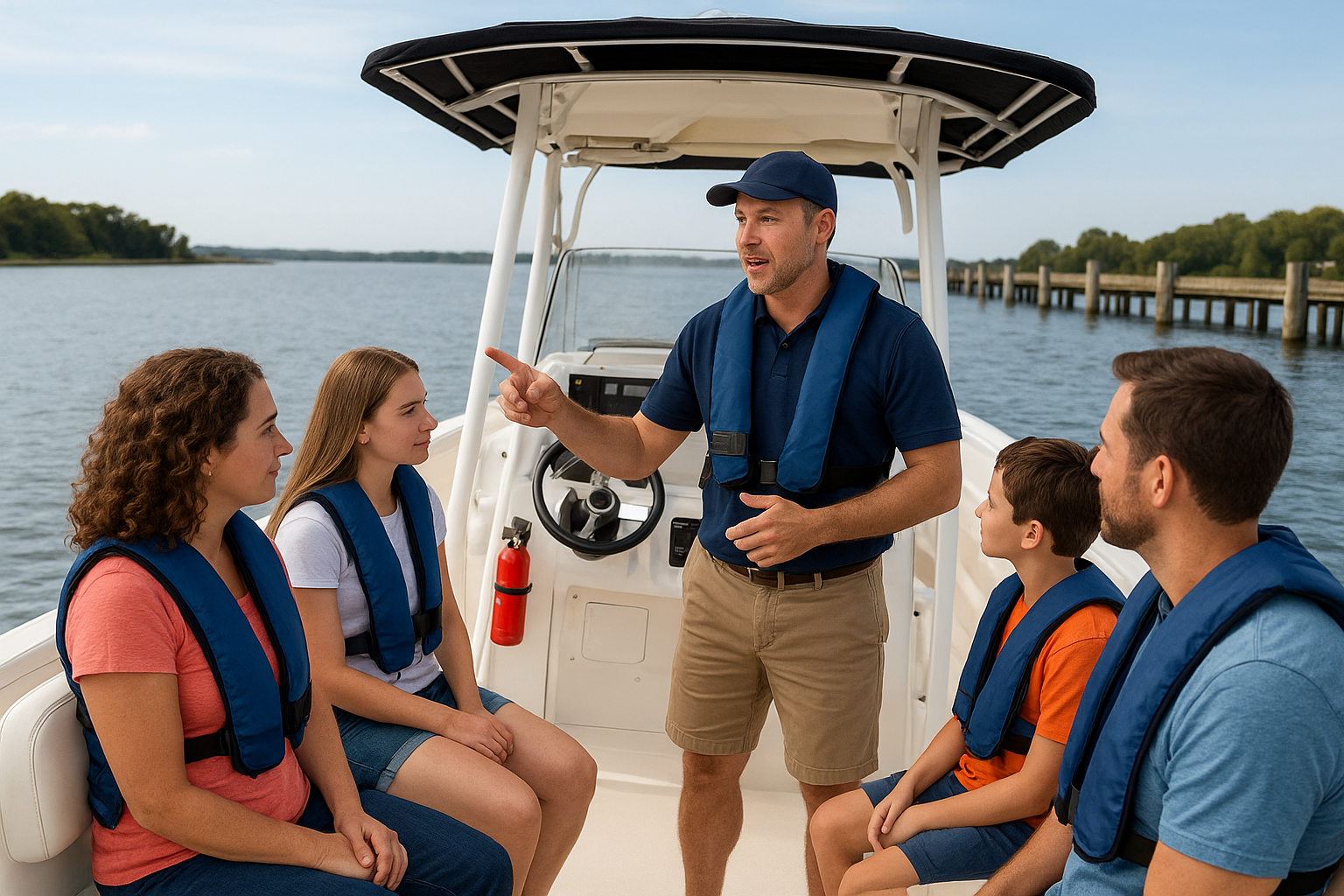
Passengers who know where safety gear sits and how to use it respond faster during emergencies.
Cover these essential topics during your briefing:
- Location of all safety equipment
- How to operate the VHF radio and call Mayday
- What to do if someone falls overboard
- Where passengers should sit while underway
- Hand signals for watersports activities
Secure lines and prepare to depart
Walk around your boat and confirm all compartments are latched, loose items are stowed, and dock lines are ready to release. Check that your anchor and rode remain accessible for quick deployment. Untie your lines in the correct sequence (stern first, then bow) and coil them neatly on deck.
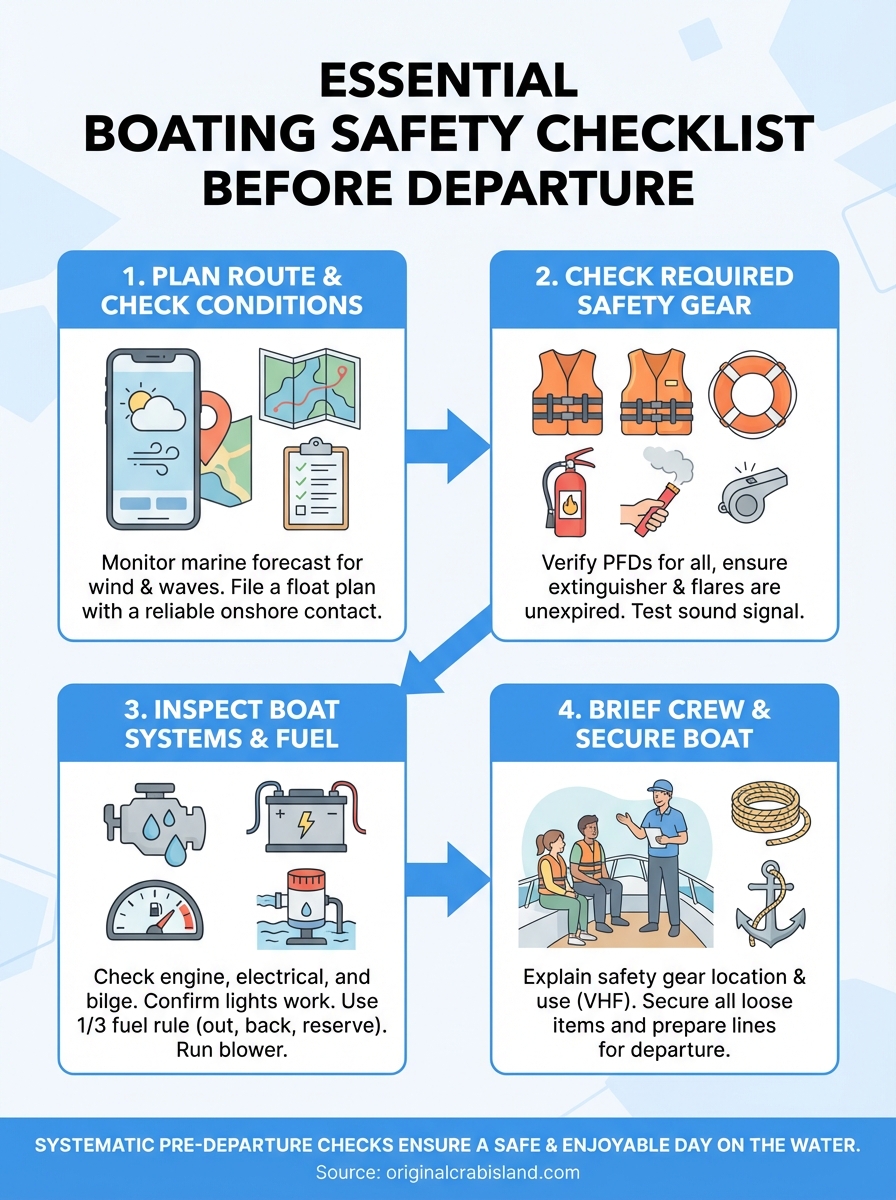
Ready to cast off safely
Your boating safety checklist transforms departure from a rushed scramble into a confident routine. You’ve verified your required equipment, inspected your boat systems, and briefed your crew on emergency procedures. Each item you check removes risk and adds peace of mind for everyone on board. Following this systematic approach before every trip keeps you compliant with Coast Guard regulations and prepared for whatever conditions you encounter. Ready to experience Destin’s waters with confidence? Book your boat rental at Original Crab Island and enjoy a worry-free adventure with properly maintained equipment and expert local guidance.