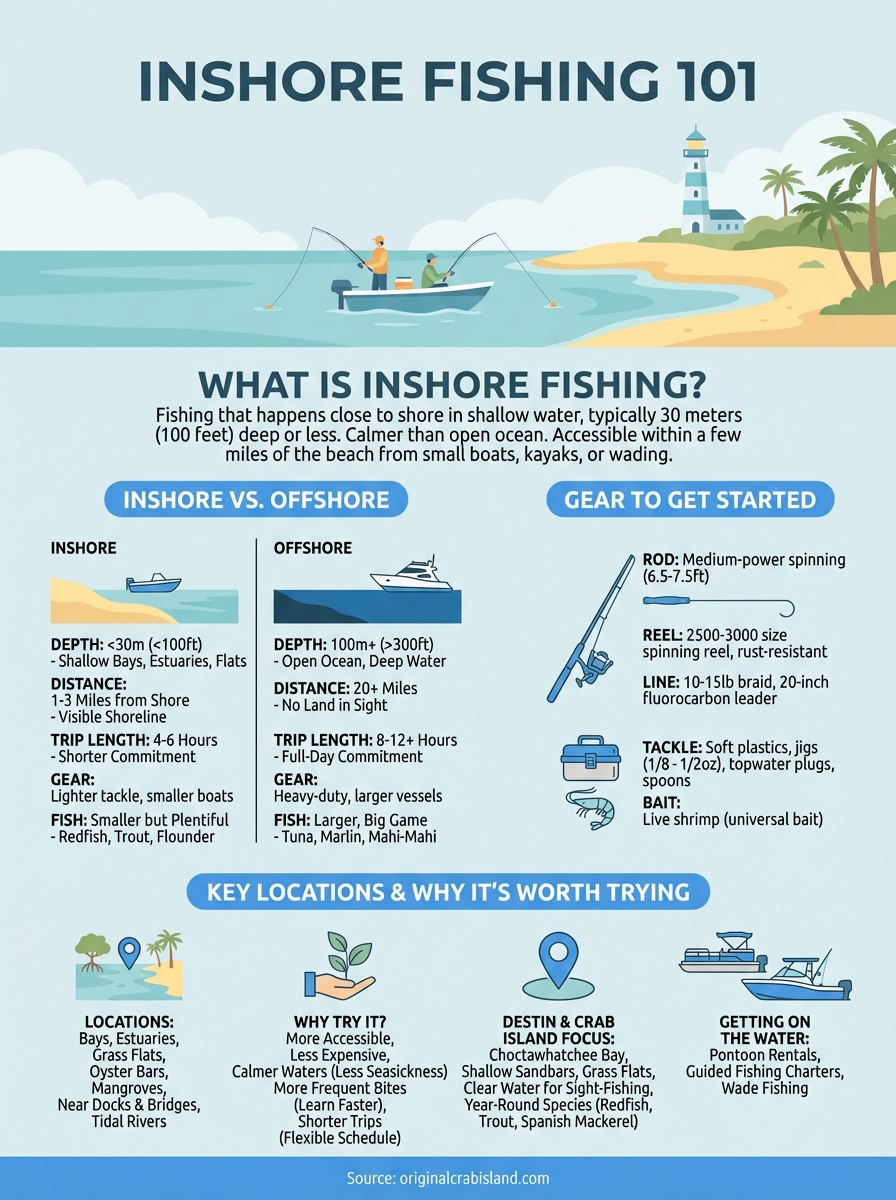
What is inshore fishing? It’s fishing that happens close to shore in shallow water, typically 30 meters deep or less. You’ll find yourself in bays, estuaries, flats and other protected areas where the water stays calmer than the open ocean. Unlike offshore trips that chase big game fish miles from land, inshore fishing keeps you within a few miles of the beach. You can do it from a smaller boat, kayak or even wade right into the water. The fish you target tend to be smaller but plentiful, and the whole experience feels more accessible for beginners.
This guide breaks down everything you need to know about inshore fishing. You’ll learn why it’s worth trying, what gear you need to get started, where to find the best spots (including right here in Destin and around Crab Island), and how it compares to offshore fishing. Whether you’re planning your first fishing trip or just curious about your options on the Emerald Coast, you’ll walk away with a clear picture of what inshore fishing offers and how to make the most of it.
Why inshore fishing is worth trying
Inshore fishing gives you an easier entry point into saltwater fishing without the challenges of deep-sea trips. You’ll spend less money on fuel and gear, and you won’t need a massive boat to get started. The calmer waters mean you’re less likely to deal with seasickness, which makes the experience more enjoyable for beginners and families. You can book a shorter trip, usually around 4 to 6 hours instead of the full-day commitment that offshore fishing demands. This flexibility lets you fit fishing into your vacation schedule without dedicating an entire day to it.
You catch more fish and learn faster
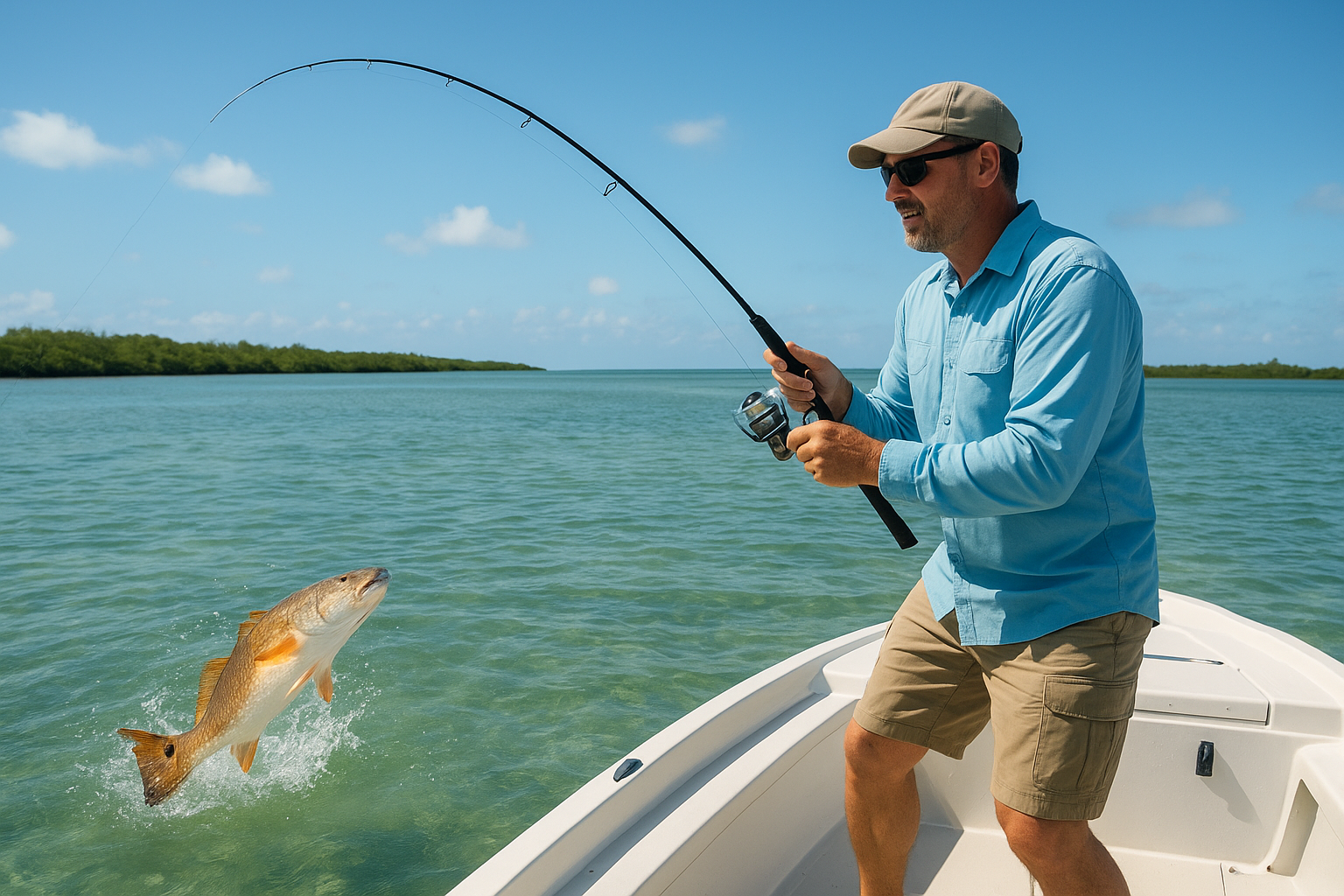
The fish inshore bite more frequently because you’re targeting species that live in these shallow areas year-round. You’ll hook into redfish, sea trout, flounder and snook throughout the day rather than waiting hours for a single big strike. This steady action helps you build your skills quickly as you practice casting, setting the hook and fighting fish. Each catch teaches you something new about reading the water, adjusting your technique and understanding fish behavior.
Inshore trips typically result in higher catch numbers, giving you more hands-on experience in a single outing.
The scenery stays within reach
You never lose sight of the shoreline when you fish inshore. You’ll watch dolphins swim by, see birds diving for baitfish and spot the local landmarks that make each area unique. The water stays clear enough to see grass beds, oyster bars and other structure where fish hide. This visibility helps you understand what is inshore fishing all about, connecting the environment to the fish you’re targeting and making each trip a complete learning experience.
How to choose inshore fishing gear and get started

You don’t need to break the bank to start fishing inshore waters. A medium-power spinning rod between 6.5 and 7.5 feet long handles most situations you’ll encounter in shallow bays and estuaries. Pair it with a rust-resistant spinning reel that holds 150 yards of line, and you’re ready to target the common species that live near shore. Your initial investment stays manageable because you’re not dealing with the heavy-duty equipment that offshore fishing demands. When you understand what is inshore fishing all about, you realize that versatility matters more than specialized gear.
Start with a medium-power spinning rod
The rod forms the foundation of your setup. You want something that casts lightweight lures accurately while still having enough backbone to handle a strong fish. A 7-foot medium-power rod with a fast action tip works for everything from small sea trout to larger redfish. The extra length helps you make longer casts when you need to reach fish holding off structure, and the moderate power lets you feel subtle bites without overpowering smaller mouths.
Most sporting goods stores carry starter rods in the $50 to $100 range that perform well for beginners. You’ll avoid frustration by choosing a rod that matches the lure weights you plan to throw, typically between 1/4 and 3/4 ounce for inshore applications.
Pick the right reel and line combination
Your reel needs to handle saltwater without corroding after a few trips. Look for a 2500 to 3000 size spinning reel with sealed bearings that keep sand and salt out of the internal components. A smooth drag system matters because fish in shallow water make sudden runs, and you need consistent pressure to tire them out without breaking your line.
Spool your reel with 10 to 15-pound braided line for the main line, then add a 20-inch leader of 15 to 20-pound fluorocarbon. The braided line gives you better sensitivity to feel bites, while the fluorocarbon leader stays nearly invisible underwater and resists abrasion from oyster bars and dock pilings.
The right line combination gives you the strength you need while staying hard for fish to detect in clear shallow water.
Stock basic tackle and live bait
Keep your tackle box simple when you’re starting out. You need a handful of soft plastic baits in natural colors like white, chartreuse and root beer, plus some jig heads in 1/8 to 1/2 ounce weights. Add a few topwater plugs for early morning fishing and some spoons that flash in the water to attract aggressive fish. Live shrimp works as a universal bait that almost every inshore species will eat, so pick up a dozen or two from a local bait shop before you head out.
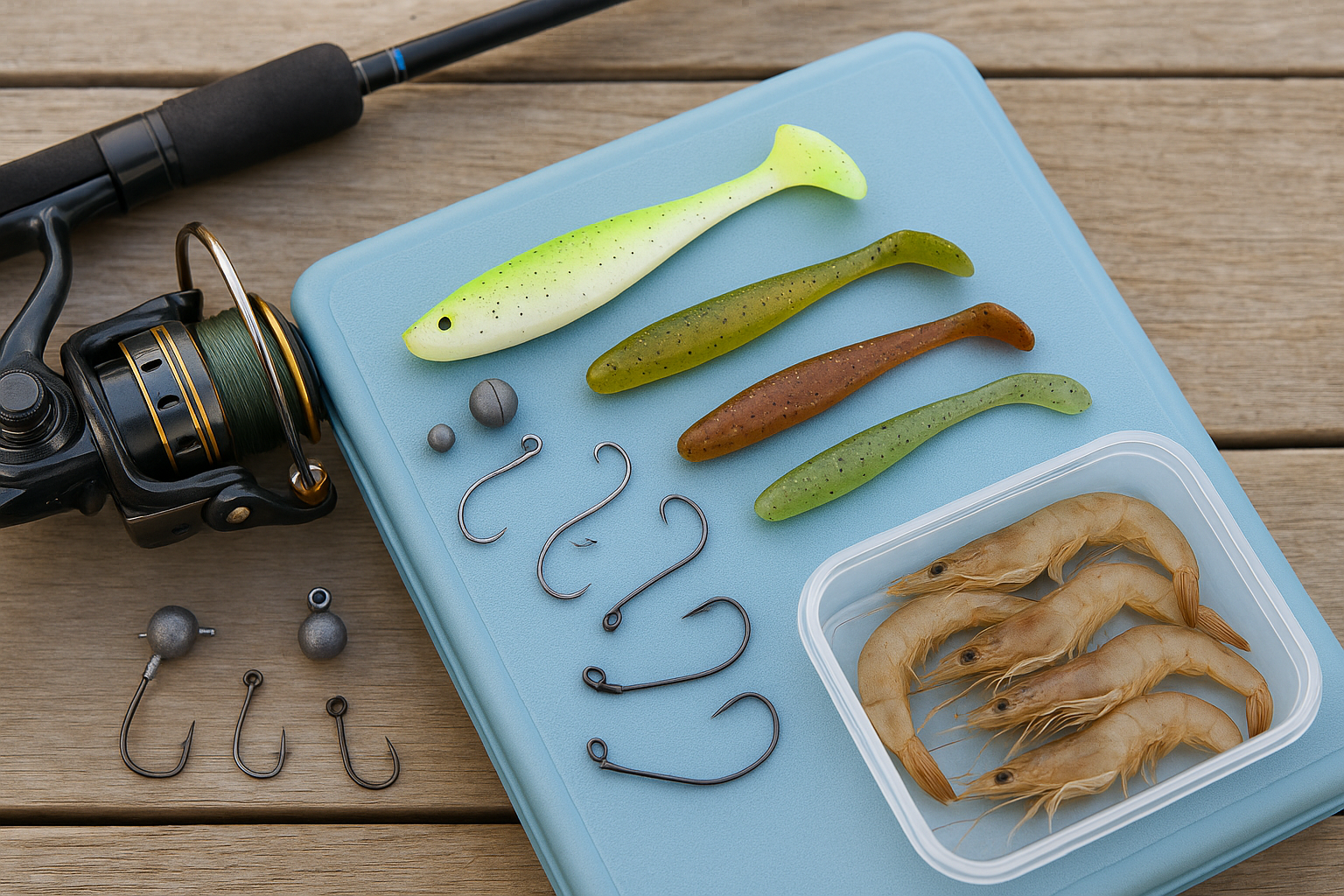
Small split shot weights and a few different hook sizes round out your essential gear. You’ll learn which baits work best in your local waters through trial and error, but starting with these basics covers the majority of inshore fishing situations you’ll face.
Inshore fishing depth, distance and locations
The definition of what is inshore fishing centers on two main factors: water depth and distance from shore. Most anglers and fishing guides consider inshore waters to be 30 meters (roughly 100 feet) deep or less, though you’ll often fish in much shallower areas that measure only a few feet. The distance from shore typically stays within 9 miles of the coastline, but the practical reality puts you much closer, usually within 1 to 3 miles. These parameters create a fishing environment that stays protected from ocean swells and offers easier access to productive waters without requiring hours of boat travel.
The 30-meter depth rule explained
Water depth determines the species you’ll encounter and the techniques that work best. Most inshore fish live in depths between 3 and 20 feet where sunlight penetrates enough to support grass beds, oyster bars and other structure that attracts baitfish. You’ll occasionally venture into waters approaching 30 meters when targeting specific species like cobia or king mackerel that cruise the edges of deeper channels. The shallow depths let you see bottom structure and fish movement, giving you visual clues about where to cast. Modern depth finders help you locate channels, holes and drop-offs that concentrate fish, but you can also read the water by watching for birds, bait activity and color changes that indicate depth transitions.
Distance from shore that counts as inshore
Your fishing trips stay close enough to shore that you maintain a constant view of landmarks and beaches. Most productive inshore spots sit less than 2 miles from the beach, putting you within quick reach of shelter if weather conditions change. The shorter distances mean you spend more time fishing and less time traveling to reach your destination. You can launch from a beach, dock or boat ramp and arrive at productive waters within 10 to 20 minutes in most cases.
Staying close to shore gives you the flexibility to adjust your location quickly based on tide, wind and fish activity throughout your trip.
Common inshore fishing locations
Bays and estuaries form the backbone of inshore fishing grounds because they provide shelter and abundant food sources for fish throughout the year. You’ll find productive water around dock pilings, bridge supports, grass flats, oyster bars, mangrove shorelines and shallow sandbars that hold fish during different tide stages. Creeks and tidal rivers that connect bays to the ocean create highways for fish moving with the tide, and the current concentrations near creek mouths often trigger feeding activity.
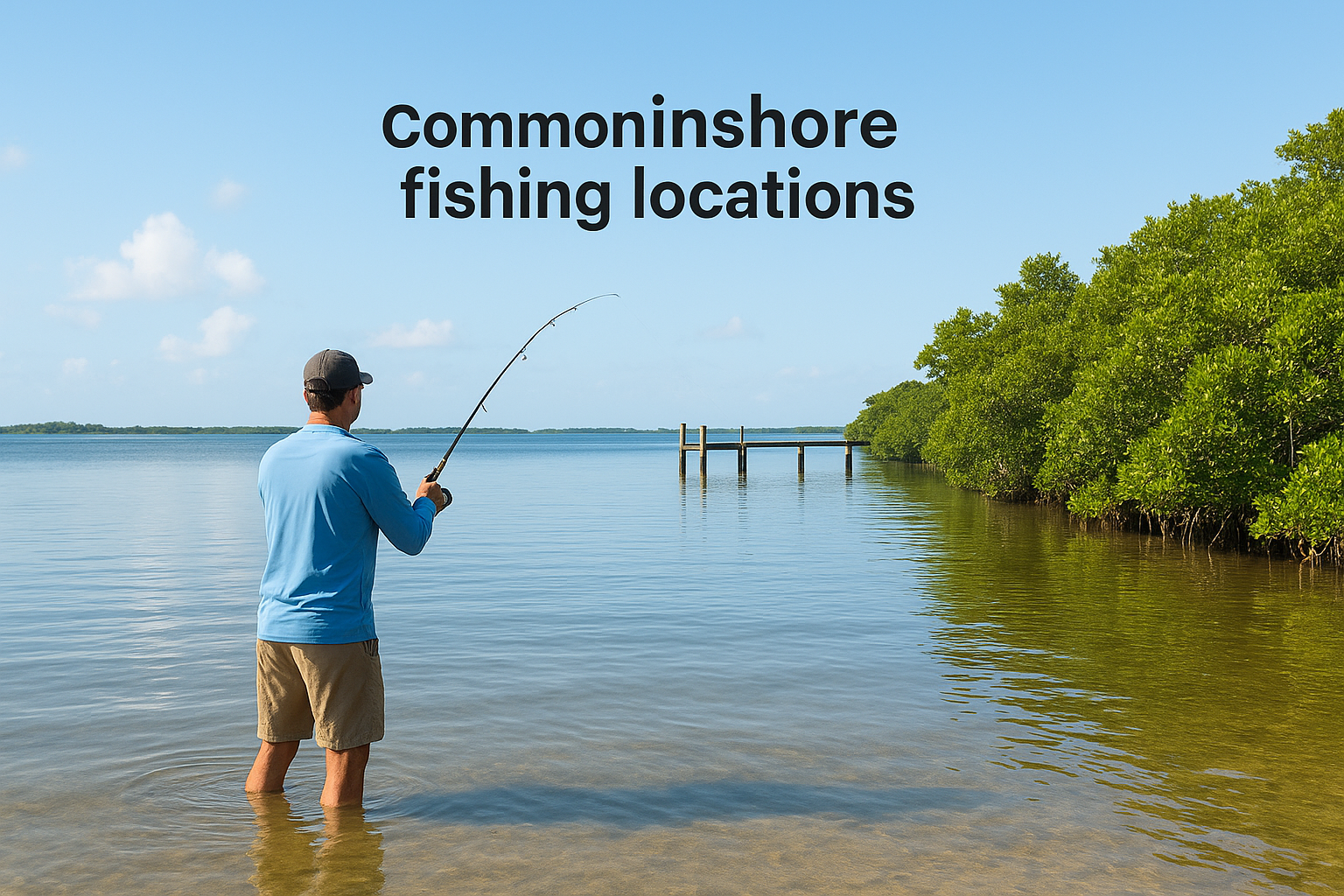
Artificial reefs placed in shallow water attract fish just like natural structure, and many coastal areas maintain public reef systems that draw everything from snapper to grouper. The key to success involves learning how each location produces during different times of day and tide stages, building a mental map of spots that consistently hold fish under specific conditions.
Inshore vs offshore fishing at a glance
Understanding what is inshore fishing becomes clearer when you compare it directly to offshore fishing. The two styles target different species in vastly different environments, and each demands its own approach to gear, time commitment and skill level. Your choice between them depends on your experience, budget and the type of fishing adventure you want. Knowing these core differences helps you pick the right charter or rental for your Destin vacation.
Key differences in distance and depth
Inshore fishing keeps you within 1 to 3 miles of shore in waters 30 meters deep or less, while offshore trips take you 20 miles or more into the ocean where depths reach 100 to over 1,000 meters. You’ll fish in calm, protected bays and estuaries for inshore species like redfish and sea trout, but offshore anglers chase tuna, marlin and mahi-mahi in open water with larger swells. The calmer inshore conditions make the experience easier on your stomach and nerves if you’re new to saltwater fishing.
Inshore waters stay visible and accessible, while offshore trips venture into the deep blue where land disappears from view.
Equipment and trip length comparison
Your inshore setup uses lighter rods between 6 and 7 feet with medium power, and you can fish from boats as small as 18 feet. Offshore fishing requires heavy-duty rods over 7 feet paired with larger reels mounted on boats that measure 30 feet or longer to handle rough seas. Inshore trips run 4 to 6 hours with steady action, giving you multiple catches throughout the day. Offshore charters last 8 to 12 hours or more as you spend significant time reaching fishing grounds, then wait for occasional big strikes from trophy fish.
Inshore fishing in Destin and Crab Island
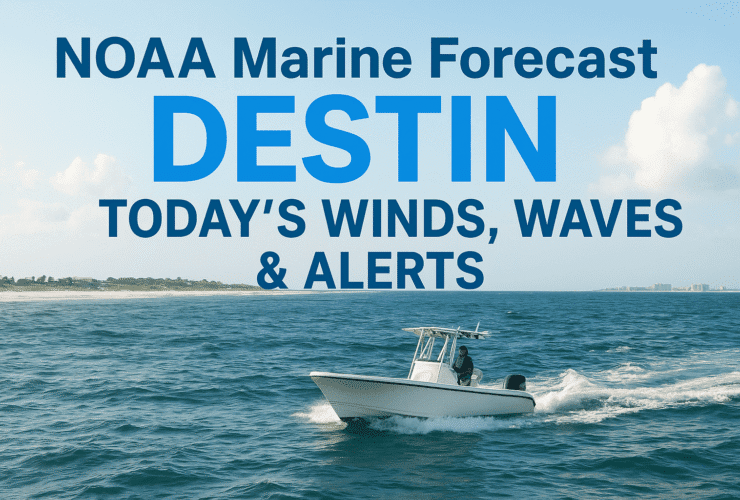
Destin sits on Florida’s Emerald Coast where Choctawhatchee Bay meets the Gulf of Mexico, creating perfect conditions for inshore fishing. The bay system offers miles of grass flats, oyster bars and shallow channels that hold fish throughout the year. Water temperatures stay warm enough to support active fish populations even during winter months, and the clear water lets you sight-fish for species cruising the flats. Crab Island, the famous sandbar located just north of the Destin Pass bridge, puts you in the middle of prime inshore fishing territory where you can combine swimming and socializing with catching fish.
Crab Island’s inshore advantages
The sandbar at Crab Island sits in 3 to 10 feet of water depending on the tide, making it an ideal spot that shows exactly what is inshore fishing delivers. You’ll find Spanish mackerel, bluefish and ladyfish cruising the edges of the sandbar during warmer months, and redfish often move through the area during tide changes. The surrounding channels drop to 15 to 20 feet and hold flounder, sea trout and sheepshead around structure.
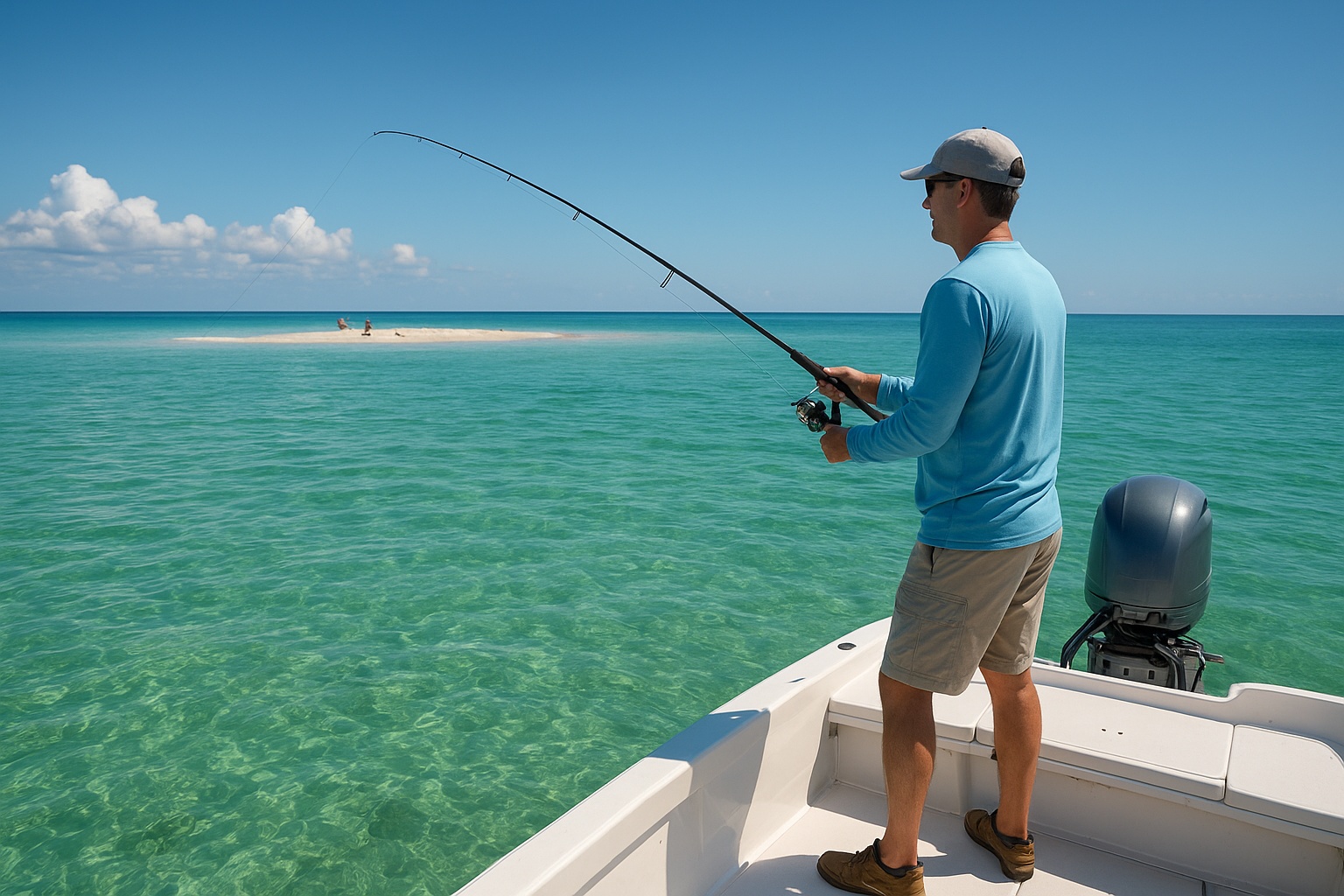
Early morning and late afternoon produce the best fishing action before crowds arrive or after they leave. Casting around anchored boats and near bridge pilings gives you the best chance at hooking fish that use these areas for shade and ambush points. The protected waters stay calm even when the Gulf shows whitecaps, letting you fish comfortably while beginners learn the basics.
Species and seasonal patterns around Destin
Spanish mackerel arrive in spring and stay through fall, chasing baitfish schools across the flats. You’ll catch redfish year-round in the grass beds that line the bay shores, and speckled sea trout hold in slightly deeper pockets where current brings food to them. Flounder lay flat on sandy bottoms near channel edges waiting to ambush passing prey, while sheepshead cluster around any hard structure like pilings and rocks where they feed on barnacles and crustaceans.
The variety of species around Crab Island means you’ll catch different fish throughout the day as tides change and feeding patterns shift.
Getting on the water in Destin
Renting a pontoon boat gives you the stable platform and shallow draft you need to access inshore fishing areas around Crab Island while still providing comfort for your group. You can book fishing charters that focus specifically on inshore species, putting you with a guide who knows the seasonal patterns and productive spots in Destin’s bay system.
Final thoughts on inshore fishing
You now understand what is inshore fishing means and why it works so well for beginners and experienced anglers alike. The shallow depths and shorter distances from shore give you access to productive waters without the commitment and expense of offshore trips. You’ll catch more fish in calmer conditions while learning valuable skills that transfer to any type of saltwater fishing. The gear stays simple, the scenery stays visible and the action stays consistent throughout your trip.
Destin and Crab Island offer some of the best inshore fishing opportunities on the Gulf Coast with year-round species, clear water and protected bays that stay fishable even when winds pick up. Original Crab Island gives you everything you need to experience these waters firsthand, from pontoon boat rentals that let you explore at your own pace to fishing charters with guides who know exactly where fish hold during each season. Book your trip and discover why inshore fishing creates the perfect balance between adventure and accessibility for your Destin vacation.