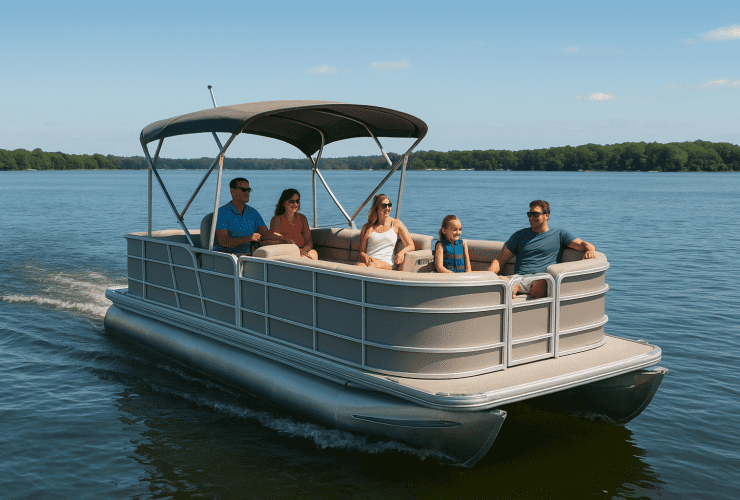
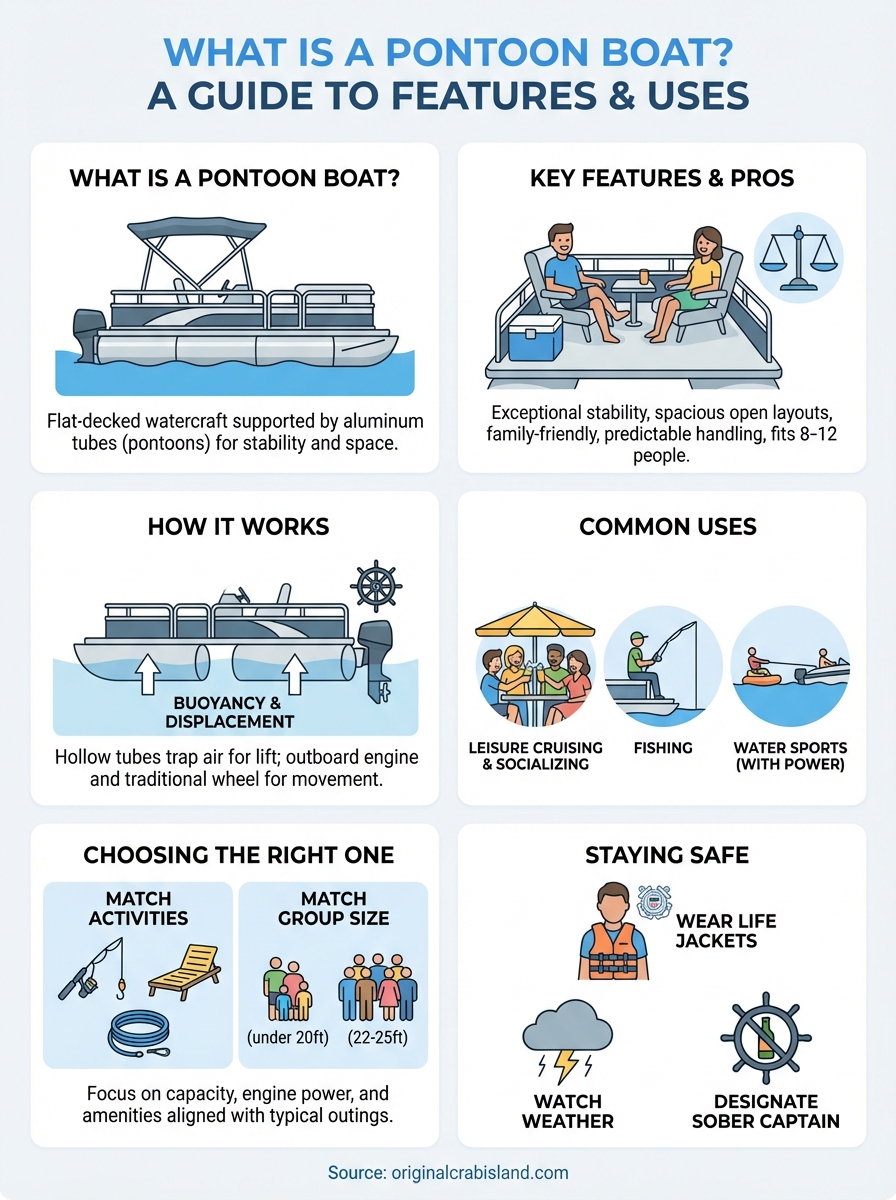
If you’ve ever watched boats glide across the sparkling waters near Crab Island in Destin, Florida, you’ve likely noticed those flat, stable vessels packed with families and friends having the time of their lives. So what is a pontoon boat, exactly? It’s a flat-decked watercraft supported by aluminum tubes (called pontoons) that provide exceptional stability and spacious layouts, making them perfect for everything from lazy afternoon cruises to lively group outings.
At Original Crab Island, we put guests on pontoon boats daily because they’re simply the best way to experience our local waters. Whether you’re a first-time boater curious about these popular vessels or you’re considering renting one for your Destin vacation, understanding what makes pontoons tick will help you get the most out of your time on the water. This guide breaks down the key features, common uses, and honest pros and cons of pontoon boats so you can decide if they’re right for your next adventure.
Why pontoon boats are so popular
Pontoon boats have become the go-to choice for recreational boating across American waterways, and for good reason. You’ll find them packed at every boat ramp on summer weekends because they deliver exactly what most people want from a day on the water: comfort, safety, and room for everyone. Understanding what is a pontoon boat means recognizing why these vessels have earned their reputation as the ultimate family-friendly watercraft.
They make everyone feel comfortable and safe
Stability sets pontoon boats apart from traditional V-hull vessels. The dual aluminum tubes that support the deck create a platform that barely rocks, even when everyone moves to one side. You can walk around freely, stand up to fish, or let kids play without constantly worrying about losing your balance. First-time boaters appreciate how forgiving pontoons are, while experienced captains value the predictable handling that makes docking and maneuvering straightforward.
Pontoon boats give you the confidence to enjoy the water without fighting the boat itself.
They maximize your time with friends and family
Space transforms everything about your boating experience. Pontoon boats offer open deck layouts that feel more like floating patios than cramped boat interiors. You get comfortable seating for 8-12 people, room for coolers and gear, and often features like built-in tables and entertainment systems. Families spread out for picnics, friends gather in conversation circles, and everyone actually relaxes instead of perching uncomfortably on narrow benches. This social aspect explains why pontoons dominate at popular destinations like Crab Island, where people want to hang out on the water, not just ride across it.
How a pontoon boat works
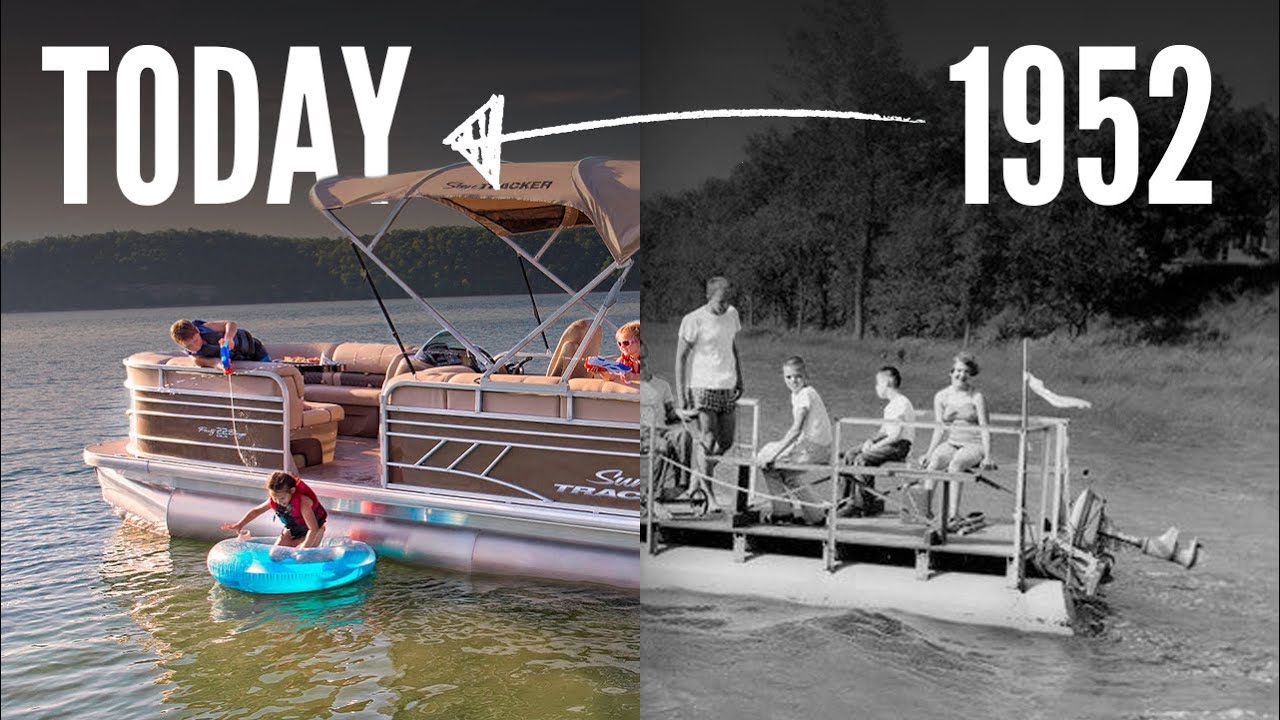
The engineering behind pontoon boats proves simpler than most people expect. When you understand what is a pontoon boat at a mechanical level, you realize these vessels rely on basic physics rather than complex systems. The design centers on buoyancy and displacement, using hollow aluminum tubes to create a stable platform that floats reliably even when loaded with passengers and gear.
The flotation system keeps you afloat
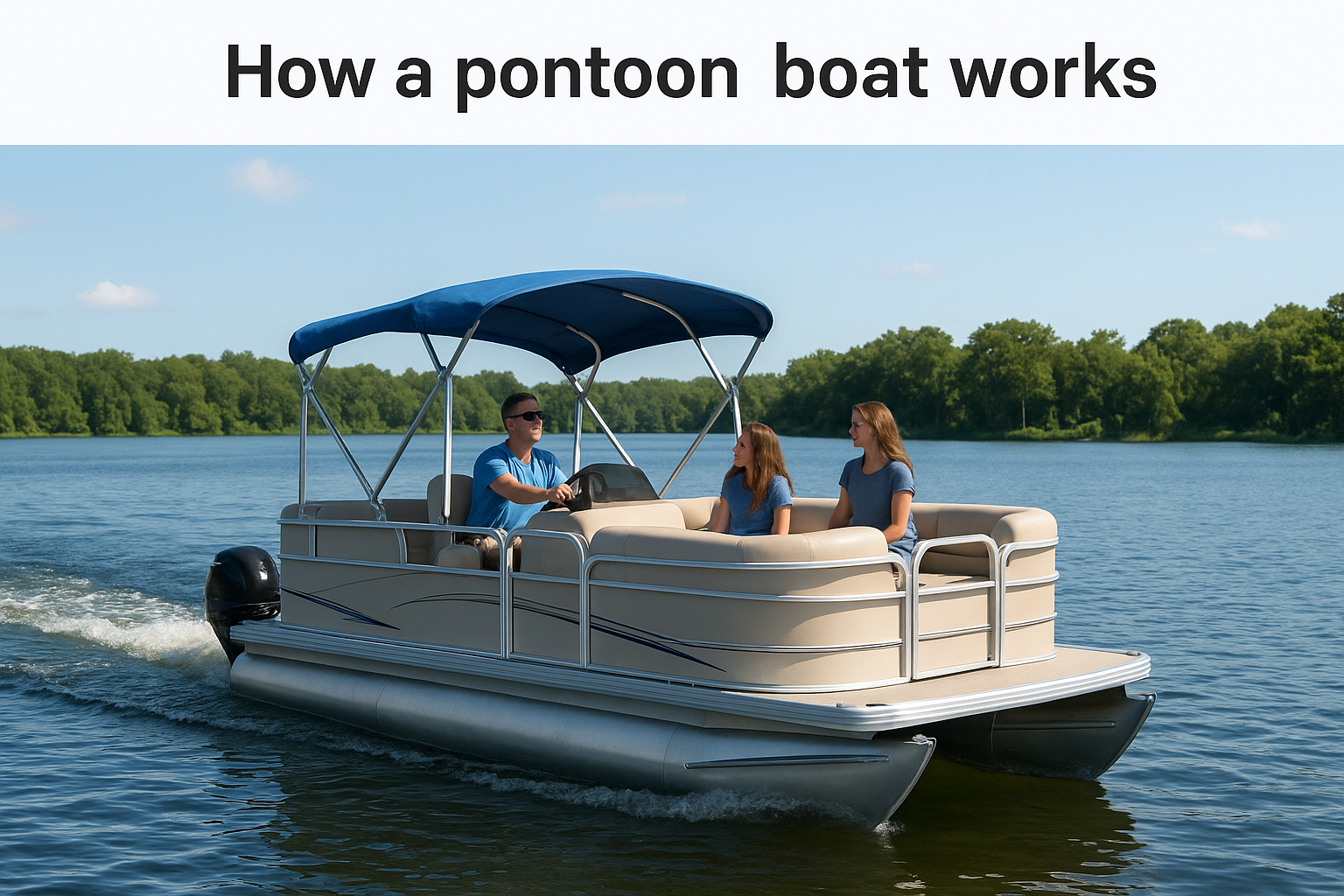
Two or three hollow aluminum tubes run the length of the boat, sealed tight to trap air inside. These pontoons displace water and create upward force that supports the entire deck and everything on it. Most tubes measure 23-27 inches in diameter and extend 18-25 feet long, giving you thousands of pounds of lifting capacity. The tubes sit parallel to each other with the deck mounted on top, spreading weight evenly across the water’s surface instead of cutting through it like traditional boat hulls.
The sealed pontoons create a virtually unsinkable platform that keeps you safe even in rough conditions.
The engine and steering make it move
An outboard motor mounts at the stern, typically ranging from 50 to 300 horsepower depending on the boat’s size. You control direction through a traditional steering wheel connected to the motor, which pivots left or right to push water and turn the boat. The flat bottom means pontoons respond differently than V-hull boats, requiring gentler turns but offering predictable handling that beginners pick up quickly.
What people use pontoon boats for
When you consider what is a pontoon boat designed to do, versatility tops the list. These vessels adapt to virtually any water activity you enjoy, from peaceful morning cruises to lively group celebrations. The spacious deck and stable platform create opportunities that traditional boats simply can’t match.
Leisure cruising and social gatherings
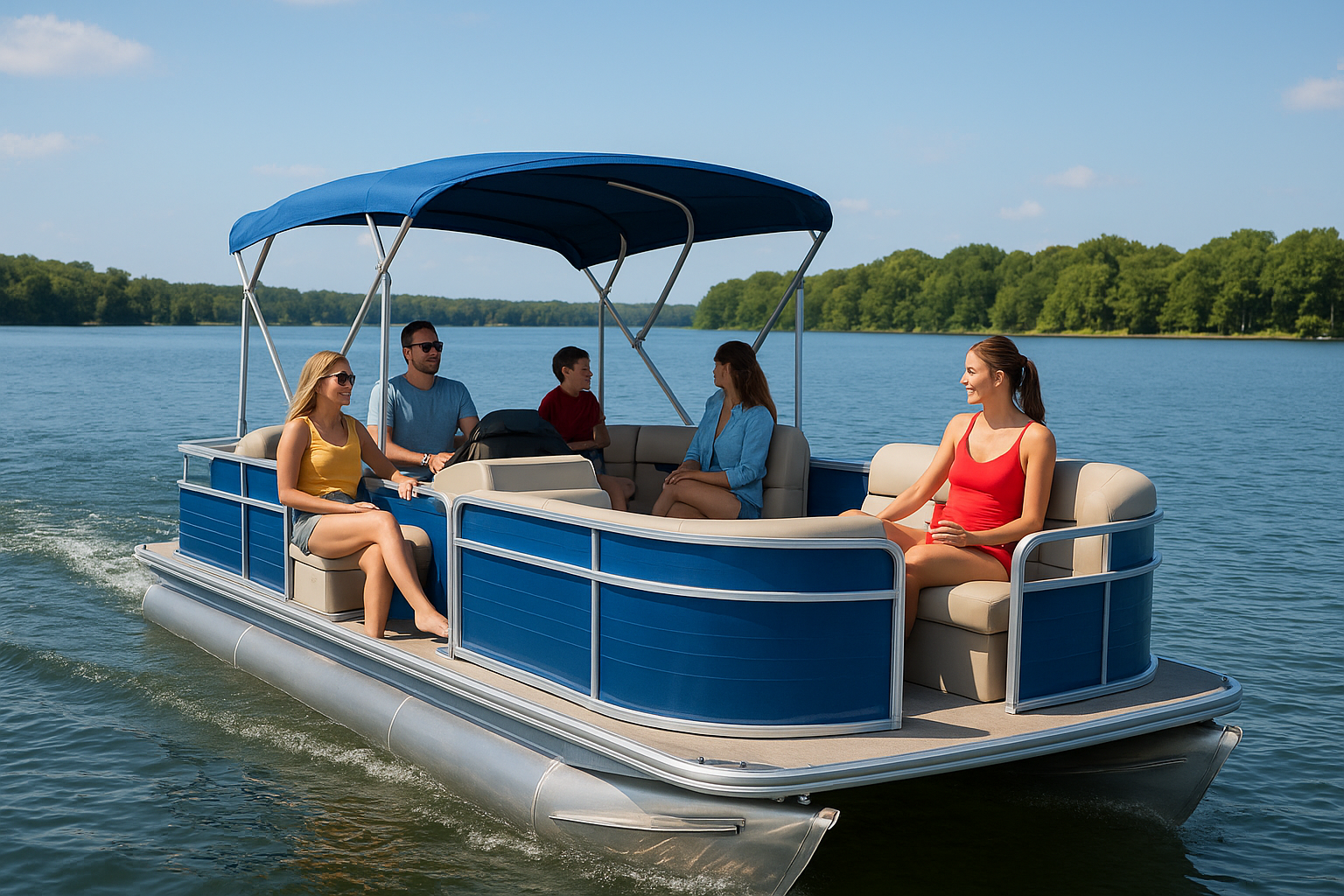
Most pontoon owners spend their time exploring calm waters at a relaxed pace. You can pack the boat with family members or friends, cruise to scenic spots like Crab Island, drop anchor, and enjoy hours of conversation, swimming, and sunshine. The flat deck accommodates picnic setups, portable grills, and coolers without crowding anyone out. Birthday parties, bachelorette celebrations, and corporate outings thrive on pontoons because everyone stays comfortable and connected throughout the trip.
Pontoons turn ordinary water time into memorable social experiences that keep everyone together.
Fishing and water sports
Anglers appreciate the casting room and stability that pontoon boats provide for serious fishing sessions. You can stand safely while working a rod, move around to different sides of the boat, and use deck space for tackle boxes and catch coolers. Some owners also tow tubes, wakeboards, or skiers behind their pontoons, though performance varies based on engine size and design.
How to choose the right pontoon boat
Selecting the right pontoon boat depends on how you plan to use it and who you’ll bring along. When you understand what is a pontoon boat capable of delivering for your specific needs, you can narrow down features that matter most. Smart buyers focus on capacity, engine power, and amenities that align with their typical outings rather than chasing every available upgrade.
Consider your primary activities
Activities determine which features you’ll actually use. If you fish regularly, look for models with rod holders, livewells, and casting platforms built into the design. Water sports enthusiasts need stronger engines (150+ horsepower) and tow bars for pulling tubes or skiers. Cruisers who prioritize comfort benefit from upgraded seating, sound systems, and sun shades that make long days on the water enjoyable.
Match your boat’s features to your actual plans, not what sounds impressive at the dock.
Match the size to your group
Length directly impacts passenger capacity and storage space. Boats under 20 feet work well for small families or couples, while 22-25 foot models accommodate larger groups comfortably. Consider typical headcount rather than maximum capacity, since cramming everyone aboard makes for a miserable experience. Rental experiences at places like Original Crab Island give you hands-on perspective before committing to a purchase.
How to stay safe on a pontoon boat
Safety on pontoon boats requires attention to basics that many boaters overlook. While understanding what is a pontoon boat includes recognizing its stability advantages, you still face real risks on the water that demand respect and preparation. Following straightforward precautions keeps everyone protected without limiting the fun.
Wear life jackets and know your limits
Life jackets belong on every passenger, especially children and weak swimmers. Keep U.S. Coast Guard-approved vests readily accessible and sized correctly for each person aboard. You must carry one jacket per passenger by law, though wearing them makes even more sense when you consider how quickly emergencies develop on the water.
The stability of pontoon boats can create false confidence that leads to preventable accidents.
Alcohol impairs your judgment and reaction time just as severely on water as on roads. Designate a sober captain for every trip and stay aware of how sun, dehydration, and wind amplify alcohol’s effects.
Watch the weather and water conditions
Check weather forecasts before leaving the dock and monitor changing conditions throughout your trip. Thunderstorms develop quickly in coastal areas like Destin, bringing lightning that poses serious danger on open water. Head back at the first sign of dark clouds or increasing wind rather than gambling with everyone’s safety.
Quick recap and next steps
You now understand what is a pontoon boat and why these stable, spacious vessels have become the go-to choice for recreational boating across America. The dual aluminum tubes provide the buoyancy and flat platform that make everything from fishing trips to family cruises completely accessible for boaters of all experience levels. You’ve learned how to choose the right size based on your typical group, identified which features match your planned activities, and reviewed the safety basics that keep everyone protected on the water.
Ready to experience pontoon boating firsthand? Explore Crab Island with Original Crab Island and discover why this Emerald Coast destination attracts thousands of boaters every season. Our rental fleet puts you on well-maintained pontoons with all the amenities and equipment you need for an unforgettable day on Destin’s crystal-clear waters. Book your adventure today and see exactly what makes these vessels perfect for creating lasting memories.