Planning a fishing trip along Florida’s Gulf Coast? The decision between inshore vs offshore fishing is often the first one you’ll face. Both styles deliver unique experiences, and understanding their differences helps you choose the right adventure based on your skill level, budget, and the species you want to catch.
At Original Crab Island, we’ve guided countless visitors through Destin’s diverse fishing opportunities, from calm backwaters and bays to the deep blue Gulf of Mexico. Our location on the Emerald Coast puts both fishing worlds within easy reach, making it an ideal home base whether you’re a first-timer or a seasoned angler.
This guide covers the key distinctions between inshore and offshore fishing: water depth and distance from shore, target species, gear requirements, and what to expect on the water. By the end, you’ll know exactly which style fits your next fishing trip in Destin.
Why the inshore vs offshore difference matters

Your choice between inshore and offshore fishing shapes every aspect of your trip, from the cost and duration to the physical demands and species you’ll encounter. These two fishing styles operate in completely different environments, and matching your choice to your group’s preferences prevents disappointment on the water. A family with young children will have vastly different needs than a group of experienced anglers chasing trophy fish.
Understanding these differences upfront helps you set realistic expectations and budget appropriately. The gap between inshore and offshore isn’t just about where you fish, it affects everything from the boat type required to the tackle you’ll use and the experience level needed to enjoy yourself.
Budget and time considerations
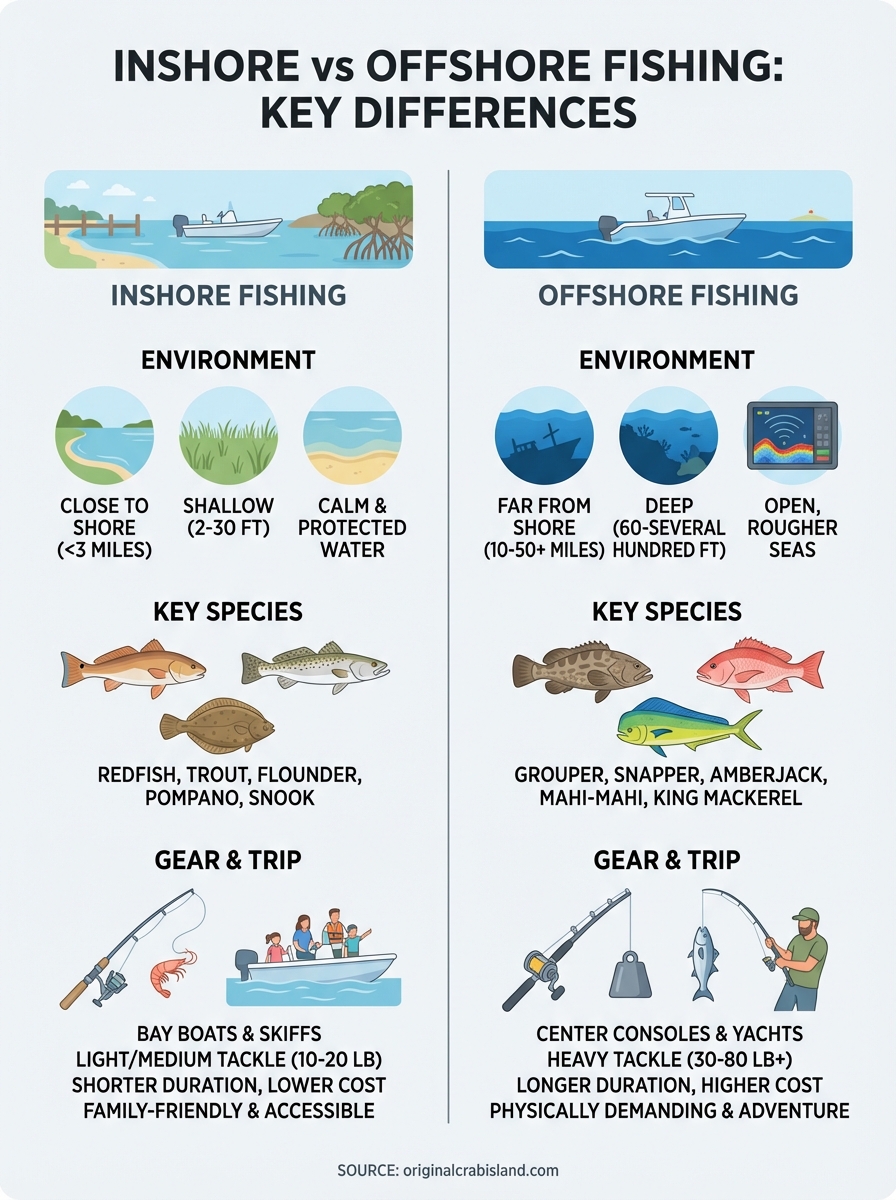
Offshore charters typically cost more because they require larger boats, burn more fuel traveling to fishing grounds, and demand specialized equipment. You’ll spend four to eight hours on an offshore trip, with a significant portion dedicated to reaching productive waters 10 to 50 miles from shore. The investment reflects the adventure: targeting larger, harder-fighting species in deeper water.
Inshore trips offer shorter durations and lower prices, making them ideal for families, beginners, or visitors with limited time. You can book half-day trips of three to four hours that stay within a few miles of the coast. The reduced fuel costs and shorter distances translate directly to your wallet while still delivering excellent fishing opportunities.
"The right fishing style depends on your group’s experience level, budget, and what kind of catch you’re hoping to bring home."
Physical demands and comfort levels
Offshore fishing challenges you with rougher seas, stronger winds, and constant boat motion that can trigger seasickness in those unprepared for Gulf swells. You’ll stand for extended periods while fighting fish that test your endurance, and bathroom facilities on smaller offshore boats can be basic at best.
Inshore waters provide calmer conditions and easier access to land if someone needs a break or feels uncomfortable. The protected bays, channels, and flats around Destin experience minimal wave action, creating a more relaxed environment for first-time anglers or those concerned about seasickness. You’ll fish from boats that can quickly return to shore if weather changes or someone needs assistance.
Inshore vs offshore: distance, depth, and water types
The physical environment separates inshore vs offshore fishing more than any other factor. These distinctions define the species you’ll encounter, the equipment you’ll need, and the overall experience on the water. Understanding where each fishing style takes place helps you visualize what your day will look like.
Distance from shore
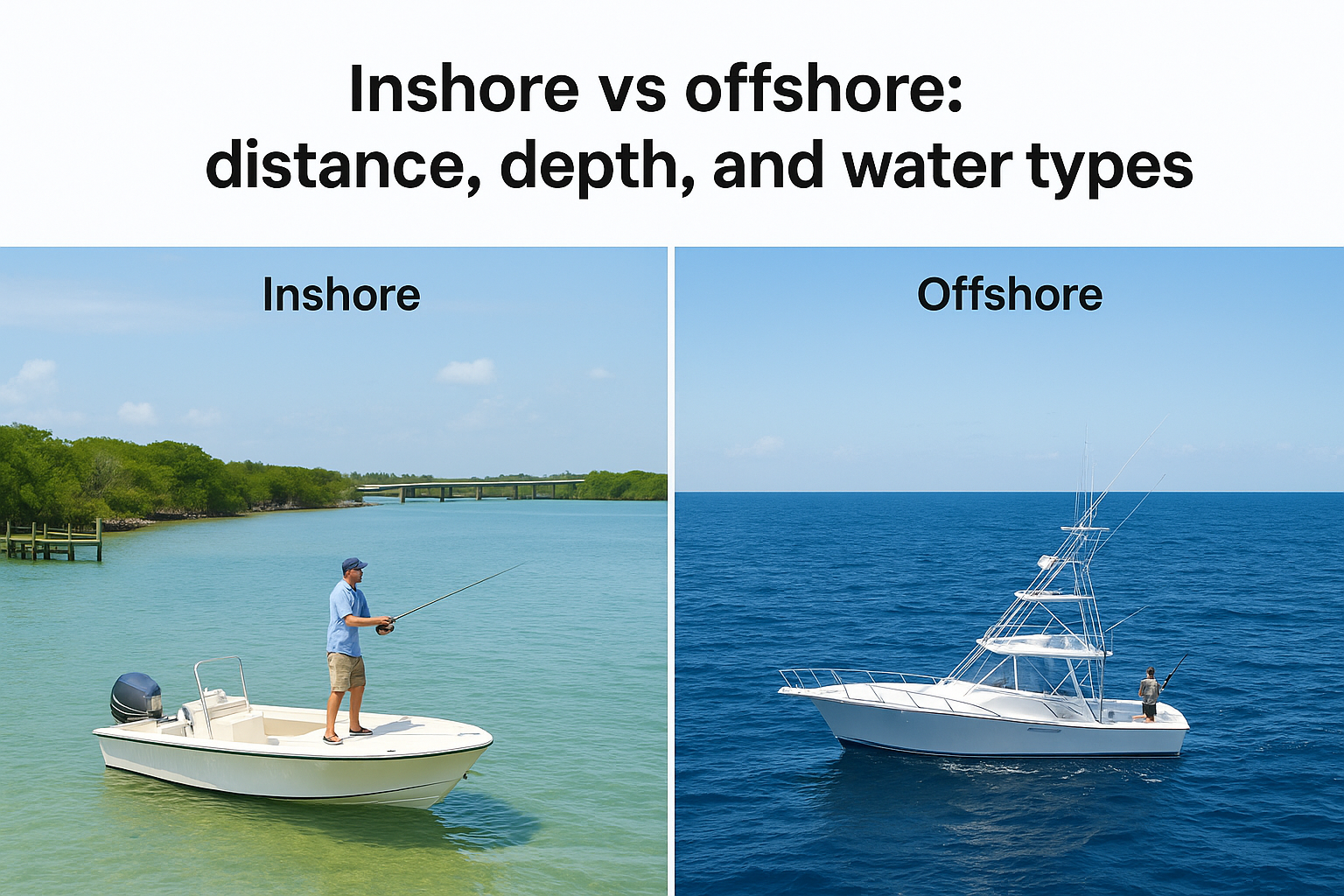
Inshore fishing happens in waters within three miles of the coastline, keeping you close to visible landmarks and protected areas. You’ll fish around docks, bridges, grass flats, and mangrove-lined channels where you can still see shore throughout your trip. The proximity means shorter travel times and quicker returns if weather shifts or conditions change.
Offshore fishing pushes you 10 to 50 miles into the Gulf, where land disappears from view and you’re surrounded by open water. Your captain navigates using GPS and sonar to locate underwater structures, ledges, and temperature breaks that concentrate game fish. These distant fishing grounds require dedicated travel time and fuel, but they provide access to species that never venture near shore.
Water depth and bottom structure
Inshore waters typically range from 2 to 30 feet deep, with visible sandy bottoms, seagrass beds, and oyster bars that create habitat for baitfish and predators. You’ll see the water color shift from emerald green to lighter blues as depth changes, and structure like pilings and rock piles becomes a focal point for targeting fish.
"The depth difference between inshore and offshore fishing completely changes the species, techniques, and equipment you’ll use."
Offshore fishing takes place in depths from 60 to several hundred feet, where bottom structure includes artificial reefs, shipwrecks, and natural ledges. The deep blue water reveals little about what’s below, making electronics essential for locating fish and productive spots.
Species you can target in Destin and beyond
The species available in inshore vs offshore fishing differ dramatically because each environment supports distinct food chains and habitats. Your target fish determines whether you’ll stay near the coast or venture into deep water, and understanding what swims where helps you plan the trip that delivers the catch you want.
Inshore species around Destin
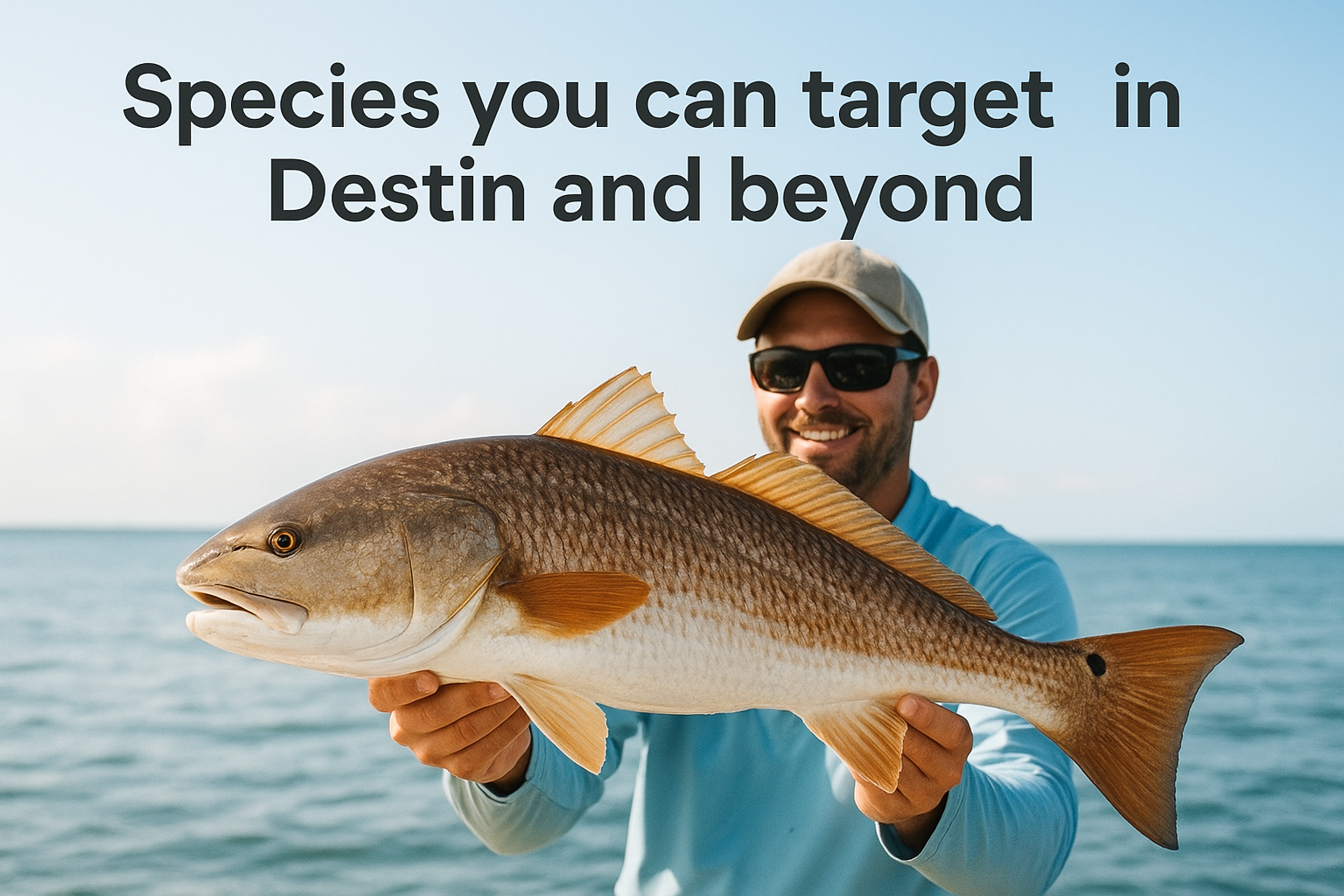
Shallow waters around Destin hold redfish, speckled trout, and flounder as primary targets throughout the year. You’ll find these species cruising grass flats, hiding near oyster bars, and ambushing prey around dock pilings. Pompano and Spanish mackerel arrive seasonally, with pompano running in spring and fall while mackerel show up during warmer months. Sheepshead congregate around structures with barnacles and crustaceans, offering excellent table fare for anglers who master their light bite.
Black drum, ladyfish, and jack crevalle round out the inshore roster, providing action when your primary targets aren’t biting. These species thrive in the protected waters of Choctawhatchee Bay, East Pass, and the channels connecting them to the Gulf.
Offshore targets in the Gulf
Deep water fishing delivers grouper, snapper, and amberjack as staple species that justify the fuel and time investment. Red snapper season draws anglers offshore in droves, while gag grouper, red grouper, and scamp provide year-round opportunities when you find the right structure. Amberjack fight harder than their size suggests, testing your arms and tackle around wrecks and reefs.
"Offshore species grow larger and fight harder, but inshore fish offer consistent action closer to home."
King mackerel, mahi-mahi, and wahoo bring speed and spectacular strikes to offshore trips, with kings available most of the year and mahi appearing during summer. Blackfin tuna and occasional sailfish add excitement when conditions align perfectly.
Gear, boats, and techniques for each
The equipment divide between inshore vs offshore fishing runs deeper than just rod size. Your boat choice, tackle selection, and fishing methods adapt completely to the environment you’re targeting. Understanding these differences prevents gear mismatches that limit your success and helps you pack appropriately for your charter.
Inshore setup and methods
Bay boats and flats skiffs dominate inshore fishing, with shallow drafts that navigate skinny water without disturbing fish. You’ll use medium-action spinning rods paired with 10 to 20-pound test line that handles structure without being too heavy for finesse presentations. Live shrimp, pilchards, and artificial lures like soft plastics and spoons produce consistent results when worked around grass beds and oyster bars.
Casting accuracy matters more than distance in tight spaces around docks and mangroves. You’ll employ sight fishing, drift fishing, and anchored presentations depending on conditions and target species. The ability to move quickly between spots makes inshore fishing a mobile, active style where you’re constantly searching.
"Inshore gear focuses on finesse and accuracy, while offshore equipment emphasizes power and durability for battling larger species."
Offshore equipment and approaches
Center console boats and sportfishing yachts provide the stability and range needed for Gulf expeditions, with larger engines that cover distance quickly. You’ll fish with heavy conventional reels mounted on stout rods rated for 30 to 80-pound line that can pull grouper from reefs and subdue powerful amberjack. Live bait, cut bait, and trolled lures target different depths and species across varying techniques.
Bottom fishing with heavy weights reaches structure in 100-plus feet, while trolling covers water to locate pelagic species. Your captain uses downriggers, planers, and specific rigging methods that maximize hookups in deep water where fish have room to run.
How to choose the right trip for your group
Your group’s composition determines whether inshore vs offshore fishing delivers the better experience. Assess everyone’s physical condition, previous fishing experience, and expectations before booking. A group split between beginners and veterans needs different planning than a crew of experienced anglers chasing trophy fish.
Consider experience levels and comfort
First-time anglers and families with young children benefit from inshore trips that stay calm and accessible. The protected waters reduce seasickness concerns while providing consistent action that keeps everyone engaged. You’ll spend more time fishing and less time traveling, which matters when attention spans vary across your group.
Experienced anglers seeking larger species and serious challenges should commit to offshore expeditions despite the rougher conditions. Your group needs the physical stamina to handle extended periods on open water and the patience to endure longer runs between fishing spots.
"Your least experienced angler should guide your decision, not your most skilled one, to ensure everyone enjoys the trip."
Match your timeline and budget
Half-day inshore trips work perfectly for visitors with packed vacation schedules or those testing fishing before committing to longer charters. You’ll return by lunch with enough energy for afternoon activities, and the lower cost lets you book multiple trips during your stay.
Full-day offshore adventures require dedicating an entire day and accepting higher expenses for fuel and gear. Book these trips when your group prioritizes the catch over convenience and can handle the time investment required to reach productive Gulf waters. Consider your group’s consensus on spending more for bigger fish versus staying closer for guaranteed action.
Wrap-up and next steps
The choice between inshore vs offshore fishing comes down to your group’s experience, budget, and target species. Inshore trips deliver consistent action in calm waters with lower costs and shorter durations, making them perfect for families and first-time anglers exploring Destin’s protected bays and flats. Offshore adventures require more time and investment but reward you with larger species and the thrill of deep-water fishing in the Gulf of Mexico’s blue waters.
Your decision shapes your entire Destin fishing experience, from the boat you’ll board to the techniques you’ll learn on the water. Consider everyone’s comfort level, physical stamina, and expectations when choosing between these two distinct fishing styles that define the Emerald Coast’s diverse opportunities.
Ready to experience world-class fishing along Florida’s coast? Original Crab Island offers guided fishing charters that put you on the water with experienced captains who know exactly where the fish are biting. Book your Destin fishing adventure today and create memories that last a lifetime.