You’ve been handed the title of best man, and now comes the real challenge: pulling together a weekend that actually works for everyone. Between coordinating flights, booking activities, and keeping the groom happy, a bachelor party itinerary template becomes less of a nice-to-have and more of a survival tool. Without a clear plan, you’re stuck fielding "what time are we leaving?" texts every five minutes.
The good news? A solid template does the heavy lifting for you. It keeps the group on track, prevents double-bookings, and gives everyone a reference point so you’re not repeating yourself all weekend. Whether you’re planning a laid-back beach trip or a packed adventure schedule, the right format makes sharing details simple and keeps the chaos to a minimum.
At Original Crab Island, we’ve helped countless bachelor parties make the most of their time in Destin, from pontoon cruises to deep-sea fishing charters. We’ve seen what separates a well-organized weekend from a logistical mess, and it usually comes down to preparation. Below, you’ll find customizable itinerary templates designed to fit your crew’s vibe, plus tips on building a schedule that balances fun with enough flexibility to actually enjoy it.
What a bachelor party itinerary template includes
A bachelor party itinerary template needs more than just a list of activities. You’re coordinating multiple people across different time zones, juggling deposits, and making sure nobody gets left behind at the airport. The best templates give you structured fields for every detail so nothing falls through the cracks, and they’re flexible enough to adjust when plans change (because they always do).
Your template should act as both a schedule and a reference document. Think of it as the single source of truth for the weekend. When someone asks about check-in times or where to meet for dinner, they should find the answer in one place without digging through a dozen group texts.
Day-by-day schedule breakdown
The core of any itinerary is a clear timeline for each day. You need start times, end times, locations, and activity descriptions laid out in a way that’s easy to scan. Break each day into morning, afternoon, and evening blocks, then fill in what’s happening during each window.
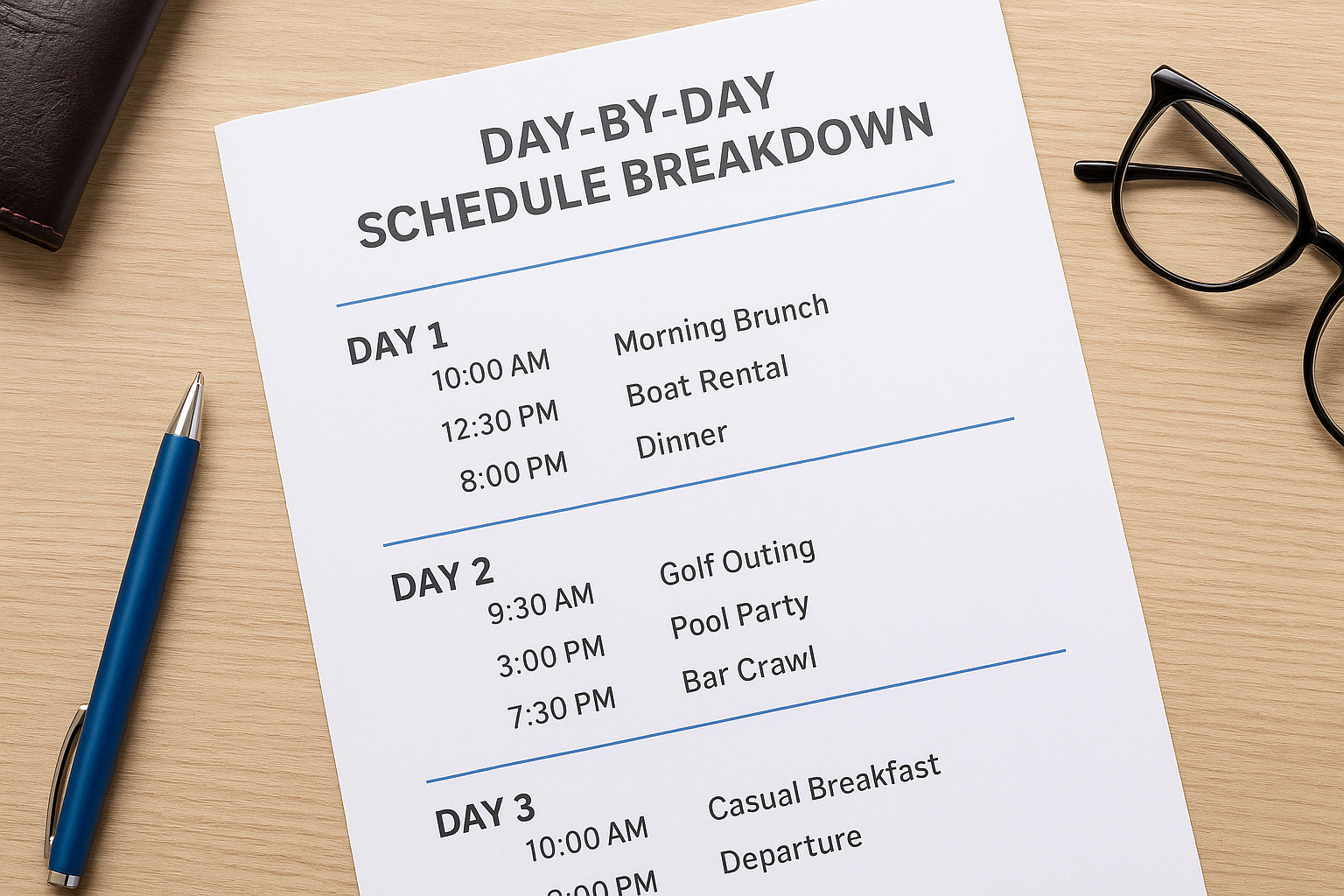
Include buffer time between activities so you’re not scrambling when things run long. A 30-minute cushion between a boat rental and dinner reservations gives everyone room to breathe. Your schedule should also note which activities are optional versus mandatory, so the guys who want to sleep in or skip the golf outing know they can.
"A template without built-in flexibility is just a recipe for frustration when the group wants to make a spontaneous stop."
Contact information and emergency details
You need a dedicated section for phone numbers, addresses, and confirmation codes. List the groom’s contact, all attendees, hotel front desk, activity vendors, and anyone else the group might need to reach. Store confirmation numbers for every reservation so you’re not searching through emails when the rental company asks for proof.
Add emergency contacts and the nearest urgent care facility. It’s not about expecting disaster, but knowing where to go if someone twists an ankle or needs a pharmacy saves time when it matters. Keep insurance information and prescription details on hand for anyone who might need them.
Activity costs and payment tracking
Money gets messy fast when you’re splitting expenses across ten people. Your template should include a cost breakdown for every activity, showing who paid, who owes, and what the per-person total looks like. Create a simple table with columns for activity name, total cost, deposit paid, and balance due.
Track payment deadlines so you’re not scrambling to collect Venmo payments the night before a charter leaves. Note which activities require upfront deposits versus day-of payment, and flag any cancellation policies that might affect refunds if plans shift.
Transportation and accommodation info
Spell out how everyone’s getting from point A to point B. Include flight numbers and arrival times, rental car details, and the address for every location you’re visiting. If you’re using rideshare apps, note estimated travel times between spots so the group knows when to request pickups.
List check-in and check-out times for your accommodation, along with parking instructions and Wi-Fi passwords. Add the property manager’s contact info if you’re renting a house, or the hotel concierge number if you need recommendations. This section prevents the "where are we staying again?" questions that always pop up.
Step 1. Lock the basics and budget
Before you touch your bachelor party itinerary template, you need solid answers to three questions: when, who, and how much. These decisions determine everything else, from which activities you can afford to whether your preferred weekend is even available. Skipping this step leads to scope creep and budget overruns that turn a fun trip into a financial headache.
Start by getting confirmation from the groom on his availability and must-haves. You’re planning this for him, not yourself, so his schedule and preferences set the boundaries. Once you have those details, you can build out the guest list and set financial expectations that work for the entire group.
Pick the dates and headcount
Poll the group at least three months out to lock down dates. Send a simple message listing three to four weekend options, then use a free polling tool to collect responses. Your goal is finding a window when the majority can attend, understanding that you’ll never get 100 percent availability.
Confirm the final headcount within two weeks of sending that poll. You need accurate numbers to book accommodations and activities without overpaying for empty spots. Make it clear that committing to the trip means committing to the costs, so people who are on the fence should decide early rather than dropping out after deposits are paid.
"Locking your headcount early prevents the awkward conversation about covering costs for people who bail at the last minute."
Set a realistic budget framework
Create a budget breakdown that covers every category of spending. Your bachelor party itinerary template should include a section that tracks estimated costs so everyone knows what they’re signing up for. Use this table structure to keep spending transparent:
| Category | Estimated Cost | Per Person | Notes |
|---|---|---|---|
| Accommodation | $1,200 | $120 | 3 nights, beach house |
| Activities | $800 | $80 | Boat rental, fishing charter |
| Food & Drinks | $600 | $60 | Dinners and bar tabs |
| Transportation | $400 | $40 | Rental car split |
| Total | $3,000 | $300 | Excludes groom’s share |
Decide upfront whether the group is covering the groom’s costs or if he’s paying his own way. Most bachelor parties split the groom’s expenses across all attendees, which adds roughly 10 to 15 percent to each person’s total. Factor that into your budget discussions so nobody gets surprised when the final invoice arrives.
Set payment deadlines tied to booking deposits. If your pontoon rental requires a deposit 30 days out, collect payments 45 days ahead so you have buffer room. Track who’s paid and who owes in your template to avoid chasing people down the week of the trip.
Step 2. Choose the weekend structure
Your bachelor party itinerary template needs a framework before you plug in specific activities. You’re deciding whether to pack every hour with events or leave breathing room for spontaneous decisions. The structure you choose affects how much energy the group burns, what type of accommodations make sense, and whether people will actually enjoy themselves or just feel rushed.

Think about the group’s personality and what works for your destination. A Friday-to-Sunday beach trip looks different from a Thursday-to-Sunday Vegas blowout. Your structure should match both the groom’s preferences and the reality of how people travel to your location.
Two-night vs. three-night formats
The two-night format works when most guests are flying in from different cities and need to minimize time off work. You arrive Friday evening, run a full schedule Saturday, and fly out Sunday afternoon. This condensed timeline requires front-loading your best activities on Saturday since Friday is usually just arrival and dinner.
Three nights give you real flexibility and recovery time. You arrive Thursday night, have Friday for activities that don’t require early starts, pack Saturday with your main events, then use Sunday morning for a final group meal before departing. The extra day means you can include multiple water activities or a fishing charter without feeling rushed.
"Adding a third night reduces the pressure to cram everything into a single day and gives your group space to recharge between activities."
Budget-conscious groups often stick with two nights to save on accommodation costs. Calculate whether the extra night’s lodging fee justifies the improved pace before committing to a longer weekend.
Activity-packed vs. open schedule approach
Decide if you’re filling every time block or leaving half the itinerary loose. The activity-packed approach schedules specific events from morning through evening, which works well when you’ve booked expensive reservations that need precise timing. Your template should show exact start times and locations for each activity so nobody misses the boat rental or dinner reservation.
The open schedule approach blocks out one or two anchor activities per day, then leaves the rest flexible. You might book a pontoon for Saturday afternoon but keep Sunday morning unplanned so the group can sleep in or explore on their own. This structure requires less advance coordination but means some guys might feel like they’re wasting time waiting for decisions.
Most successful bachelor parties blend both styles. Lock in your premium activities that require deposits, then leave gaps for spontaneous bar hopping, beach time, or naps. Your template should mark which time slots are fixed versus flexible so everyone knows when they need to show up ready.
Step 3. Build the itinerary table
Your bachelor party itinerary template needs a table that everyone can scan in seconds. This is where you translate all your planning into a visual schedule that shows times, locations, and activities without making people read paragraphs of text. The table format keeps information organized and makes it easy to spot conflicts or gaps in your timeline before you commit to bookings.
Start with a simple structure that includes the essential columns: day, time, activity, location, and notes. You can expand from there based on your group’s needs, but these five fields cover the basics. Your goal is creating a reference document that works on both desktop and mobile screens, since people will pull it up throughout the weekend.
Core table structure
Build your table using five core columns that capture every detail guests need. The day column helps people navigate multi-day trips, while the time column sets expectations for when they need to be ready. Activity names should be descriptive and specific rather than vague labels like "water stuff."
Use this structure as your starting point:
| Day | Time | Activity | Location | Notes |
|---|---|---|---|---|
| Friday | 6:00 PM | Arrival & Check-in | Surfside Beach House | 123 Gulf Shore Dr |
| Friday | 8:00 PM | Welcome Dinner | Boshamps Seafood | Reservations under "Smith" |
| Saturday | 9:00 AM | Pontoon Rental | Isla del Cangrejo | Departs from HarborWalk |
| Saturday | 2:00 PM | Free Time | Beach or Pool | Optional jet ski add-on |
| Saturday | 7:00 PM | Group Dinner | Dewey Destin’s | Casual attire |
| Sunday | 10:00 AM | Brunch & Checkout | House Kitchen | Flights after 2 PM |
"A well-structured table eliminates the need for constant group chat questions about timing and meeting locations."
Fill in time blocks and activities
Map out every confirmed activity first, then fill in the gaps with free time or meal blocks. Start with your anchor events like boat rentals or fishing charters that have fixed departure times, since those create structure around which everything else fits. Leave buffer zones between activities so travel delays don’t cascade into missed reservations.
Include meal times even when you haven’t picked restaurants yet. Blocking "Lunch" from noon to 1:30 PM reminds everyone to eat and prevents the group from getting hangry midday. You can update the location details later, but having the time slot reserved keeps your schedule realistic.
Add details that prevent confusion
Your notes column handles everything that doesn’t fit the other fields. Add dress codes for restaurants, weather-dependent backup plans, and who’s responsible for driving or coordinating each activity. List contact names and confirmation numbers for any vendor, so whoever shows up first can check the group in without waiting for you.
Mark optional activities clearly so people know they can skip without throwing off the schedule. If Saturday’s fishing charter only fits eight people and you have twelve attendees, note who’s confirmed versus standby so expectations are set upfront. Include cost reminders for activities that require day-of payment rather than deposits, preventing anyone from showing up without cash or cards.
Step 4. Add logistics everyone forgets
Your bachelor party itinerary template isn’t complete until you’ve added the practical details that always get overlooked. You’re tracking activities and meal times, but the difference between a smooth weekend and a chaotic mess often comes down to boring logistics like who’s bringing sunscreen or what happens when someone’s phone dies. These details don’t belong buried in group chat messages where they’ll get lost.
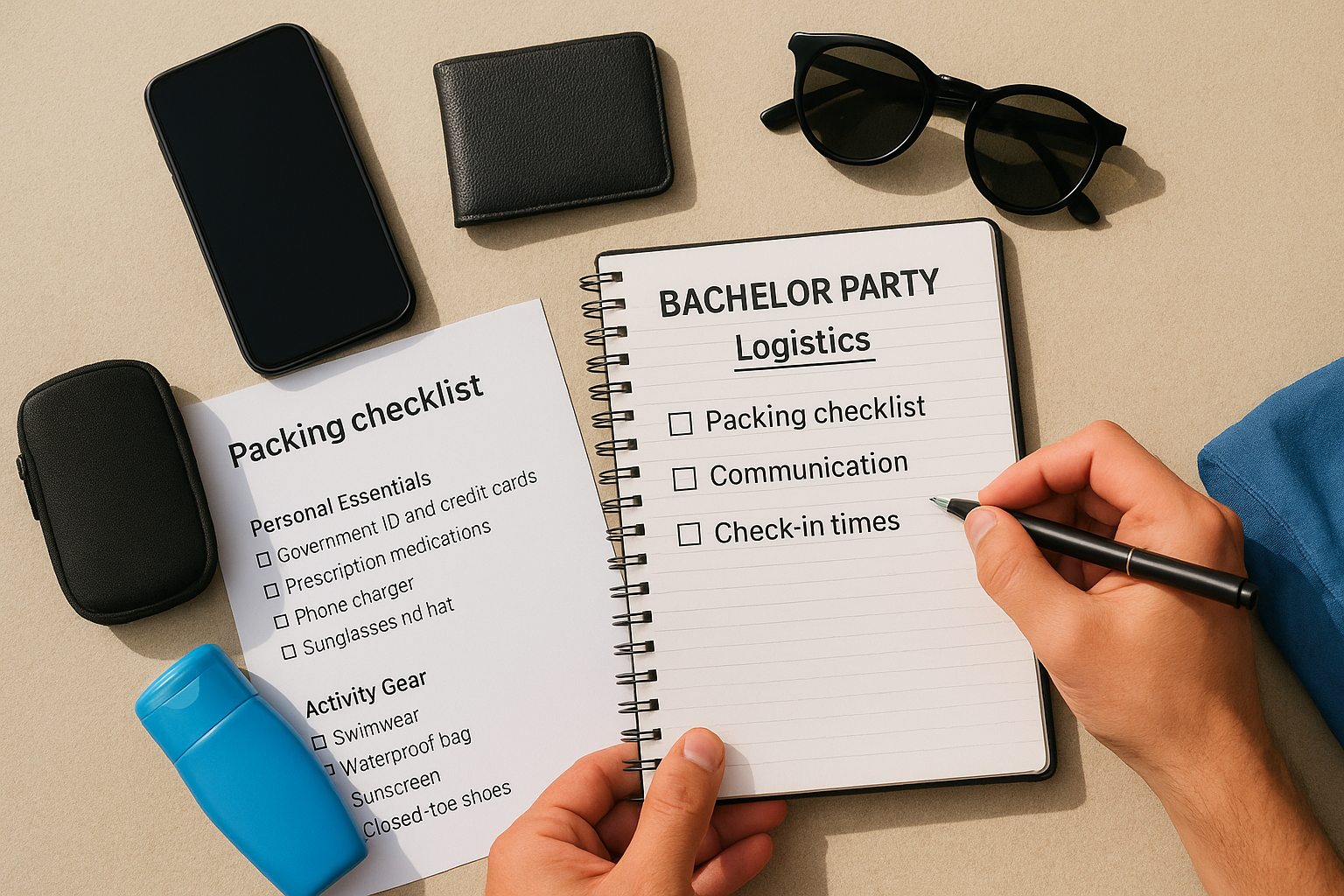
Create dedicated sections in your template for the operational stuff that keeps a bachelor party running smoothly. This is where you list who’s handling specific responsibilities, what everyone needs to pack, and how to handle common situations before they become problems. Your future self will thank you when someone asks about outlet converters or medication at midnight.
Packing checklist and gear reminders
Add a packing list section to your template that accounts for both obvious and forgotten items. Include weather-appropriate clothing, but also call out activity-specific gear like reef-safe sunscreen for boat trips, waterproof phone cases, and motion sickness medication for guys who get seasick. List items people commonly forget like phone chargers, prescription medications, and extra contact lenses.
Break your packing list into categories so it’s easy to scan:
Personal Essentials:
- Government ID and credit cards
- Prescription medications (bring extra)
- Phone charger and portable battery
- Sunglasses and hat
Activity Gear:
- Swimwear and beach towels
- Waterproof bag for valuables
- Sunscreen (reef-safe for ocean activities)
- Closed-toe shoes for boat rentals
Assign someone to bring shared items like a first aid kit, portable speaker, or cooler. Note who’s responsible for each item in your template so you’re not stuck with duplicates or gaps.
Communication and check-in protocols
Establish a primary communication channel and document it in your template. Most groups use a group text, but you should also list a backup method like a dedicated app or phone tree in case cell service cuts out on the water. Include everyone’s phone numbers in the contact section so people can reach each other even if they lose access to the group chat.
"Setting a daily check-in time prevents the group from fracturing into smaller clusters that end up at different locations."
Set morning and evening check-in times where everyone confirms they’re present and knows the next activity. Add these check-ins to your itinerary table as 5-minute blocks so they become routine rather than forgotten. List who’s responsible for taking attendance at each check-in so someone’s always tracking the full headcount.
Step 5. Plan for weather and backups
Your bachelor party itinerary template needs a contingency plan for when Mother Nature doesn’t cooperate. Booking a pontoon rental or fishing charter weeks in advance means gambling on conditions you can’t control. A single thunderstorm or rough seas can shut down your main activity, leaving everyone scrambling for alternatives at the last minute. You need backup options documented in your template before the weekend starts.
Planning for weather isn’t about pessimism, it’s about having options that keep the trip moving when outdoor plans fall through. Your template should include both preventive strategies (choosing the right dates) and reactive solutions (indoor alternatives ready to go). This preparation separates a minor inconvenience from a weekend where everyone sits around waiting for conditions to improve.
Check weather windows and seasonal patterns
Research historical weather data for your destination before locking dates. Destin’s summer months bring afternoon thunderstorms that typically pass within an hour, while spring and fall offer more stable conditions for water activities. Your bachelor party itinerary template should note the typical weather patterns for your chosen weekend so expectations are realistic.
Build in flexible time blocks around weather-dependent activities. If you’re booking a morning pontoon trip to Crab Island, add a note that departure might shift by an hour or two based on conditions. Contact your activity vendors ahead of time to ask about their weather call protocols and how much notice they give before canceling. Document those policies in your template so you know when to expect updates.
"Knowing your vendor’s cancellation timeline lets you activate backup plans early rather than waiting until everyone’s already dressed and ready to go."
Build backup activities into your template
Create a "Plan B" section in your itinerary that lists indoor or flexible alternatives for every outdoor activity. If your Saturday boat rental gets canceled, you need options like visiting a brewery, hitting an arcade, or booking last-minute spa time at the resort. List these alternatives with contact information and rough costs so you can pivot quickly.
Your backup activities should match the energy level and budget of your original plans. Swapping a $400 fishing charter for a $30 movie theater trip creates an awkward gap in both spending and experience. Consider semi-indoor options like covered bar districts, aquariums, or museums that work in any weather but still feel like destinations rather than fallback plans.
Document cancellation policies and costs
Track every vendor’s cancellation terms in a dedicated table within your template. You need to know which deposits are refundable, how much notice is required, and whether you can reschedule versus getting a full refund. This information determines how aggressively you cancel when weather looks questionable.
| Vendor | Activity | Cancellation Window | Refund Terms |
|---|---|---|---|
| Original Crab Island | Pontoon Rental | 48 hours | Full refund |
| Gulf Coast Charters | Fishing Trip | 24 hours | 50% refund |
| Harborwalk Marina | Jet Ski Package | Same day | Weather reschedule only |
Keep travel insurance details in your template if anyone purchased coverage. Note the claim process and what documentation you’ll need if weather forces major changes that trigger insurance claims.
Step 6. Share it and keep it updated
Your bachelor party itinerary template becomes worthless if nobody can access it or if outdated information sends people to the wrong locations. You need a sharing method that works across different devices and platforms, plus a system for pushing updates when plans change. The moment you book a new restaurant or shift a departure time, everyone should see the revised schedule without you having to send individual text messages.
Keeping your itinerary current requires establishing who can edit versus view and how you’ll communicate changes. You’ll make adjustments throughout the planning process and probably during the trip itself, so your distribution method needs to handle real-time updates. Choosing the right platform and setting clear protocols prevents version confusion that leads to half the group showing up at the old meeting spot.
Choose the right sharing format

Use Google Docs or Google Sheets for live collaboration where multiple people can view changes instantly. Share the document with edit access for your core planning team and view-only access for everyone else. Set up notifications so the group gets alerted when major sections change, or post updates in your group chat with a link to the revised itinerary.
Cloud-based documents solve the "which version is current" problem because there’s only one master file. Everyone sees the same information whether they’re checking from a laptop or phone, and you avoid the mess of email attachments where people save outdated copies. Make sure your sharing settings allow anyone with the link to view so new attendees don’t need special permissions.
"A single shared document eliminates the confusion that comes from forwarding multiple PDF versions through group texts."
PDF formats work better when your schedule is finalized and you want to prevent accidental edits. Export your final itinerary as a PDF a few days before departure and have everyone download it for offline access. This backup ensures the group can reference timing and addresses even without cell service.
Set update protocols and version control
Designate one person as the itinerary owner who makes all official edits. Other organizers can suggest changes through comments or messages, but only the owner updates the master document. This prevents conflicting edits where two people change the same time slot simultaneously and overwrite each other’s work.
Add a "Last Updated" timestamp at the top of your template and increment it every time you make changes. Post a brief changelog note when you modify significant details like departure times or restaurant reservations. Your updates should highlight what changed rather than making people scan the entire document for differences.
Sample itineraries for Destin and Crab Island
Your bachelor party itinerary template works best when you see it filled out with real activities and timing. Below are two sample schedules built around Destin and Crab Island that you can copy and customize based on your group’s preferences. These examples show how to structure your weekend with specific vendors and realistic time blocks that account for travel, meals, and recovery time between activities.
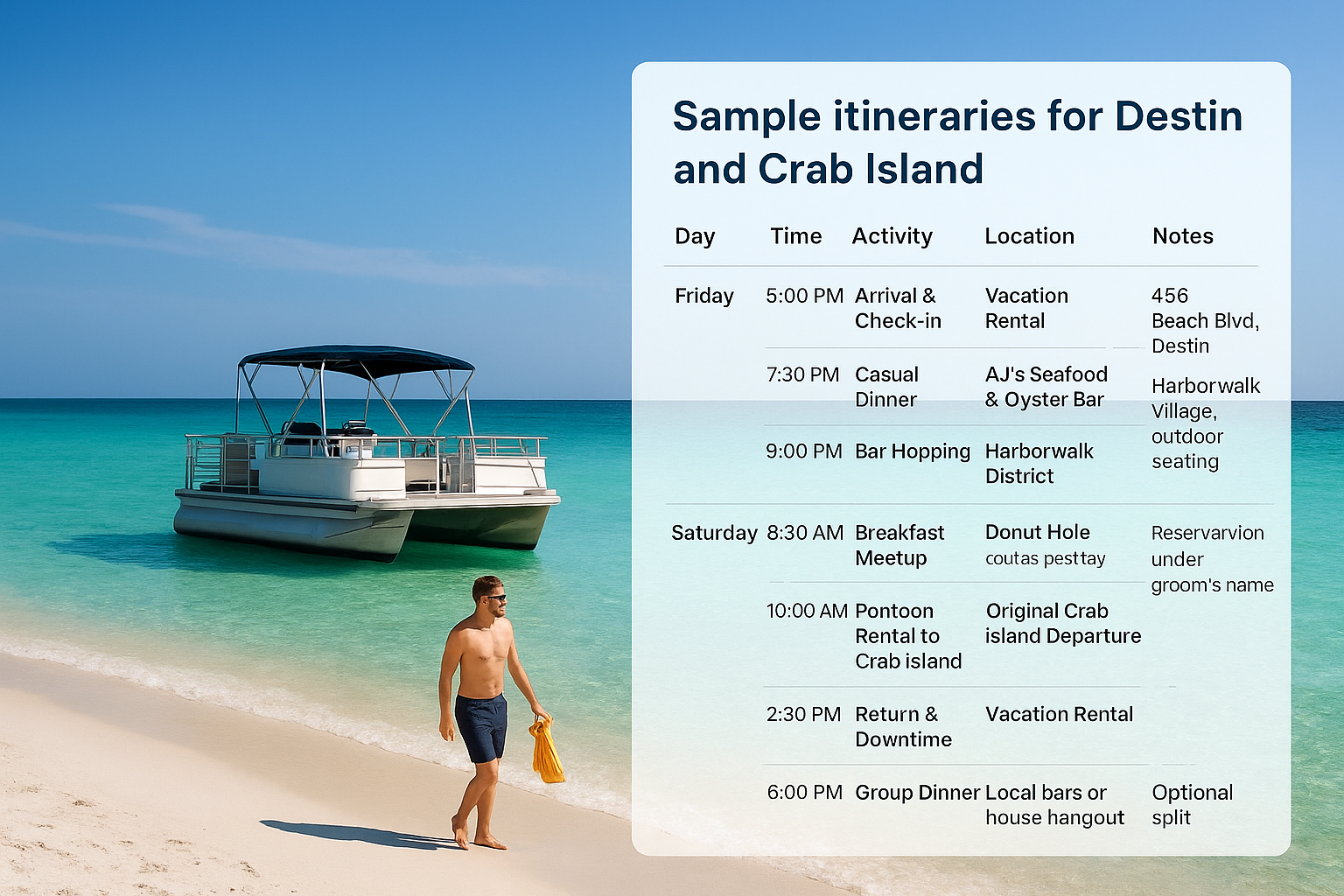
Both templates include Original Crab Island services that work well for bachelor parties, from pontoon rentals to fishing charters. You can swap activities based on your budget and energy level, but the structure demonstrates how to balance planned events with open time slots.
Two-night beach and boat focus
This compressed schedule works when guests are flying in Friday evening and need to maximize Saturday before departing Sunday. You front-load the main water activities on Saturday and keep Sunday light for travel.
| Day | Time | Activity | Location | Notes |
|---|---|---|---|---|
| Friday | 5:00 PM | Arrival & Check-in | Vacation Rental | 456 Beach Blvd, Destin |
| Friday | 7:30 PM | Casual Dinner | AJ’s Seafood & Oyster Bar | Harborwalk Village, outdoor seating |
| Friday | 9:00 PM | Bar Hopping | Harborwalk District | Walking distance from dinner |
| Saturday | 8:30 AM | Breakfast Meetup | Donut Hole | Fuel up before boat day |
| Saturday | 10:00 AM | Pontoon Rental to Crab Island | Original Crab Island Departure | 4-hour rental, departs HarborWalk Marina |
| Saturday | 2:30 PM | Return & Downtime | Vacation Rental | Shower and recharge |
| Saturday | 6:00 PM | Group Dinner | Boshamps Seafood | Reservations under groom’s name |
| Saturday | 8:30 PM | Late Night Plans | Local bars or house hangout | Optional split for energy levels |
| Sunday | 9:00 AM | Brunch | Pancakery | Casual spot near airport |
| Sunday | 11:00 AM | Checkout & Departures | Rental Property | Flights after 1 PM recommended |
"A two-night format requires tight coordination on Saturday to fit your premier activities without feeling rushed between stops."
Three-night adventure-packed weekend
Adding a third night lets you spread activities across Friday and Saturday without overloading either day. This schedule includes both water sports and fishing, giving the group variety and built-in rest periods.
| Day | Time | Activity | Location | Notes |
|---|---|---|---|---|
| Thursday | 6:00 PM | Early Arrivals Check-in | Beach House Rental | 789 Scenic Gulf Dr |
| Thursday | 8:00 PM | Welcome Drinks | House patio or nearby bar | Low-key first night |
| Friday | 7:00 AM | Deep-Sea Fishing Charter | Original Crab Island Charter | 6-hour trip, departs marina |
| Friday | 2:00 PM | Lunch & Recovery | Back at house | Order takeout, nap optional |
| Friday | 7:00 PM | Steak Dinner | Flemings Prime Steakhouse | Business casual attire |
| Saturday | 10:00 AM | Jet Ski Rentals | Original Crab Island | 2-hour guided tour |
| Saturday | 1:00 PM | Beach Time | Public beach access | Free afternoon, coolers allowed |
| Saturday | 7:30 PM | Sunset Cruise | Original Crab Island Departure | BYOB allowed, 2-hour trip |
| Sunday | 10:00 AM | Farewell Brunch | Camille’s at Crystal Beach | Scenic last meal |
| Sunday | 12:30 PM | Checkout | Rental Property | Late checkouts available |
This extended format works when most guests can take Friday off work and want to justify the travel time with a fuller experience.
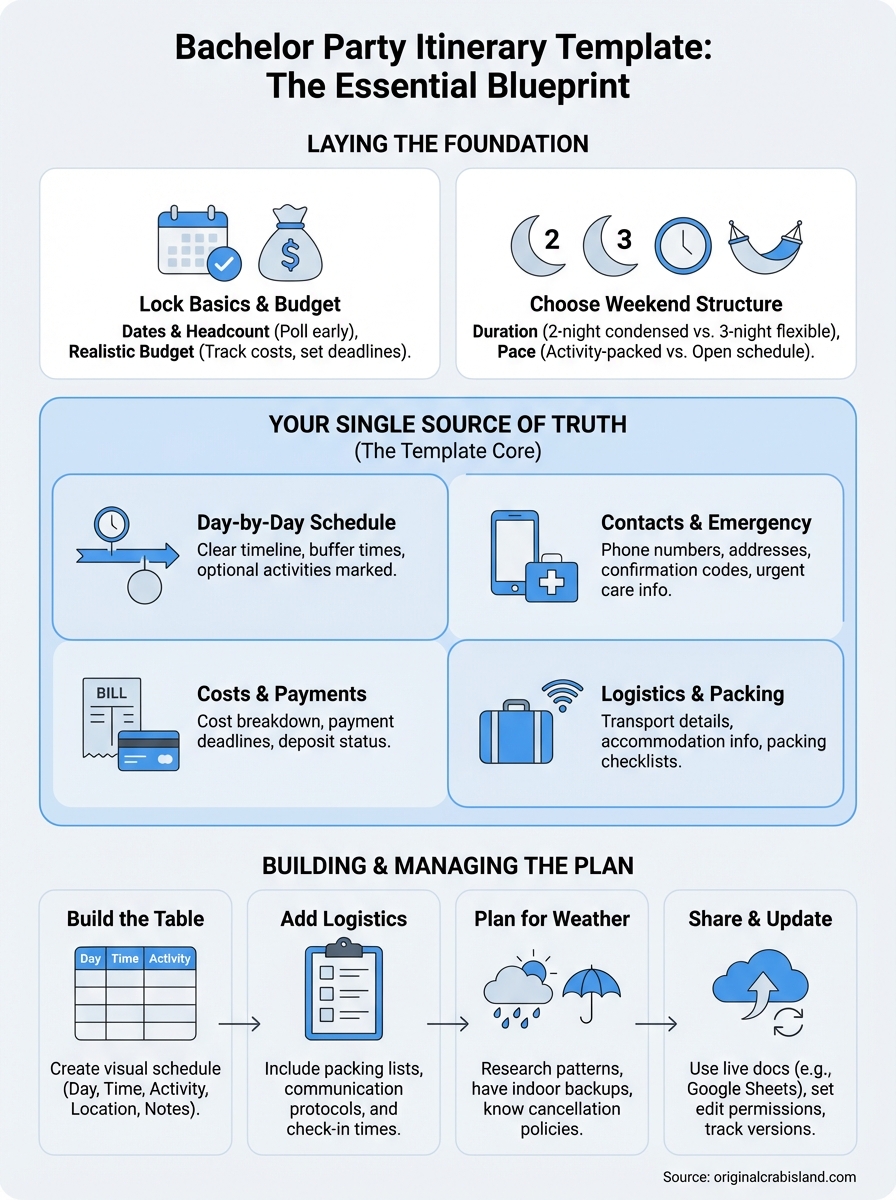
Wrap-up and where to go from here
Your bachelor party itinerary template now includes everything from activity schedules to emergency contacts, giving you a framework that prevents last-minute scrambling. You’ve built structure around the weekend while leaving flexibility for spontaneous decisions, which keeps the trip enjoyable without feeling overly regimented. The template eliminates confusion about timing and logistics, so you can focus on creating experiences rather than answering the same questions repeatedly.
Now comes the execution. If you’re planning your bachelor party around Destin and Crab Island, Original Crab Island handles the water activities that make these trips memorable. From pontoon rentals that let you anchor at the sandbar to fishing charters and sunset cruises, booking your activities through Original Crab Island means working with operators who understand bachelor party logistics. They’ll help you fit water sports into your schedule without conflicts, making the planning process smoother from start to finish.